Old-Fashioned Vegetable Soup Recipe
This vegetable soup is brothy, chunky, and never bland. Brown the tomato paste, add frozen veg last, and get real depth without any meat.
Why You'll Love This Recipe
- Deep savoury flavour with no meat, no beef broth and no long simmer
- One pot, 8 generous servings, and it costs very little to make
- Naturally vegan and gluten-free as written, with nothing swapped out to get there
- The vegetables stay distinct instead of collapsing into mush
Brown the tomato paste before any liquid goes in. Add two tablespoons directly to the hot pot with the softened vegetables and cook it, stirring and scraping, for a full two minutes.
It will darken from bright red to a deep brick colour and start sticking to the bottom of the pan. That sticking is the point.
Tomato paste is concentrated enough in sugars and amino acids to brown the same way meat does, so it manufactures the fond that a meat-free soup otherwise has no way to produce.
Raw tomato paste stirred into broth just tastes like tomato. Browned tomato paste tastes savoury and slightly roasted, and it is the difference between vegetable soup that tastes flat and vegetable soup that tastes like it simmered for hours.
Read Before You Start
Cut everything to roughly the same size, about half an inch. This matters more here than in any other soup, simply because there are eight different vegetables in the pot and they all have different cooking times to begin with. As featured in our 15 Vegetable Soup Recipes collection, uniform cutting ensures every spoonful has distinct texture rather than mush.
Frozen vegetables go in at the end, not the beginning. Frozen corn, peas and green beans were blanched before freezing, which means they are already most of the way cooked. They need three to five minutes to heat through, not thirty. Adding them with the potatoes is the single most common reason a homemade vegetable soup ends up with grey, collapsed peas.
Ingredient Deep Dive & Notes
Russet potato, not a waxy one. Russets break down slightly at the edges and release starch into the broth, which gives the soup body it would not otherwise have. Waxy potatoes like red or Yukon Gold hold cleaner cubes but leave the broth thin. If you want both, use a russet and accept the slightly cloudy broth.
Tomato paste, 2 tablespoons. This is the one ingredient I would not substitute or skip. Canned tomatoes cannot do its job, because they carry too much water to brown properly. See the tip above for why it matters.
Canned diced tomatoes with their juice. Acidity and a bit of sweetness. Use the juice, do not drain it.
Low-sodium vegetable broth. Eight cups. Regular broth plus canned tomatoes plus added salt stacks up fast, and you want the seasoning under your control at the end.
Green beans, corn and peas. Frozen is genuinely fine here, and often better than tired fresh green beans in the middle of winter. Just add them late.
Green cabbage. Optional, and easy to overlook, but two cups adds real sweetness as it softens and it costs almost nothing. It also holds up better than spinach or kale, which collapse.
Bay leaf and dried herbs. Dried thyme and oregano go in early so they have time to soften into the broth. Fresh parsley goes on at the end for brightness. The same early-versus-late logic applies in Minestrone, which is essentially this soup with beans and pasta added.
Lemon juice. A tablespoon at the very end, off the heat. Most recipes call for red wine vinegar here, and lemon does the same job without the ambiguity.
Equipment Needed
- A 6 to 8 quart pot or Dutch oven. This makes a genuinely large batch and a 5 quart pot will be uncomfortably full
- A wooden spoon or flat-edged spatula for scraping the browned tomato paste off the bottom, which a rounded spoon does badly
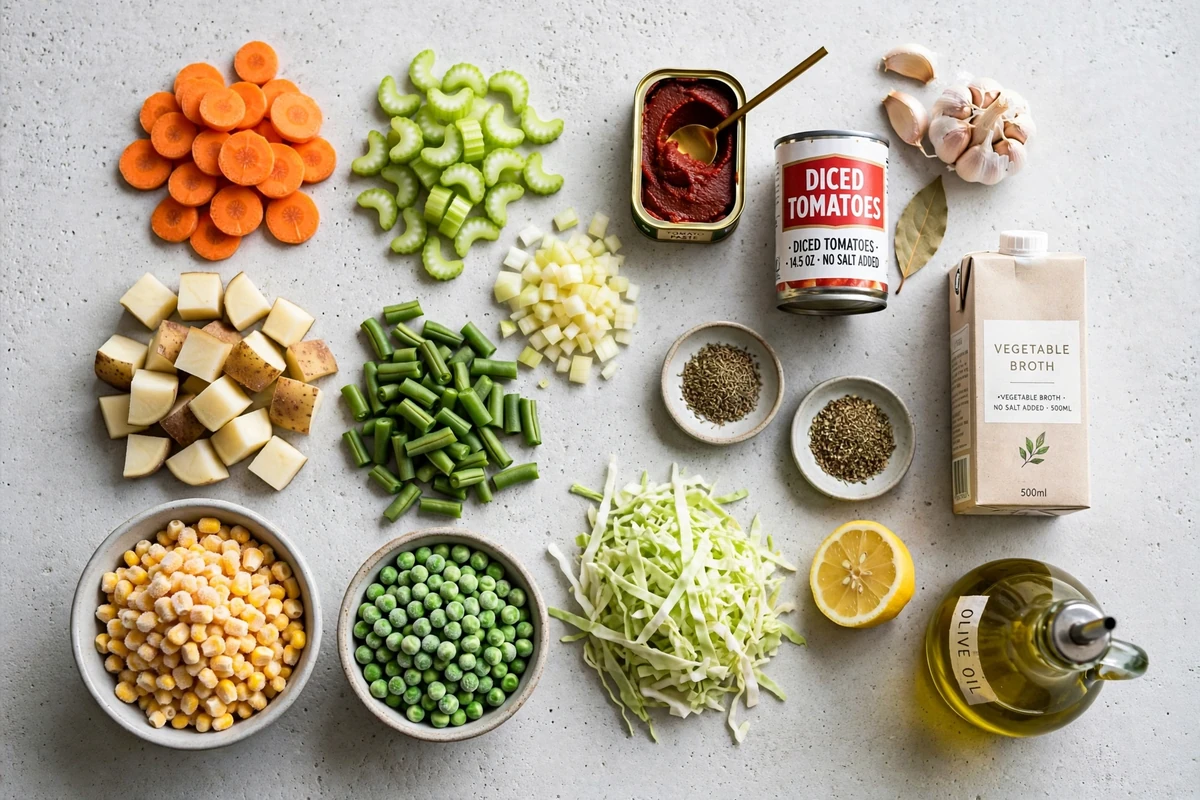
Ingredients for Old-Fashioned Vegetable Soup including onions, carrots, celery, potatoes, green beans, cabbage, corn, peas, tomatoes, broth and herbs
Detailed Step-by-Step Cooking Guide
Preparation & Setup
Soften the base vegetables
Add garlic and dried herbs
Brown the tomato paste
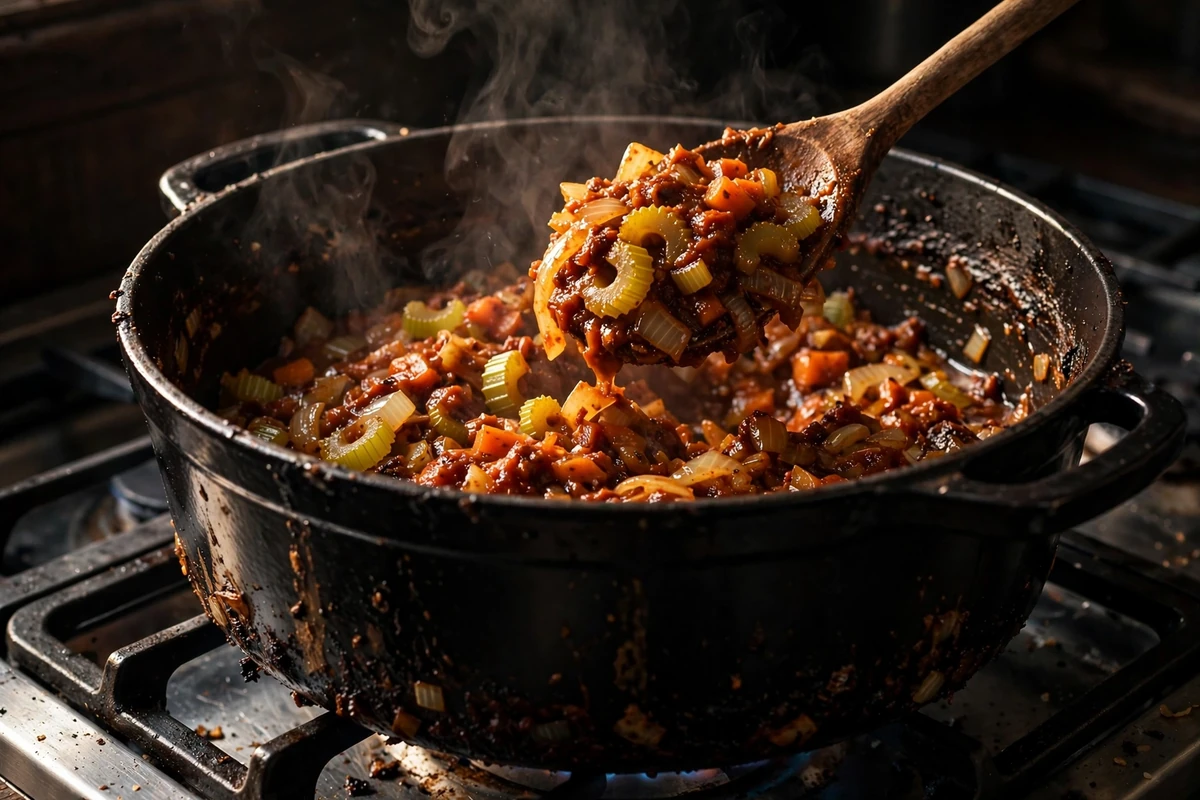
Browning tomato paste with softened base vegetables in a Dutch oven with a wooden spoon
Deglaze and add the long-cooking vegetables
Simmer
Add the green beans
Add the quick vegetables and finish
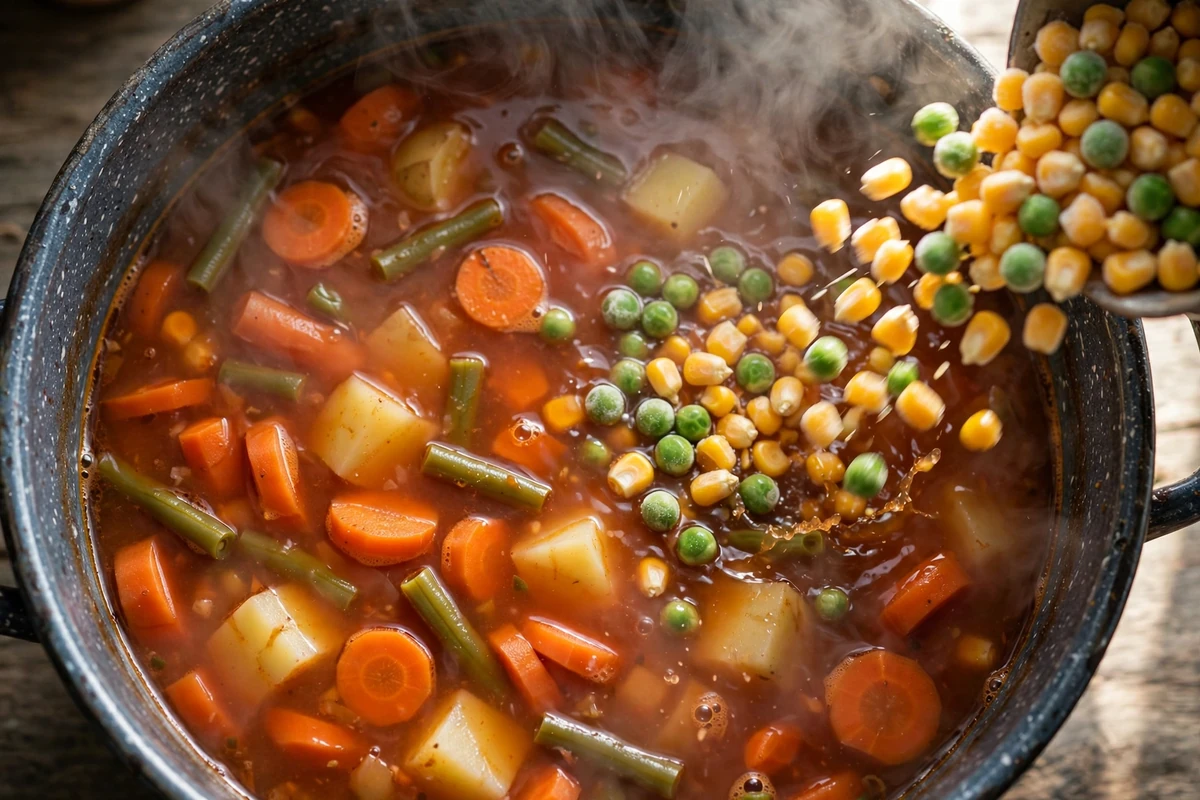
Adding frozen corn and peas into the simmering vegetable soup pot
Getting the Flavour Right
Almost every complaint about homemade vegetable soup comes down to the same thing: it tastes like water with vegetables in it. Here is what is usually behind that.
Vegetables simmered in broth from the start have nothing savoury to give. The browned tomato paste in step 3 is not optional if you want depth, and there is no way to add it back once the liquid is in.
A large brothy soup takes considerably more salt than people expect, and 8 cups of broth plus eight vegetables absorbs a lot of it. Salt in stages and taste properly at the end.
A tablespoon of lemon juice off the heat lifts everything. Long-simmered vegetables go soft and sweet, and without something sharp the soup reads as dull.
Everything went in at once. Follow the three-stage order in the method: hard vegetables first, green beans at 5 minutes out, frozen corn and peas at 3 minutes out.
Thin usually means the potato was waxy rather than starchy. Slightly cloudy is normal and is a sign the starch did its job.
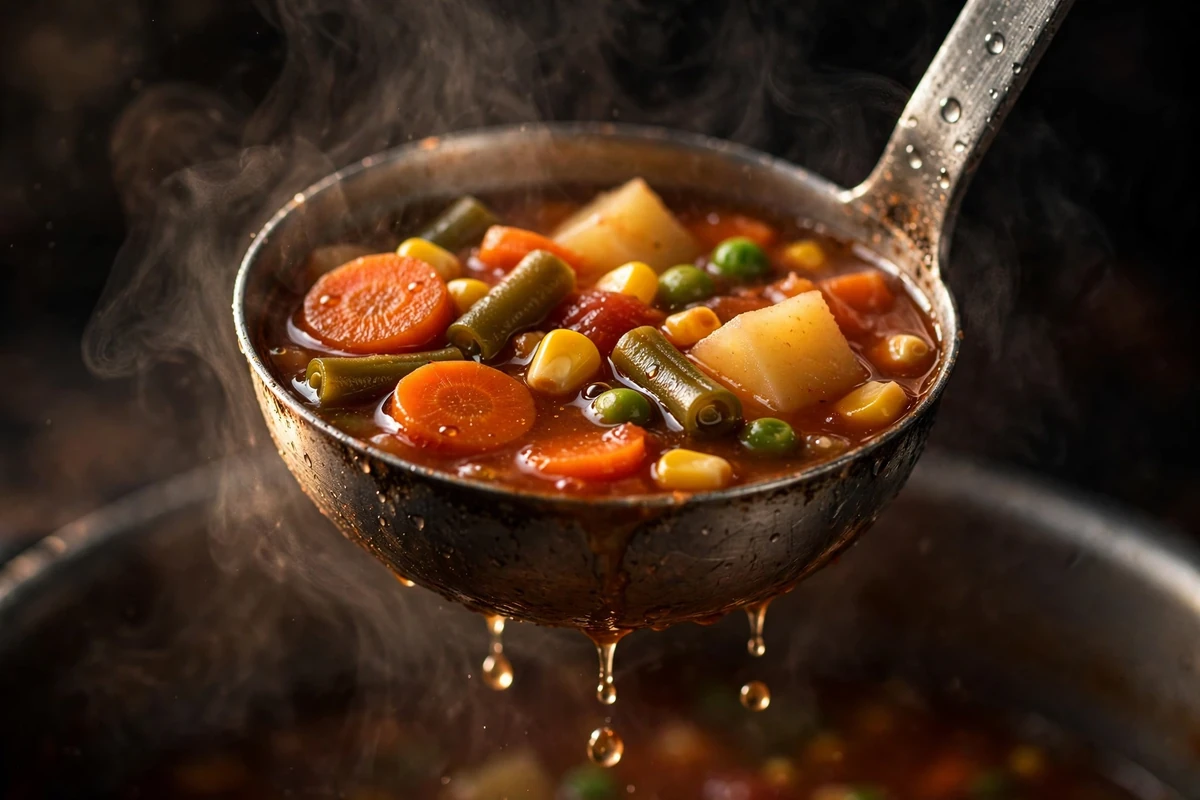
Steaming vegetable soup close-up in a metal ladle showing broth and vegetable texture
How to Use This Broth Base
How to Serve, Store & Reheat
Ladle into deep bowls and finish with more parsley and a heavy grind of black pepper. Crusty bread is the obvious partner, and a grilled cheese alongside turns this from a light dinner into a full one. If you enjoy velvety, puréed winter soups instead of chunky broths, take a look at our 10 Creamy Soup Recipes guide.
Cool to room temperature within 2 hours, then refrigerate in an airtight container for up to 5 days. This soup genuinely improves on day two as the herbs and browned tomato work further into the broth. It is one of the better meal-prep soups for exactly that reason.
Warm in a saucepan over medium heat until steaming, about 6 to 8 minutes, stirring occasionally. Add a splash of broth if it has thickened. In a microwave, 2 minutes at full power, stirring halfway. There is no dairy here, so nothing will split.
The soup freezes well for up to 3 months in portioned airtight containers with an inch of headspace, and everything comes back fine except the potato, which turns slightly grainy after freezing and thawing. Potato cells rupture when the water inside them expands into ice crystals, and that texture change is not reversible. If you plan to freeze the whole batch, leave the potato out and add freshly cooked potato when you reheat. If you are only freezing half, most people find the texture change minor enough to ignore.
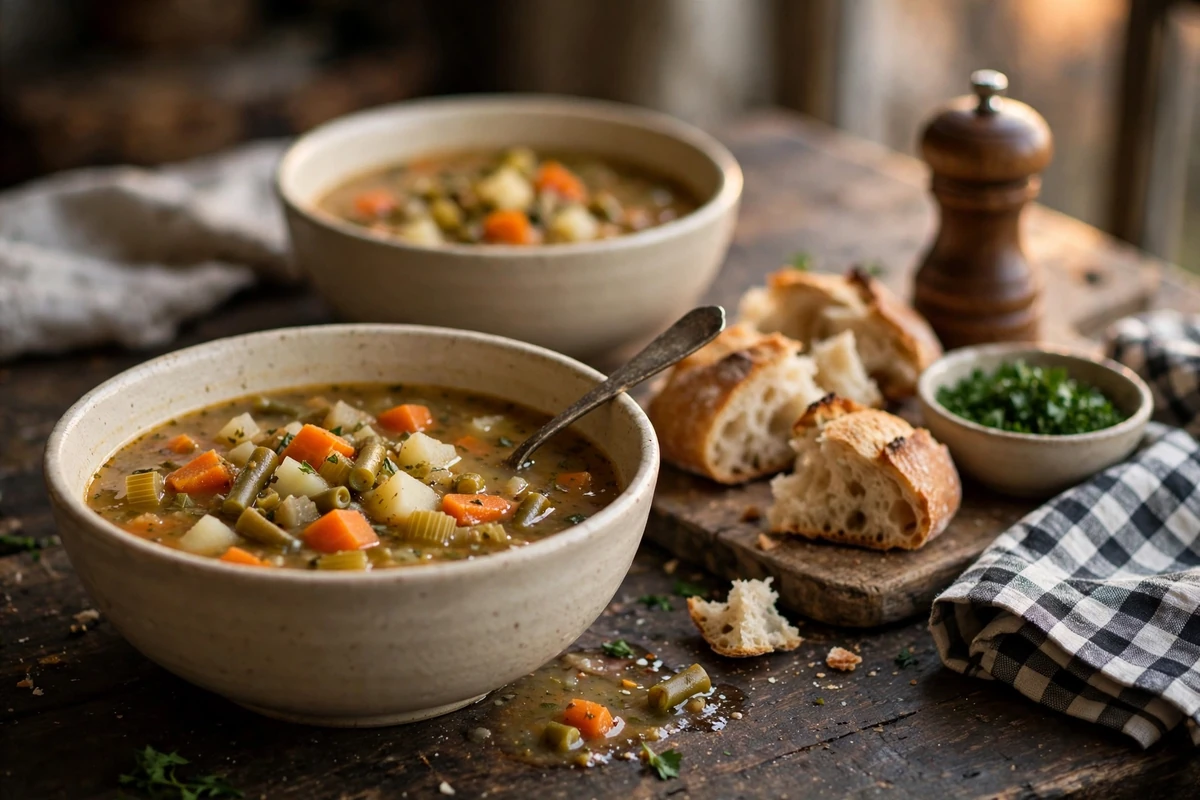
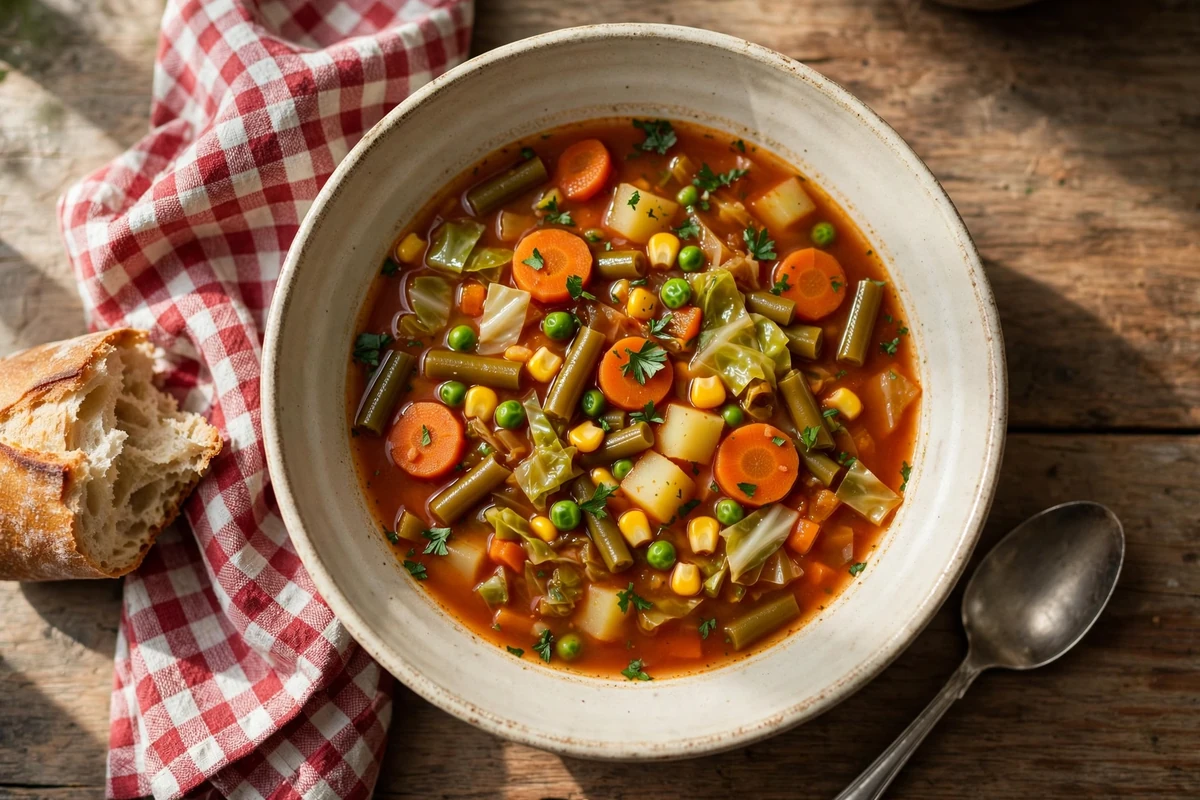
Finished Old-Fashioned Vegetable Soup served in bowls with crusty bread on a rustic table
Dietary Variations
Add a drained and rinsed can of cannellini or kidney beans in the last 10 minutes. This adds around 6 grams of protein per serving and keeps the recipe vegan. Cooked lentils work too and thicken the broth slightly.
Brown a pound of diced stew beef or ground beef in the pot before step 1, remove it, build the soup as written, and return it at step 4 so it simmers with the potatoes. Swap the vegetable broth for beef broth. Note this version no longer qualifies as vegetarian or vegan.
Leave out the potato, corn and peas, and add two extra cups of cabbage plus a diced zucchini with the green beans. This cuts the carbohydrates by roughly half. The broth will be thinner without the potato starch, which is expected.
The russet potato in this recipe is doing two jobs, and only one of them is obvious. Beyond being a vegetable in the bowl, it sheds starch into the broth as it simmers, giving what would otherwise be thin liquid a noticeable, spoon-coating body.
If you want potato starch doing the full thickening work in a rich dairy broth, explore our Creamy Potato Soup.
Allergen Notice: This recipe is free of the most common allergens as written: no dairy, no eggs, no nuts, no soy, no shellfish and no wheat. Two things are still worth checking. Celery is a declared allergen in the UK and EU and is present here. Leave it out and add an extra half carrot if that applies to you. And vegetable broth varies a lot between brands, with some containing wheat-derived ingredients or soy, so read the carton you actually buy rather than relying on this list. Nothing here should be treated as safe for a diagnosed food allergy without checking that label yourself.
Frequently Asked Questions
Recipe Visual Gallery (6 Full Photos)
Recipe Card & Steps
Ingredients Checklist
Click an item to check it off as you prep
- 2 tbspolive oil
- 1 largeyellow onion, diced (about 1 1/2 cups)
- 3 stalkscelery, sliced 1/4 inch thick
- 3 mediumcarrots, sliced 1/4 inch thick
- 1 tspsalt, divided
- 4 clovesgarlic, minced
- 1 tspdried thyme
- 1 tspdried oregano
- 2 tbsptomato paste
- 8 cups (1.9 L)low-sodium vegetable broth, divided
- 1 can (14.5 oz / 411 g)diced tomatoes, with juice
- 1 largerusset potato (about 12 oz / 340 g), cut into 1/2-inch dice
- 2 cupsgreen cabbage, roughly chopped
- 1bay leaf
- 1 1/2 cupsgreen beans, cut into 1-inch pieces (fresh or frozen)
- 1 1/2 cupsfrozen corn
- 1 cupfrozen peas
- 1 tbspfresh lemon juice
- 1/2 tspfreshly ground black pepper
- 1/4 cupchopped fresh parsley
Step-by-Step Instructions
Follow along and mark each step complete as you cook
Heat the olive oil in a 6 to 8 quart pot over medium heat. Add the onion, celery, carrots and 1/2 tsp of the salt. Cook 6 to 8 minutes, until the onion is translucent and the celery has softened. Do not brown.
Add the garlic, thyme and oregano. Stir 45 seconds, until fragrant.
Add the tomato paste and stir it into the vegetables, pressing it against the bottom of the pot. Cook 2 full minutes, scraping constantly, until it darkens from bright red to brick brown and begins sticking to the pan.
Pour in 1 cup of the broth and scrape the bottom of the pot until all the browned bits dissolve. Add the remaining broth, the diced tomatoes with their juice, the potato, the cabbage and the bay leaf.
Bring to a boil, then reduce to a steady simmer and cook uncovered 15 to 18 minutes, until a fork enters a potato cube with only slight resistance.
Add the green beans and simmer 5 minutes, until bright green and tender with a slight bite.
Add the corn and peas and cook 3 minutes, just until heated through. Remove the bay leaf.
Take off the heat. Stir in the lemon juice, then taste and add the remaining 1/2 tsp salt and the black pepper as needed. Stir through the parsley and serve.
Recipe Card Notes & Tips
- The browned tomato paste in step 3 is what makes this taste savoury without meat. Do not shorten it or skip it.
- Add vegetables in three stages as written. Everything at once gives you mush.
- Use a russet potato. The starch it releases is what gives the broth body.
- Freezes for up to 3 months, though the potato turns slightly grainy. Leave the potato out if freezing the whole batch.
- Add a drained can of white beans in the last 10 minutes for a heartier, higher-protein version.
Ratings & Reviews
Leave a Review
Made this recipe? Share your thoughts, tweaks, and honest rating with other home cooks!
Community Reviews (0)
You Might Also Enjoy
More delicious recipes in Soups & Chilis.

White Chicken Chili Recipe (Creamy, One Pot)
15 Vegetable Soup Recipes: Brothy, Creamy, and Hearty