Roasted Butternut Squash Soup Recipe
The difference between a squash soup that tastes like something and one that tastes like orange baby food comes down to two decisions: roast the squash instead of boiling it, and put acid in at the end. Neither one takes extra effort. Skip either and no amount of cream or salt will fix what is missing.
Why You'll Love This Recipe
- Roasting concentrates the squash instead of watering it down, so the flavor is deeper than the boiled version
- Naturally gluten-free and easily made vegan with one swap
- Freezes properly, unlike most creamy soups, so a double batch is worth making
- Six ingredients do the actual work, and the rest is seasoning
Stir a tablespoon of apple cider vinegar in at the very end, off the heat. Butternut squash is high in sugar and almost completely lacking in acid, which is why these soups so often taste heavy and one-note even when they are seasoned properly.
The vinegar does not make the soup taste sour. It sharpens the edges so the squash reads as sweet and roasted rather than flat and cloying.
Add it after blending, taste, and add a second teaspoon if the soup still feels like it is sitting on your tongue. Fresh lemon juice does the same job if that is what you have open.
Read Before You Start
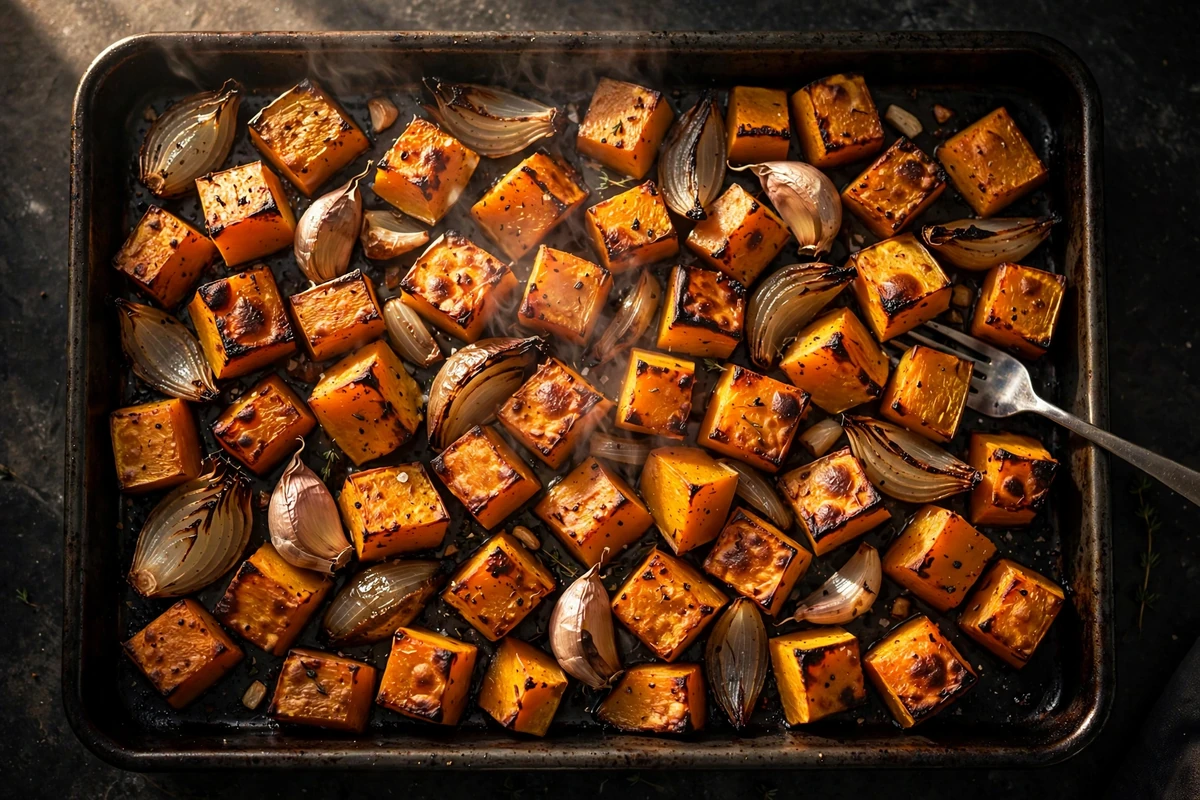
Roast the squash, do not boil it. Boiled squash absorbs water and gives up flavor to the pot, which is why so many versions of this soup end up thin and vaguely sweet. Roasting at 425°F drives moisture off and browns the natural sugars on the cut surfaces. That browning is most of the flavor in the finished bowl, and there is no way to add it back later.
Give the cubes room on the pan. Squash releases a lot of steam. Crowd it and the pieces sit in that steam and turn pale and soft without ever browning. Spread the cubes in one layer with visible gaps between them, and use two sheet pans if one is tight. This is the most common reason a roasted squash soup still tastes boiled.
Ingredient Deep Dive & Notes
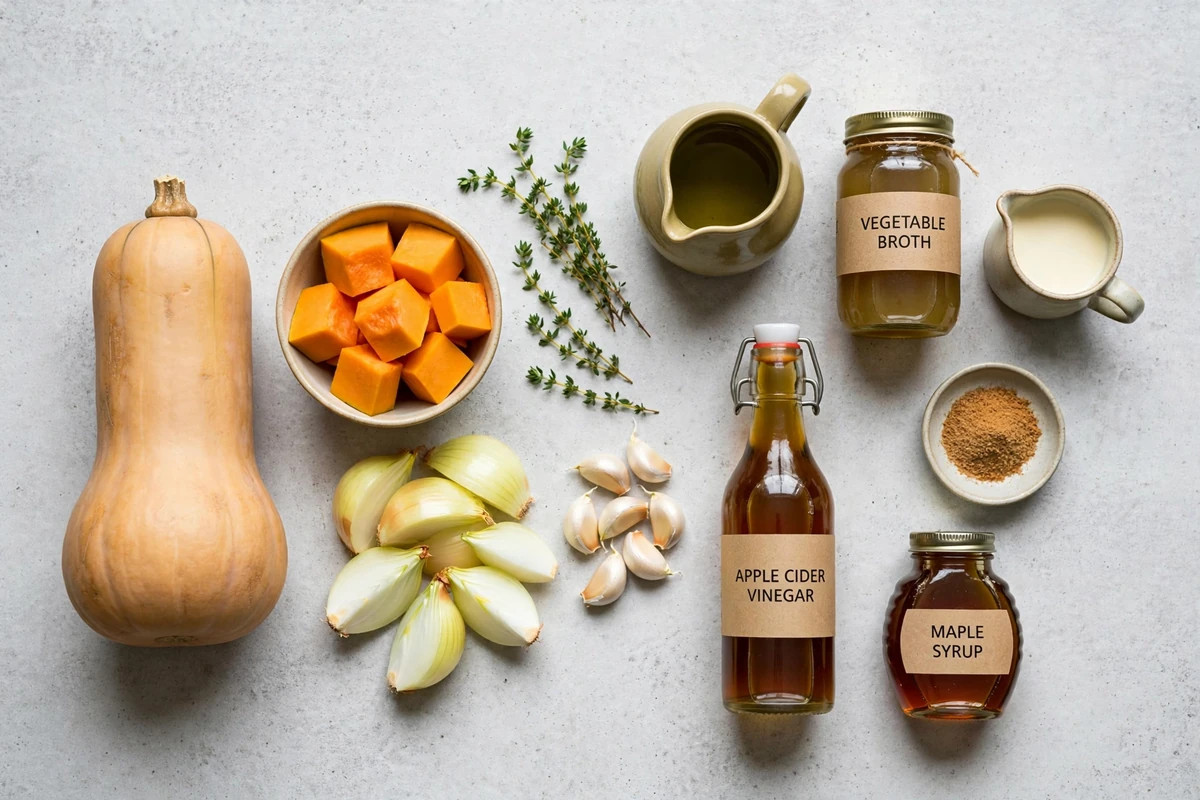
Butternut squash, 3 pounds whole. That yields roughly 8 cups of cubes once peeled and seeded. Look for one that feels heavy for its size with a matte, hard skin. A glossy skin usually means it was picked early and it will be watery and bland.
Yellow onion in wedges, not diced. It roasts on the same pan as the squash. Wedges hold together and caramelize at the edges over 40 minutes, where diced onion would burn.
Whole unpeeled garlic cloves. Roasted in their skins alongside everything else, then squeezed out. The papery skin protects them from scorching, and roasted garlic is sweet and mellow rather than sharp, which is what this soup wants.
Olive oil. Three tablespoons total, most of it on the roasting pan. Do not go lighter here. The oil is what conducts heat into the cut surfaces and lets them brown.
Low-sodium vegetable broth. Keeps the soup vegetarian and keeps the salt under your control. Chicken broth works fine if you are not cooking vegetarian, and gives a slightly rounder result.
Heavy cream, or full-fat canned coconut milk. Half a cup, added at the end. This is not what makes the soup creamy, the blended squash does that. The cream is there for richness and mouthfeel. Coconut milk is the swap I would reach for first if you want it dairy-free, and it suits the warm spices well.
Apple cider vinegar. The one ingredient I would not skip, for the reason above.
Maple syrup, optional. Squash varies a lot in sweetness. Taste before you add any. The same technique of roasting and tasting before seasoning carries through our curated 15 Vegetable Soup Recipes guide, where natural sweetness is balanced with gentle acid.
Equipment Needed
- Two rimmed sheet pans, or one very large one. Crowding is the enemy here
- A sharp Y-peeler, which handles squash skin far better than a straight peeler
- Immersion blender or countertop blender. A countertop blender gives a silkier result, an immersion blender means one less thing to wash
Roasted Butternut Squash Soup Recipe
Detailed Step-by-Step Cooking Guide
Preparation & Setup
1. Heat the oven and prep the pan
2. Roast the squash, onion and garlic
Roasted Butternut Squash Soup Recipe
3. Squeeze out the garlic
4. Warm the aromatics
5. Simmer briefly
6. Blend
Roasted Butternut Squash Soup Recipe
7. Finish and season
Getting the Texture Right
A blended soup gives you almost total control over consistency, which is good, because butternut squash is unpredictable. Two squash of the same weight can hold noticeably different amounts of water depending on how long they were cured after harvest.
Add warm broth a quarter cup at a time. Water works in a pinch but dulls the flavor.
Simmer uncovered for 5 to 10 minutes, stirring occasionally. This is also why the recipe holds a cup of broth in reserve rather than adding it all at once.
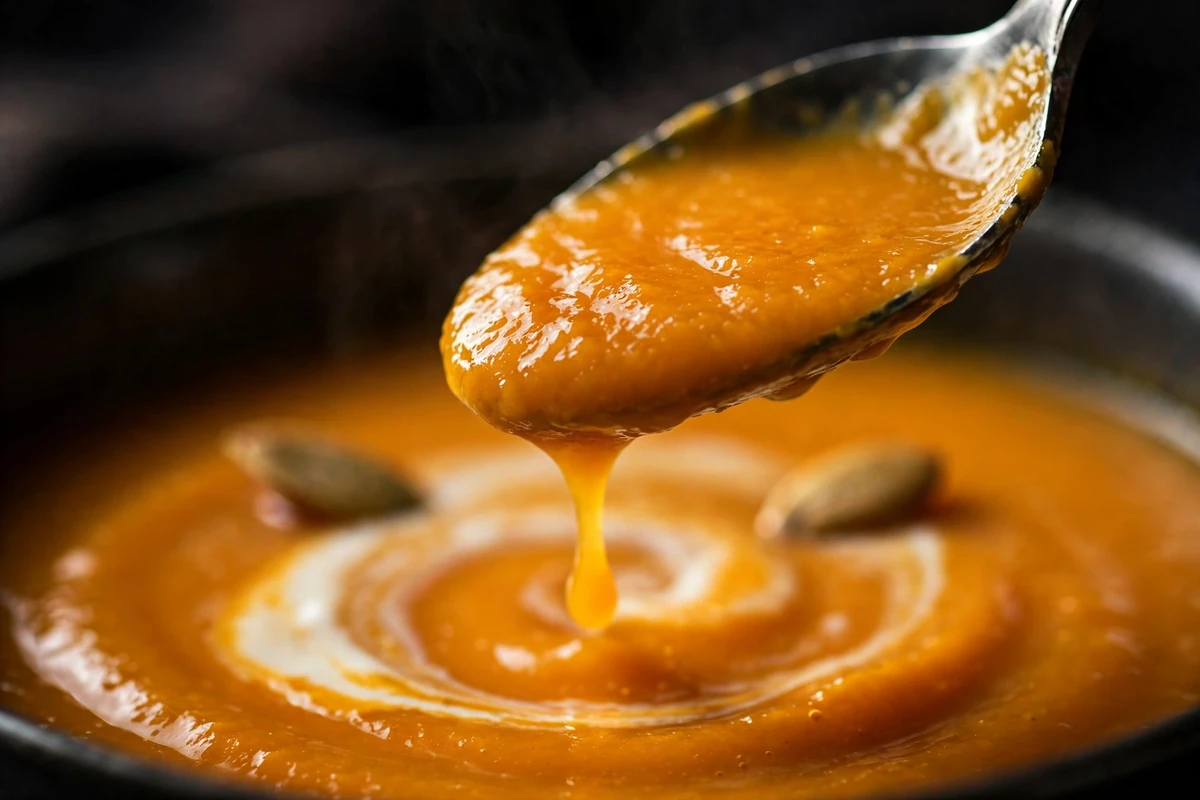
Under-blended. Keep going for another minute or two. If it still will not smooth out, pass it through a fine mesh sieve, pressing with the back of a ladle.
Not enough acid and not enough salt, in that order. Add vinegar first, then salt, then reassess.
Usually a sign the squash was steamed rather than roasted. Nothing to do about it in the pot, but worth noting for next time.
Roasted Butternut Squash Soup Recipe
How to Use the Roasted Squash Purée
How to Serve, Store & Reheat
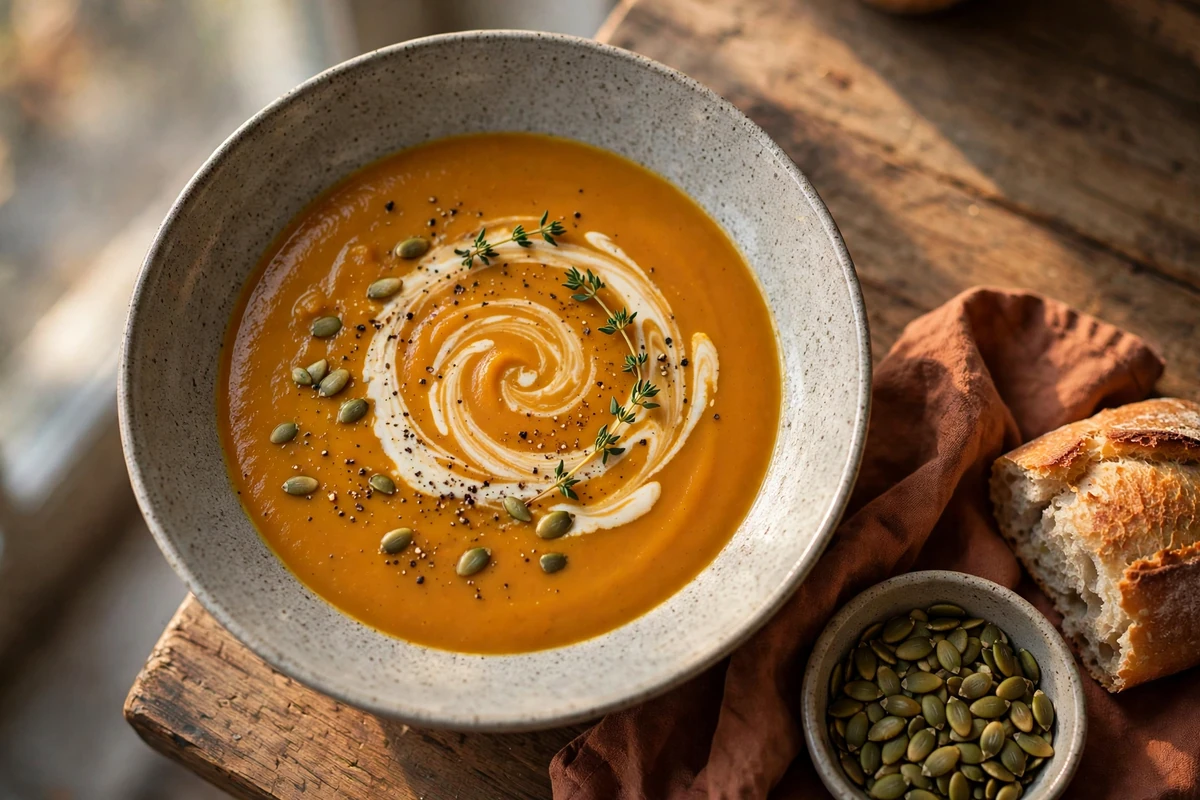
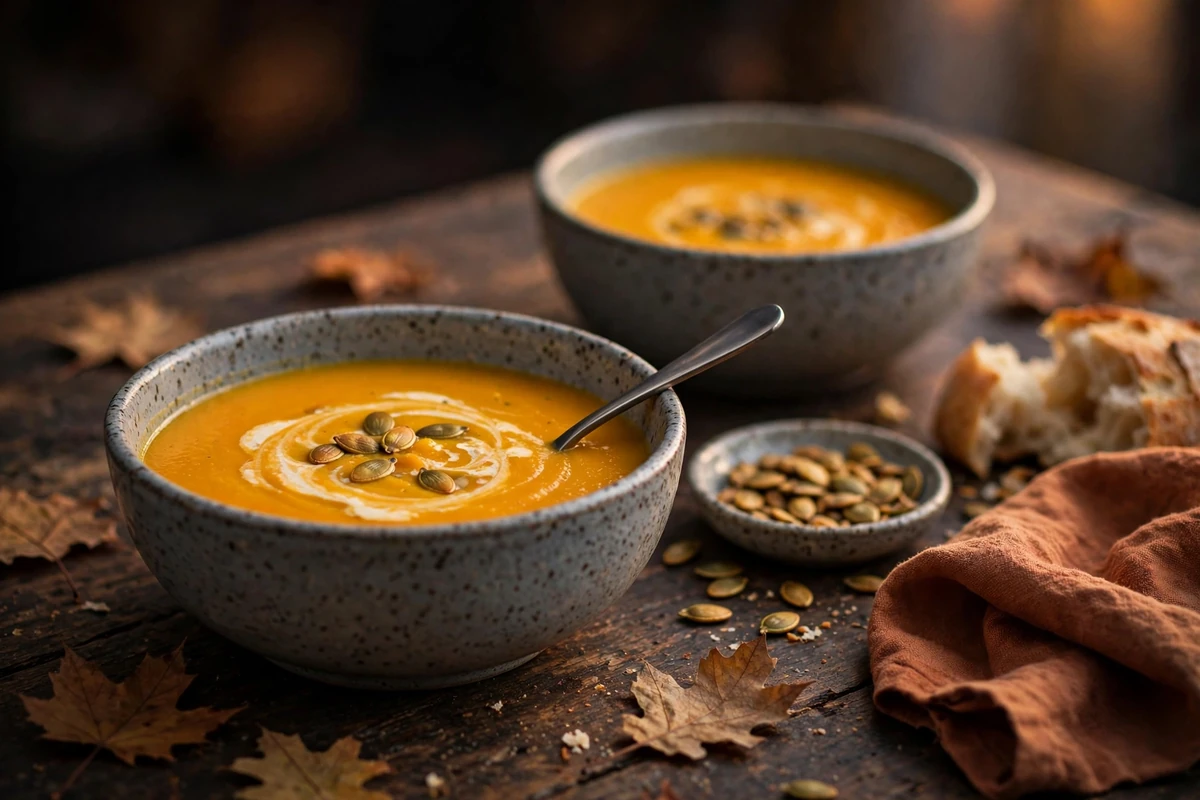
Ladle into wide shallow bowls and finish each one at the table: a swirl of cream, toasted pumpkin seeds for crunch, cracked black pepper, a few thyme leaves. The garnish is doing real work here, because a smooth soup with no textural contrast gets monotonous by the third spoonful. Crusty bread or a grilled cheese turns it into dinner, and a crisp Christmas Salad with tart pomegranate balances the soup's autumn sweetness.
Cool to room temperature within 2 hours, then refrigerate in an airtight container for up to 4 days. It thickens slightly in the fridge, which a splash of broth fixes on reheating.
Warm gently in a saucepan over medium-low heat, stirring occasionally, until steaming. If you added cream, keep it below a boil so the dairy does not split. In a microwave, use 50 percent power in one-minute bursts, stirring between each.
Yes, and it freezes better than almost any other creamy soup. The reason is that the body comes entirely from puréed squash rather than dairy or starch, as detailed in our guide to 10 Creamy Soup Recipes. Dairy-free and vegetable-thickened soups thaw smooth without splitting.
Roasted Butternut Squash Soup Recipe
Dietary Variations
Swap the butter for another tablespoon of olive oil and the heavy cream for full-fat canned coconut milk. Use vegetable broth. The coconut adds a faint sweetness that pairs well with the squash, and you can lean into it by adding half a teaspoon of curry powder with the other spices.
Cashew cream works and stays neutral. Or skip the cream entirely, since the blended squash carries enough body on its own, and add an extra teaspoon of olive oil at the end for richness.
Blend in a cup of cooked red lentils along with the squash at step 6. They disappear completely into the purée and add roughly 5 grams of protein per serving without changing the flavour.
Hold back a cup of the broth and blend the soup thicker than you want it, then thin it to taste. Squash cured for a long time after harvest has lost water and will be dense and sweet.
A squash that came off the vine recently holds far more moisture and blends into something noticeably looser with the exact same amount of liquid.
Since you cannot tell which one you bought until it is blended, the only reliable approach is to add liquid last. Removing water from a soup takes ten minutes of simmering. Adding it takes ten seconds.
Allergen Notice: This recipe contains dairy (butter and heavy cream). Both are optional. Use olive oil in place of the butter and coconut milk or cashew cream in place of the heavy cream for a dairy-free version. Note that coconut is classified as a tree nut by the US FDA, so the coconut milk substitution is not appropriate for a tree nut allergy. Cashew cream obviously is not either. For a soup free of both dairy and tree nuts, leave the cream out entirely and finish with olive oil. Everything else here is naturally gluten-free, but check your broth carton, since some vegetable broths contain wheat-derived ingredients. Read the label on whatever you actually buy rather than relying on this list, and do not treat any of it as safe for a diagnosed allergy without doing so.
Frequently Asked Questions
Recipe Visual Gallery (6 Full Photos)
Recipe Card & Steps
Ingredients Checklist
Click an item to check it off as you prep
- 3 lb(1.35 kg) butternut squash, peeled, seeded and cut into 1-inch cubes (about 8 cups)
- 1medium yellow onion, cut into 1-inch wedges
- 4garlic cloves, unpeeled
- 2 tbspolive oil
- 1 tspsalt, divided
- 1/2 tspfreshly ground black pepper
- 1 tbspunsalted butter
- 1 tbspolive oil
- 1 tspfresh thyme leaves
- 1/4 tspground nutmeg
- 1/8 tspcayenne pepper
- 4 cups(950 ml) low-sodium vegetable broth, divided
- 1/2 cup(120 ml) heavy cream or full-fat canned coconut milk
- 1 tbspapple cider vinegar
- 1 tbspmaple syrup, optional
- Toasted pumpkin seeds, extra cream, cracked black pepper, fresh thyme
Step-by-Step Instructions
Follow along and mark each step complete as you cook
Heat the oven to 425°F (220°C). Toss the squash cubes and onion wedges with the 2 tbsp olive oil, 1/2 tsp of the salt and the black pepper.
Spread across one or two rimmed sheet pans in a single layer with gaps between the pieces. Tuck the unpeeled garlic cloves among them.
Roast 35 to 40 minutes, turning once at 20 minutes, until the cut edges are deeply browned in patches and a fork passes through a cube with no resistance.
Squeeze the roasted garlic out of its skins and discard the skins.
Melt the butter with the 1 tbsp olive oil in a large pot over medium heat. Add the thyme, nutmeg and cayenne and stir 30 seconds, until fragrant. Add the roasted squash, onion and garlic.
Pour in 3 cups of the broth, reserving 1 cup. Bring to a gentle simmer and cook 5 minutes.
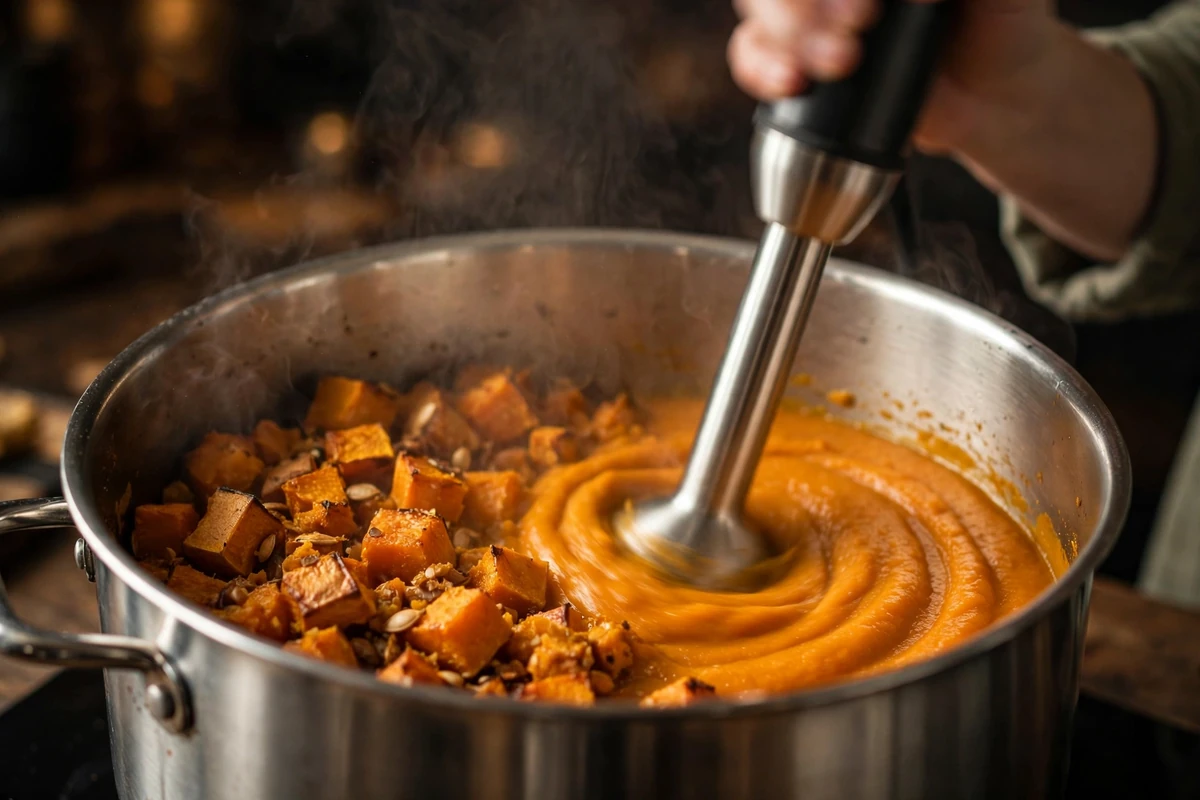
Blend until completely smooth, 2 to 3 minutes with an immersion blender, or in two batches in a countertop blender with the jar no more than two-thirds full and the lid vented. Add some or all of the reserved broth to reach the consistency you want.
Remove from the heat. Stir in the cream, then the apple cider vinegar. Taste and add the remaining 1/2 tsp salt as needed, and the maple syrup only if the squash was not sweet enough on its own.
Serve topped with toasted pumpkin seeds, a swirl of cream, cracked pepper and thyme.
Recipe Card Notes & Tips
- Do not crowd the sheet pans. Crowded squash steams instead of roasting, and roasting is where the flavour comes from.
- Pale, soft squash is not done. Look for browned edges.
- Add the vinegar before you consider adding sweetener. Most soups that taste flat need acid, not sugar.
- Freeze before adding the cream for the cleanest result, up to 3 months.
- For a vegan version, use olive oil in place of butter and coconut milk in place of cream.
Ratings & Reviews
Leave a Review
Made this recipe? Share your thoughts, tweaks, and honest rating with other home cooks!
Community Reviews (0)
You Might Also Enjoy
More delicious recipes in Soups & Chilis.

White Chicken Chili Recipe (Creamy, One Pot)

Old-Fashioned Vegetable Soup Recipe