Classic Butter Cookies Recipe
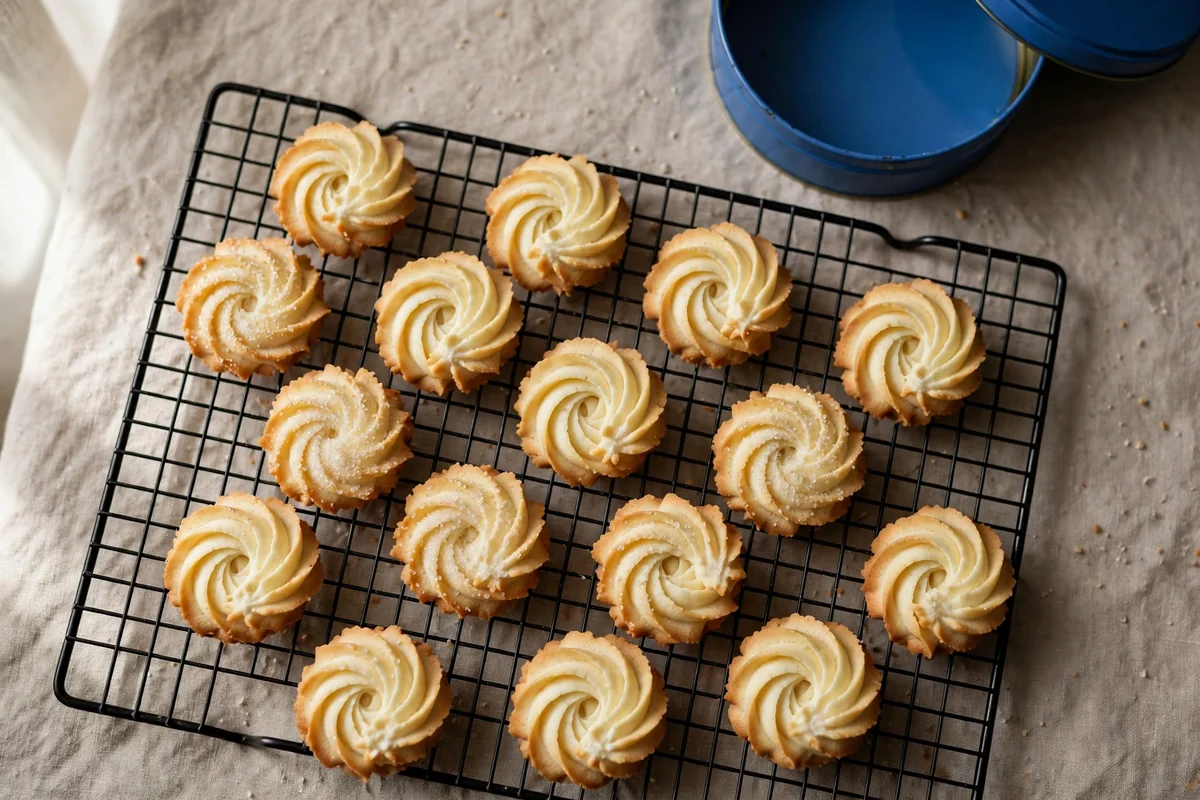
Piped swirl butter cookies with crisp golden ridges and a short, sandy melt-in-the-mouth center. Six ingredients, no dough chilling before shaping, and Danish bakery texture.
Why You'll Love This Recipe
- Six pantry ingredients, no chilling the dough before you shape it
- The swirls stay sharp instead of melting into flat discs
- One batch makes 36, which covers a gift tin and still leaves some at home
- The dough pipes, slices, or presses, so you are not locked into one shape
Beat the butter and sugar for two minutes, not five. Long creaming is correct for a chewy drop cookie because the air you whip in helps it rise and spread.
Here that same air works against you: the bubbles expand in the oven and round off the ridges, so the piped swirl blurs into a mound.
Two minutes gets you smooth and pale enough to pipe, with the ridges still crisp after baking.
Read Before You Start
Weigh the flour if you can. A cup of flour scooped straight from the bag can carry 20 grams more than a spooned cup. With this little liquid in the dough, that extra flour is the difference between a pipeable dough and one that fights you.
Use a sturdy piping bag, not the thin disposable kind. This dough is stiff by design. Thin bags split at the seam right when the swirl is half formed, usually over the tray.
Ingredient Deep Dive & Notes
Unsalted butter, 1 cup (226 g), at 65°F to 67°F. This is the whole recipe, so use a butter you would eat on toast. Unsalted lets you set the salt yourself. Temperature matters more than brand: press a finger into it and you want a shallow dent with no smear and no resistance.
Powdered sugar, 3/4 cup (90 g). Do not substitute granulated here. Powdered sugar dissolves completely into cold butter and carries a little cornstarch, which gives butter cookies their short, sandy bite. Granulated sugar leaves crystals that melt in the oven and pull the cookie flat.
One large egg, at room temperature. The egg is what makes the dough soft enough to push through a piping tip. A cold egg seizes the butter into small lumps that clog the tip.
Alcohol-free vanilla extract, 2 teaspoons. Two teaspoons sounds like a lot for a cookie this plain. It is not, because there is no chocolate or spice to hide behind.
Fine salt, 1/2 teaspoon. Use fine, not flaky. Flaky crystals do not dissolve into a low-moisture dough and you get salty pockets.
All-purpose flour, 2 1/4 cups (270 g). Plain AP is right. Bread flour makes these tough and cake flour cannot hold the ridge.
If you want a cookie with more spice and a crackled top instead, my Snickerdoodle Cookies go the other direction with cream of tartar. For bakery-style peanut butter cookies, explore our Chewy Peanut Butter Cookies and rich Chocolate Peanut Butter Cookies. You can also explore our bakery-tested Vanilla Cupcakes for a celebration treat.
Equipment Needed
- A piping bag, cloth or heavy reusable, roughly 16 inch
- A large open star tip about 1/2 inch across at the mouth. Small tips will not pass this dough
- A kitchen scale, ideally
- Light-coloured heavy baking sheets. Dark pans brown the bases before the tops set
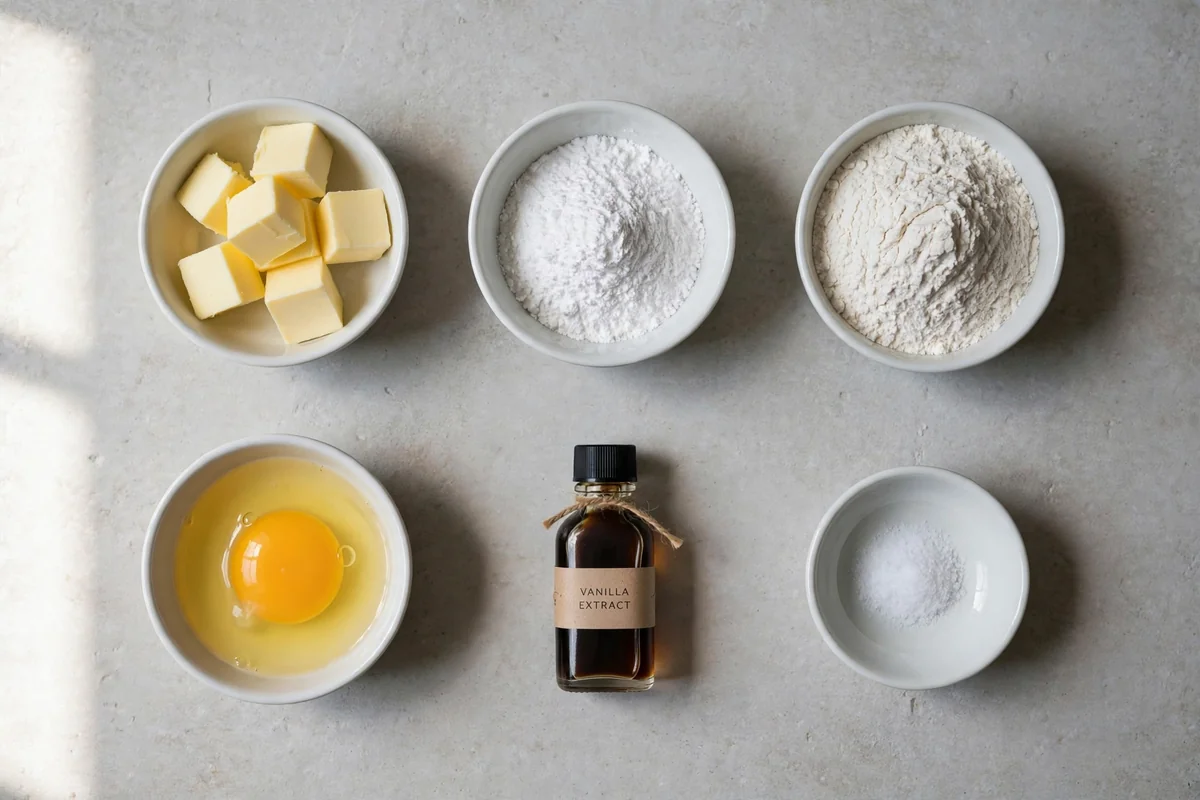
Ingredients for classic butter cookies laid out: cubed butter, powdered sugar, flour, egg, vanilla extract and salt
Detailed Step-by-Step Cooking Guide
1. Bring the butter to temperature
2. Cream the butter and sugar, briefly
3. Add the egg and vanilla
4. Mix the flour in by hand at the end
5. Pipe while the dough is still warm
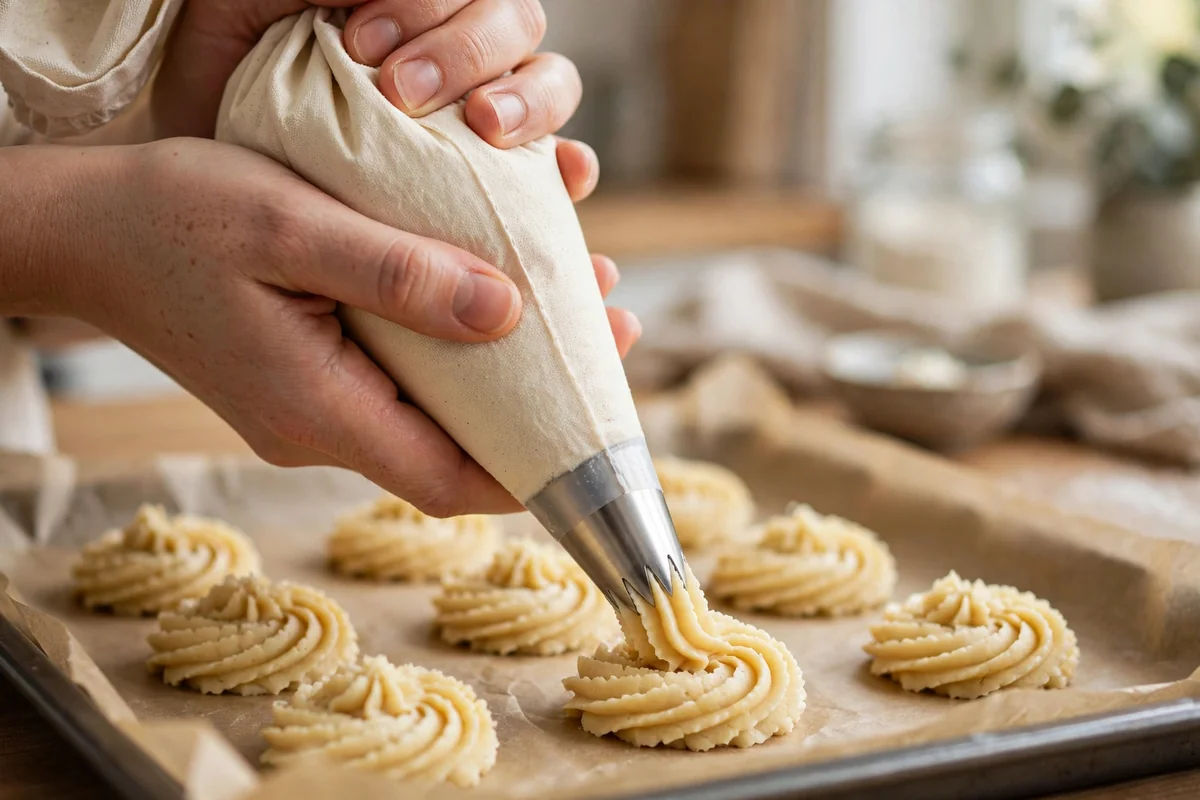
Piping Danish butter cookie swirls onto a baking sheet with a cloth piping bag and star tip
6. Chill the piped tray for 20 minutes
7. Bake and cool
Getting the Texture Right
Troubleshooting common butter cookie texture, piping, and spreading issues:
The butter was too warm, or it was over-creamed, or both. Re-chill the piped tray for 30 minutes and bake a test cookie before committing the batch.
Same cause as above, usually over-creaming. The ridge is held by cold fat, so anything that softens or aerates the butter rounds it off.
Too much flour, or the mixer ran too long after the flour went in. Weigh next time and finish by hand.
Dark or thin pans. Drop the oven by 15°F and double up the baking sheets.
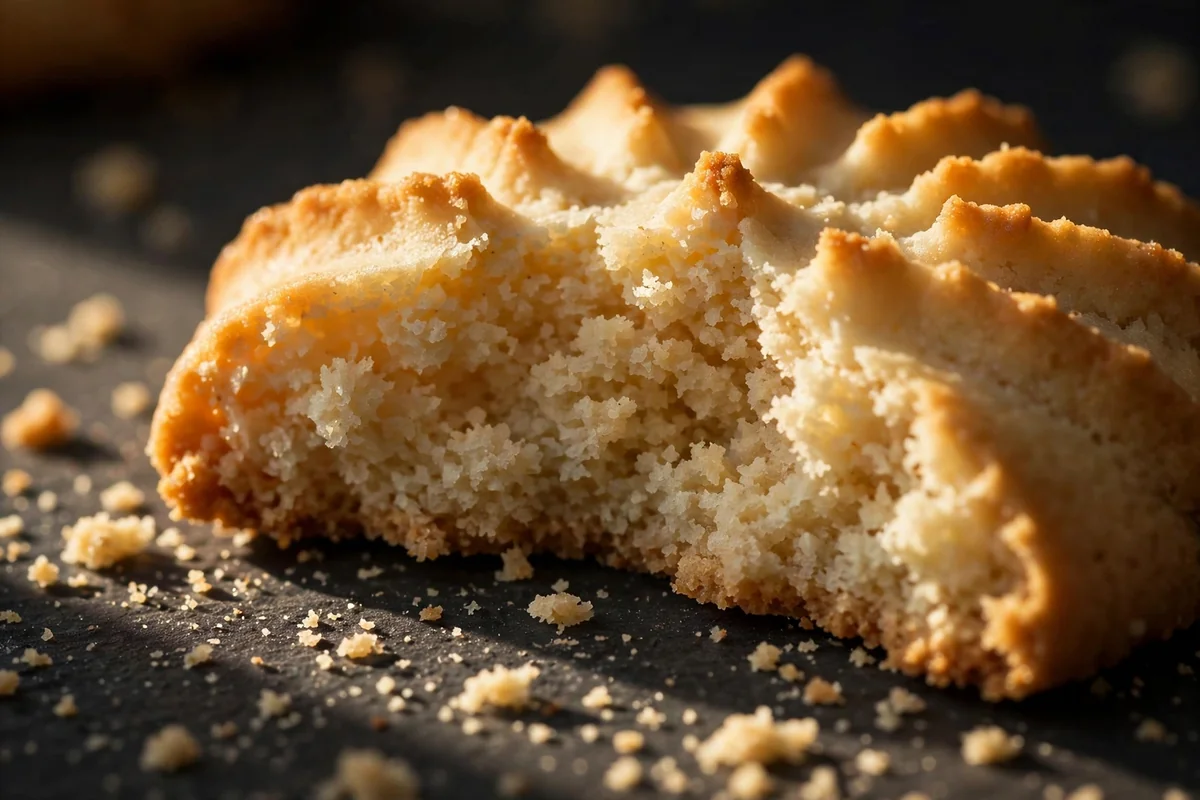
Close-up macro of a broken butter cookie showing short sandy melt-in-the-mouth texture
How to Use These Butter Cookies
How to Serve, Store & Reheat
Room temperature, with coffee or tea. Straight from the fridge they taste waxy because the butter has firmed up.
Airtight at room temperature for up to 10 days. Keep them away from anything soft, since they pull moisture from the air and lose their snap. A slice of bread in the tin does the opposite of what you want here, so leave it out.
Not needed, but if they have softened, 4 minutes at 300°F (150°C) brings the crispness back. Cool fully before storing again.
Yes, both ways. Freeze the baked butter cookies in a rigid container for up to 3 months and thaw uncovered at room temperature for an hour. You can also pipe the swirls onto a tray, freeze solid, bag them, and bake from frozen with 2 extra minutes.
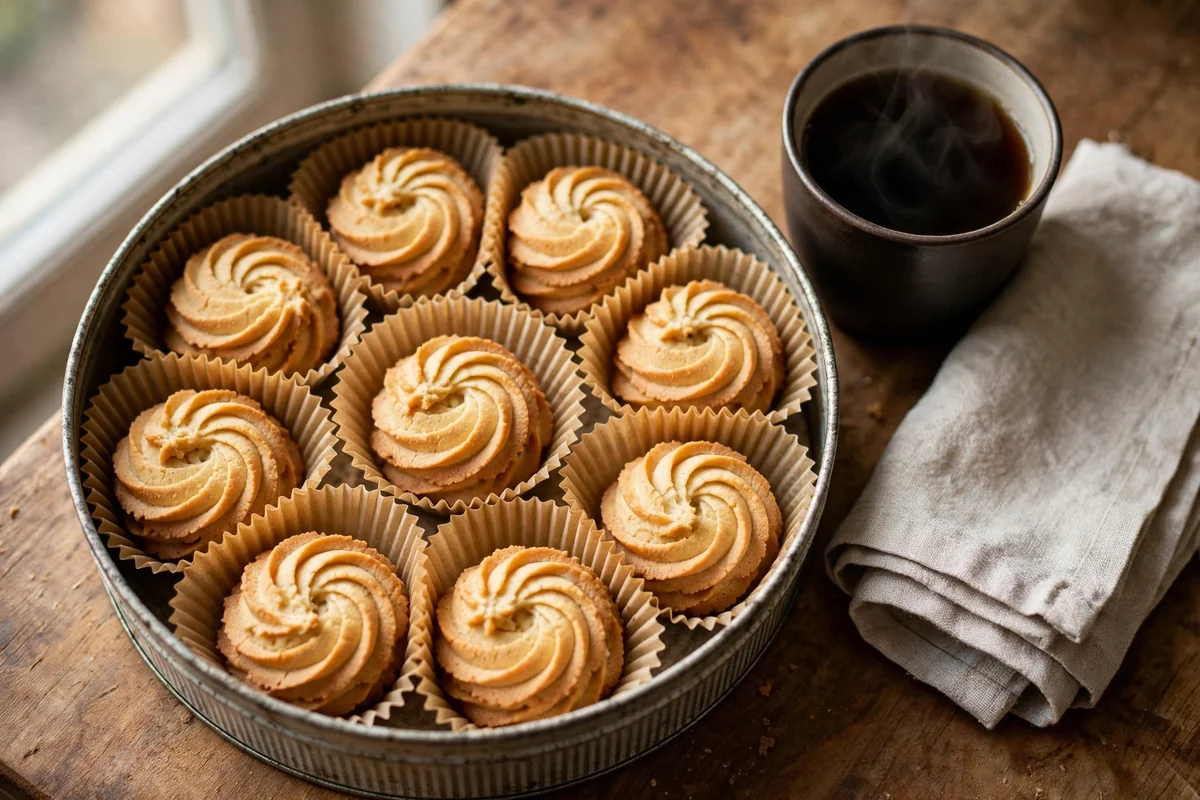
Classic butter cookies packed in a decorative round tin with paper cups next to black coffee
Dietary Variations
Swap the flour for a 1:1 gluten free blend that already contains xanthan gum, by weight not by cup. The dough pipes slightly stiffer, so add 2 teaspoons of milk.
Use a firm block-style vegan butter, not a tub spread. Tub spreads carry too much water and the cookies will spread badly.
Replace the egg with 3 tablespoons of milk or cream. You lose a little structure, so the swirl is softer, but the flavour holds.
Powdered sugar is doing two jobs that granulated cannot. It dissolves fully into cold fat, which is why the dough stays smooth enough to force through a star tip, and the 3 percent cornstarch it carries slightly dilutes the flour's protein.
Less available protein means less gluten, and less gluten is exactly what gives butter cookies that short crumb that collapses on the tongue instead of bending.
Allergen Notice: This recipe contains dairy (butter), egg, and wheat. Substitutions for each are listed above. Shared equipment and ingredient brands vary, so anyone cooking for a diagnosed allergy should check every label themselves.
Frequently Asked Questions
Recipe Visual Gallery (5 Full Photos)
Recipe Card & Steps
Ingredients Checklist
Click an item to check it off as you prep
- 1 cup (226 g)unsalted butter, at 65°F to 67°F
- 3/4 cup (90 g)powdered sugar
- 1/2 tspfine salt
- 1 largeegg, room temperature
- 2 tspalcohol-free vanilla extract
- 2 1/4 cups (270 g)all-purpose flour
- 1 to 2 tspmilk, only if the dough resists piping
- 2 tbspcoarse sanding sugar or sprinkles (optional)
Step-by-Step Instructions
Follow along and mark each step complete as you cook
Cut the butter into tablespoon pieces and let it sit 30 to 45 minutes until it takes a shallow dent under a finger without smearing.
Beat the butter alone 30 seconds until smooth. Add the powdered sugar and salt and beat on medium for exactly 2 minutes, until pale and smooth. Scrape the bowl.
Add the egg and vanilla. Mix on low about 30 seconds, just until combined.
Add the flour in two additions on the lowest speed. Stop while a little dry flour is still visible and finish folding with a spatula.
Fit a piping bag with a large open star tip about 1/2 inch across and fill it two-thirds full. Pipe 1.5 inch swirls onto parchment-lined sheets, 1 inch apart. If the dough will not move, work in the milk and continue.
Scatter sanding sugar or sprinkles over the swirls if using.
Refrigerate the piped sheets 20 minutes. Heat the oven to 350°F (177°C) during this time.
Bake 12 to 14 minutes, until the ridges are light golden brown and the centres look matte and set rather than glossy.
Cool on the sheet 5 minutes, then transfer to a wire rack to cool completely before storing.
Recipe Card Notes & Tips
- Weigh the flour if possible. A scooped cup can run 20 g heavy and will make the dough unpipeable.
- Freeze piped unbaked swirls solid, bag them, and bake from frozen with 2 extra minutes.
- Vanilla extract defaults to alcohol-free vanilla to remain halal-friendly.
Ratings & Reviews
Leave a Review
Made this recipe? Share your thoughts, tweaks, and honest rating with other home cooks!
Community Reviews (0)
You Might Also Enjoy
More delicious recipes in Desserts.