Baked Lemon Chicken Recipe with Crispy Skin
This lemon chicken recipe bakes bone-in thighs at high heat for shatter-crisp skin, with roasted garlic and a bright lemon pan sauce.
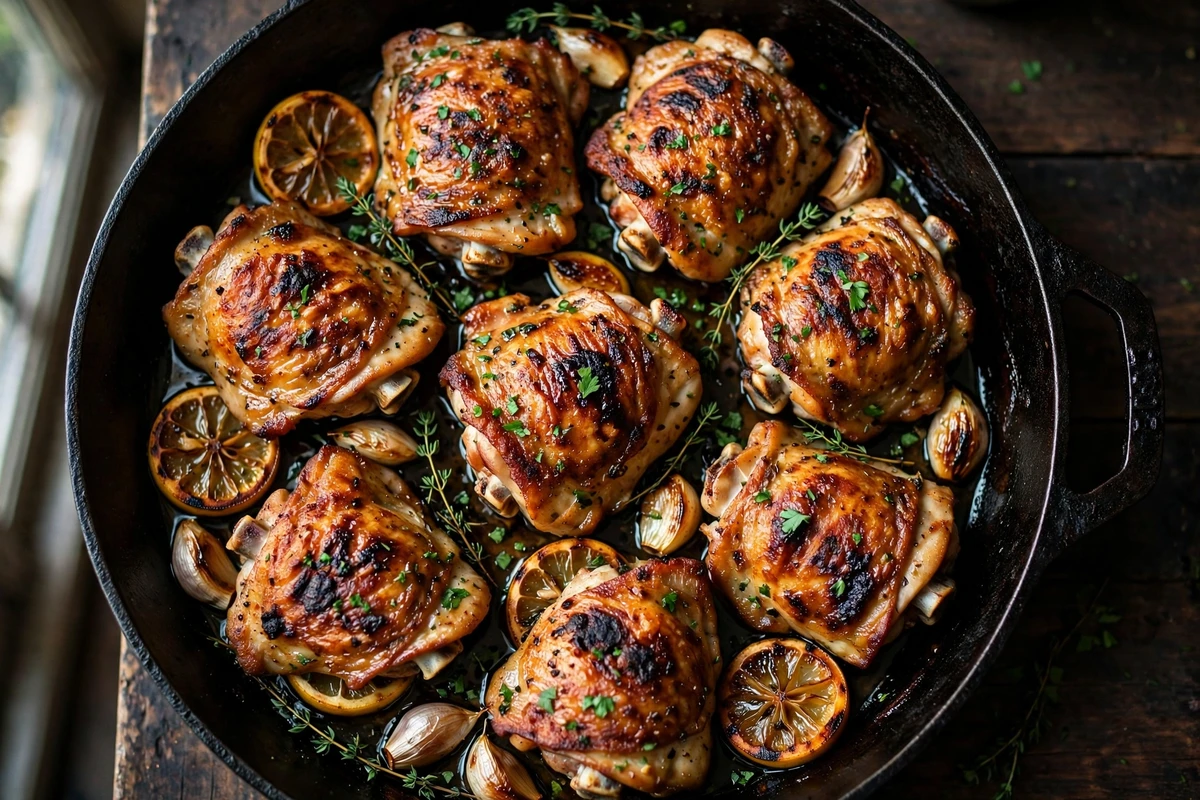
Fifteen minutes of active work is all this takes. Oven heat and rendered fat do the heavy lifting, delivering golden crackling skin and an effortless pan sauce built directly from the roasted drippings.
Why You'll Love This Recipe
- Fifteen minutes of real work. The oven handles the other 45, plus a quick 4-minute pan sauce.
- The skin genuinely crisps, because the thighs sit above the lemon and onion rather than swimming in liquid.
- One pan, and the sauce builds itself from the drippings.
- It reheats better than most roast chicken, since thigh meat stays juicy at 175°F.
Put the lemon slices under the chicken, never on top. Sliced lemon on top of the skin releases steam directly onto it, so the skin turns soft in exactly the places you wanted crisp, and the rind sitting in direct oven heat scorches into real bitterness.
Underneath, the slices sit in fat and drippings, mellow out, and perfume the sauce from below.
Read Before You Start
Salt the skin, then leave it alone. Thirty minutes uncovered at room temperature pulls surface moisture out and seasons the meat past the surface. Wet skin steams before it browns, and no oven temperature fixes that.
High heat from the start. Starting at 425°F and holding it there renders thigh fat fast enough to crisp the skin before the meat overcooks. A 375°F oven cooks the chicken through but leaves the skin pale and rubbery.
Ingredient Deep Dive & Notes
Bone-in, skin-on chicken thighs. The bone slows heat transfer so the meat stays juicy through the long roast, and the fat under the skin is what does the crisping. Boneless skinless thighs work for a rushed weeknight, but you lose both the crisp skin and the drippings that make the sauce.
Lemons, two of them. One gets zested and juiced, the other gets sliced. Buy unwaxed if you can find them, since you are roasting the peel and the wax can taste slightly off.
Garlic, left whole. Smashed cloves roast into something sweet and spreadable. Minced garlic at 425°F for 45 minutes just burns.
Yellow onion in thick wedges. It props the chicken up out of the liquid and breaks down into the sauce. Thin slices collapse and char.
Chicken stock. Low-sodium, so you control the seasoning after reducing. Check the label if you need the dish gluten-free, since some stocks carry wheat-based flavorings.
Honey, two teaspoons. Not to sweeten it. Two teaspoons across four servings is enough to round off the sharp edge of the lemon juice without anyone tasting sugar.
Dried oregano, not fresh. Dried oregano holds up to dry oven heat; fresh oregano turns black and tastes dusty.
Don't substitute: the fresh lemon juice. Bottled lemon juice is pasteurized, which strips the volatile aromatics and leaves flat sourness behind. In a dish where lemon is the entire point, that is the one swap that ruins it.
For a skillet version with a cutlet and a spooned sauce instead, see Garlic Butter Chicken. For something richer and tomato-based, explore our restaurant-style Butter Chicken.
Equipment Needed
- A 12-to-14-inch stovetop-safe cast iron skillet or a large shallow metal roasting pan (about 12x16 inches). Avoid small baking dishes that crowd eight thighs edge-to-edge. Glass and ceramic dishes hold heat differently, tend to give you paler skin, and cannot go directly on a stovetop burner for making the sauce.
- An instant-read thermometer. Thigh doneness by eye is guesswork.
- A fat separator or a large spoon for skimming the drippings.
- A medium saucepan (only required if roasting in a dish that is not safe for direct stovetop burners).
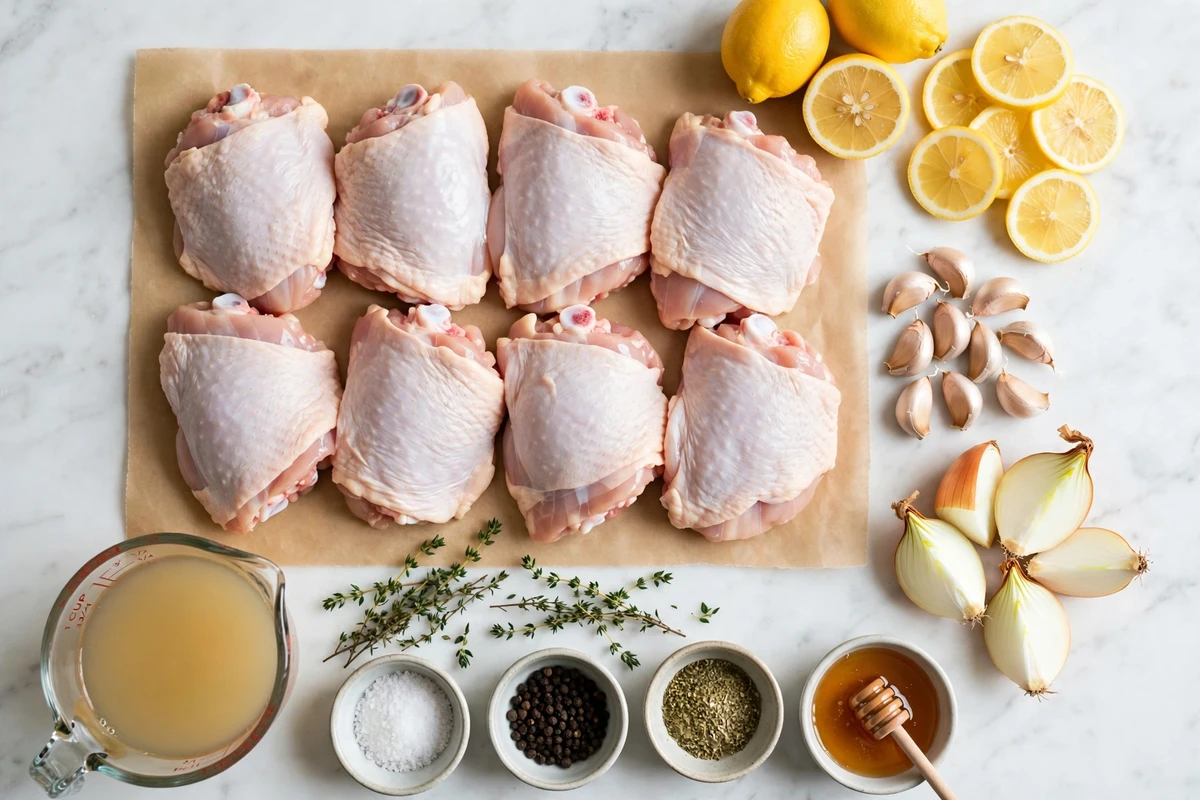
Raw ingredients for baked lemon chicken including bone-in chicken thighs, sliced lemons, garlic, onion, fresh thyme, chicken stock, honey, and seasonings
Detailed Step-by-Step Cooking Guide
Salt and rest the chicken
Heat the oven and build the base
Season and place the chicken
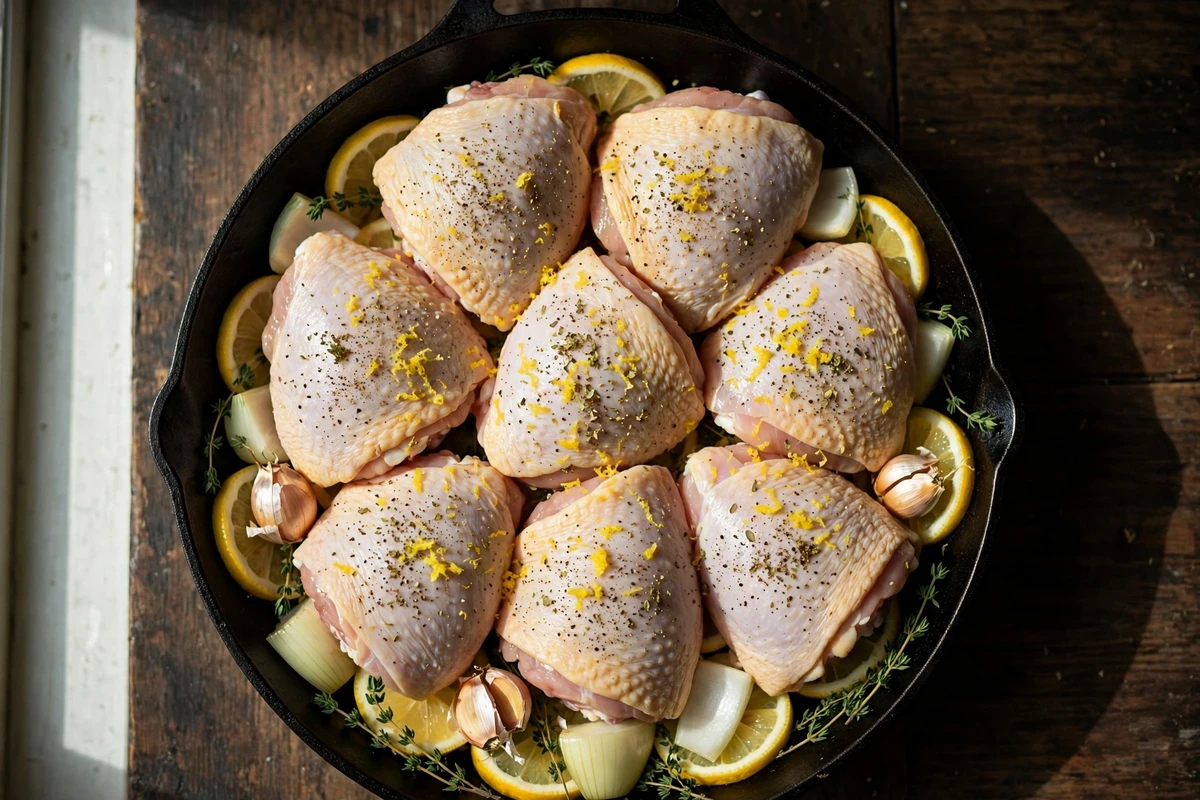
Seasoned chicken thighs rubbed with lemon zest and herbs arranged skin-side up over sliced lemons, onions, and garlic in a cast-iron skillet
Roast to temperature
Rest the chicken and skim the pan
Make the pan sauce
Getting the Crispy Skin Right
Crisp chicken skin is a game of moisture control and sustained high roasting heat.
Almost always moisture or overcrowding. Either the thighs went into the oven damp, or they were packed tightly so trapped moisture steamed the skin. Give the thighs the 30-minute uncovered salt rest, and use a pan large enough to leave at least half an inch of clearance between pieces.
Your oven runs hot on top. Drop the temperature to 400°F (200°C) and give it another 8 to 10 minutes, tenting loosely with foil only if the skin is already getting very dark.
Two likely causes: either the lemon slices took direct heat from the broiler and scorched, or fresh lemon juice was added while the pan was still boiling on the burner. Always stir in fresh lemon juice completely off the heat.
Not enough initial fat or liquid under the aromatics. A tablespoon of olive oil tossed with the lemon and onions prevents burning, as does using a heavy skillet rather than a thin baking sheet.
It is under-salted, not under-lemoned. Salt the reduced pan sauce right at the end and taste again before reaching for extra lemon juice.
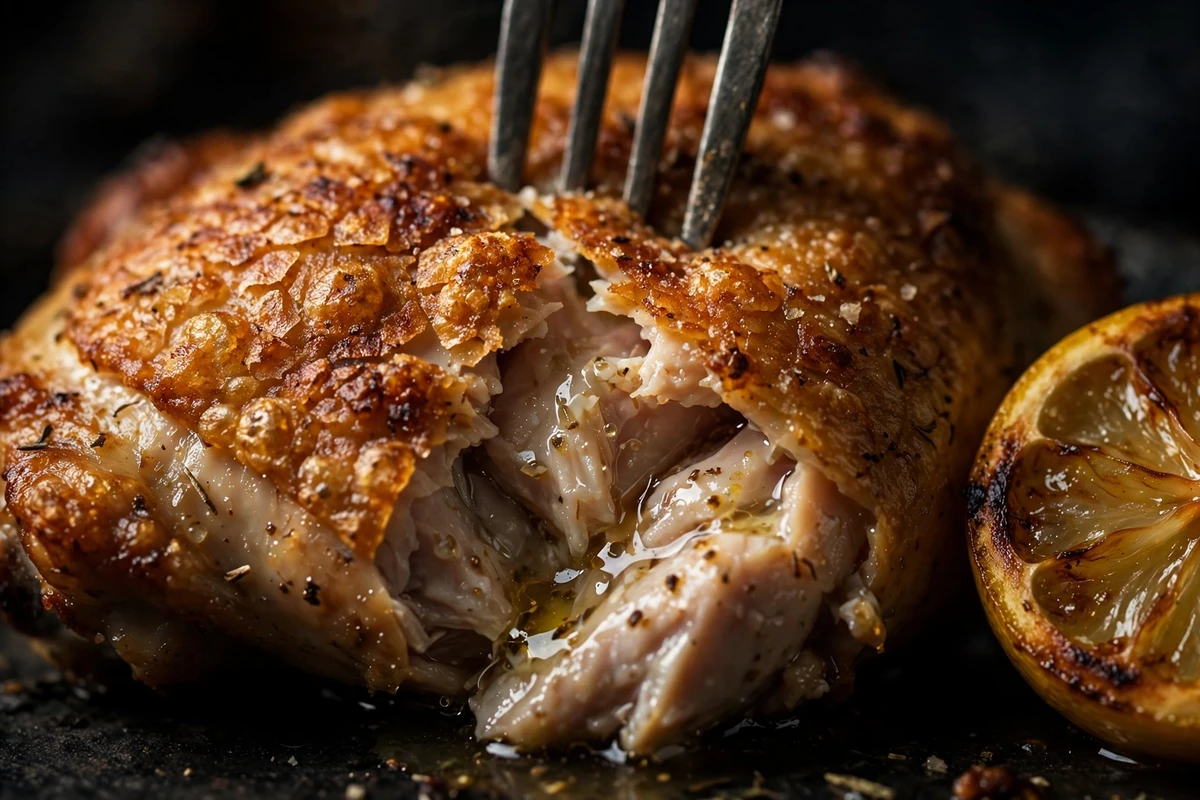
Fork piercing into shatteringly crispy golden baked chicken thigh skin with juicy meat and roasted lemon slice
How to Use the Lemon Pan Juices
How to Serve, Store & Reheat
Serve straight from the skillet or on a warm platter with the roasted lemon and onion still in it. It goes with almost any starch that absorbs sauce: rice, orzo, buttered noodles, fluffy baked potatoes in the oven with crispy skin, or crusty bread. A crisp side like Asian Cucumber Salad balances the richness of the skin.
Refrigerate leftover chicken and sauce in separate airtight containers for up to 3 days. Storing them in the same container softens the skin overnight, and it will not regain full crispness.
Reheat in the oven only. Bake at 400°F (200°C) on a wire rack set in a sheet pan for 10 to 12 minutes until the skin re-crisps and the meat is hot through to a safe minimum internal temperature of 165°F (74°C). Warm the pan sauce separately in a small saucepan over low heat and spoon it over the chicken at the table. Avoid the microwave, which turns crisp skin leathery.
Cooked chicken thighs freeze well for up to 2 months and the sauce freezes easily in a sealed container, but crisp skin will not survive freezing and thawing. If freezing leftovers, plan to shred the tender meat into casseroles or soups, and thaw overnight in the refrigerator before reheating.
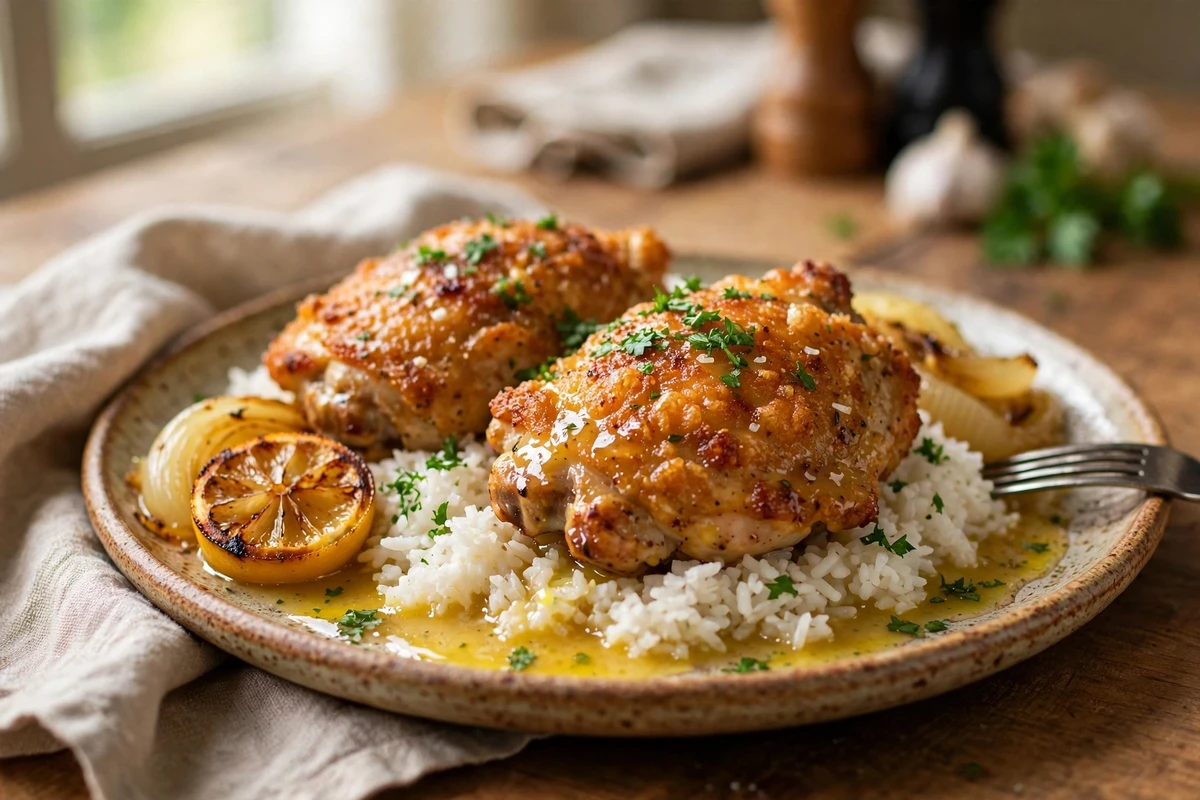
Plated baked lemon chicken thighs with crispy skin served over fluffy rice with pan sauce, roasted lemon wheel, and fresh parsley
Dietary Variations
Use 8 boneless skinless thighs, roast at 425°F (220°C) for 22 to 25 minutes to an internal temperature of 175°F (80°C). This creates a lighter meal without the crisp skin, while the pan sauce remains delicious.
Cut the salt rest to 1 teaspoon kosher salt and use no-salt-added chicken stock, seasoning the pan sauce to taste at the very end.
Toss 1.5 lb of halved baby potatoes with the onion and garlic at the start, spreading them around the chicken, and add 10 minutes to the roasting time. Reduce the stock to 1/2 cup since potatoes release cooking moisture.
Lemon juice heated for 45 minutes loses its freshness. The bright, floral high notes come from volatile citrus oils like citral that evaporate quickly under dry oven heat, while bitter pith compounds concentrate as moisture cooks off.
Splitting the lemon into three dedicated roles solves the problem: the zest provides oil-soluble lemon aromatics that endure high-heat roasting, the lemon rounds roasting underneath infuse mellow caramelized citrus into the drippings, and fresh raw juice stirred in off the heat at the very end restores vibrant acidity.
Frequently Asked Questions
Recipe Visual Gallery (5 Full Photos)
Recipe Card & Steps
Ingredients Checklist
Click an item to check it off as you prep
- 8bone-in, skin-on chicken thighs (about 3 lb / 1.35 kg)
- 2 tspkosher salt
- 3/4 tspfreshly ground black pepper
- 1 tspdried oregano
- Zest of 1 large lemon
- 1 tbspolive oil
- 1 largelemon, sliced into 1/4-inch rounds
- 8 clovesgarlic, peeled and smashed
- 1 mediumyellow onion, cut into thick wedges
- 4 sprigsfresh thyme
- 3/4 cuplow-sodium chicken stock
- 2 tsphoney
- 3 tbspfresh lemon juice (from the zested lemon)
- 2 tbspchopped fresh parsley
Step-by-Step Instructions
Follow along and mark each step complete as you cook
Pat the chicken thighs completely dry. Season all over with the kosher salt, set skin side up on a plate, and rest uncovered at room temperature for 30 minutes.
Heat the oven to 425°F (220°C) with a rack in the upper third.
Scatter the lemon slices, smashed garlic, onion wedges, and thyme sprigs across a 12-to-14-inch oven-safe skillet or roasting pan. Drizzle with the olive oil and toss to coat, then spread into an even layer.
Pat the chicken dry again. Rub the skin with the black pepper, dried oregano, and lemon zest. Place the thighs skin side up on top of the aromatics, spaced apart with at least 1/2 inch clearance. Leave the skin uncovered.
Roast for 40 to 45 minutes, until the skin is deep golden brown and an instant-read thermometer in the thickest part of a thigh reads 175°F to 180°F (80°C to 82°C). If the skin is still pale, broil 2 to 3 minutes, watching constantly.
Transfer the chicken to a plate and rest 5 minutes.
Tilt the skillet and spoon off most of the clear rendered fat, leaving the browned drippings. If stovetop-safe, set the pan over medium heat (or transfer drippings to a saucepan), add the stock and honey, and scrape up the browned bits. Simmer 3 to 4 minutes until reduced by about a third.
Mash 2 to 3 of the roasted garlic cloves into the sauce. Remove from the heat completely, then stir in the fresh lemon juice and parsley. Taste and add salt if needed.
Spoon the sauce, onion, and roasted garlic over or around the chicken and serve.
Recipe Card Notes & Tips
- The salt rest is essential: leaving the salted skin uncovered for 30 minutes at room temperature (or up to 12 hours refrigerated) pulls out moisture for genuinely crackling skin.
- Ensure the pan is large enough (12-to-14 inches or a metal roasting pan) so thighs have at least 1/2 inch space and do not crowd and steam.
- If using a glass, ceramic, or non-stovetop-safe roasting pan, always transfer the degreased drippings to a saucepan before making the sauce on the stove.
- Never add the fresh lemon juice while the sauce is actively boiling on the burner; stir it in off the heat to preserve bright aromatics without bitterness.
- For chicken breasts: swap in bone-in, skin-on breasts, roast at 400°F (200°C), and ensure they reach a safe internal temperature of 165°F (74°C). Thighs are best at 175°F to 180°F (80°C to 82°C) where connective tissue breaks down.
- Reheat leftovers in an oven at 400°F until reaching an internal temperature of 165°F (74°C) to restore crispy skin.
- To make gluten-free, use certified gluten-free chicken stock.
Ratings & Reviews
Leave a Review
Made this recipe? Share your thoughts, tweaks, and honest rating with other home cooks!
Community Reviews (0)
You Might Also Enjoy
More delicious recipes in Main Dishes.