Snickerdoodle Cookies Recipe with Soft, Chewy Centers
Soft, chewy snickerdoodle cookies with crackly cinnamon sugar tops. Cream of tartar tang, no chilling needed, and exact cues so they never bake flat.
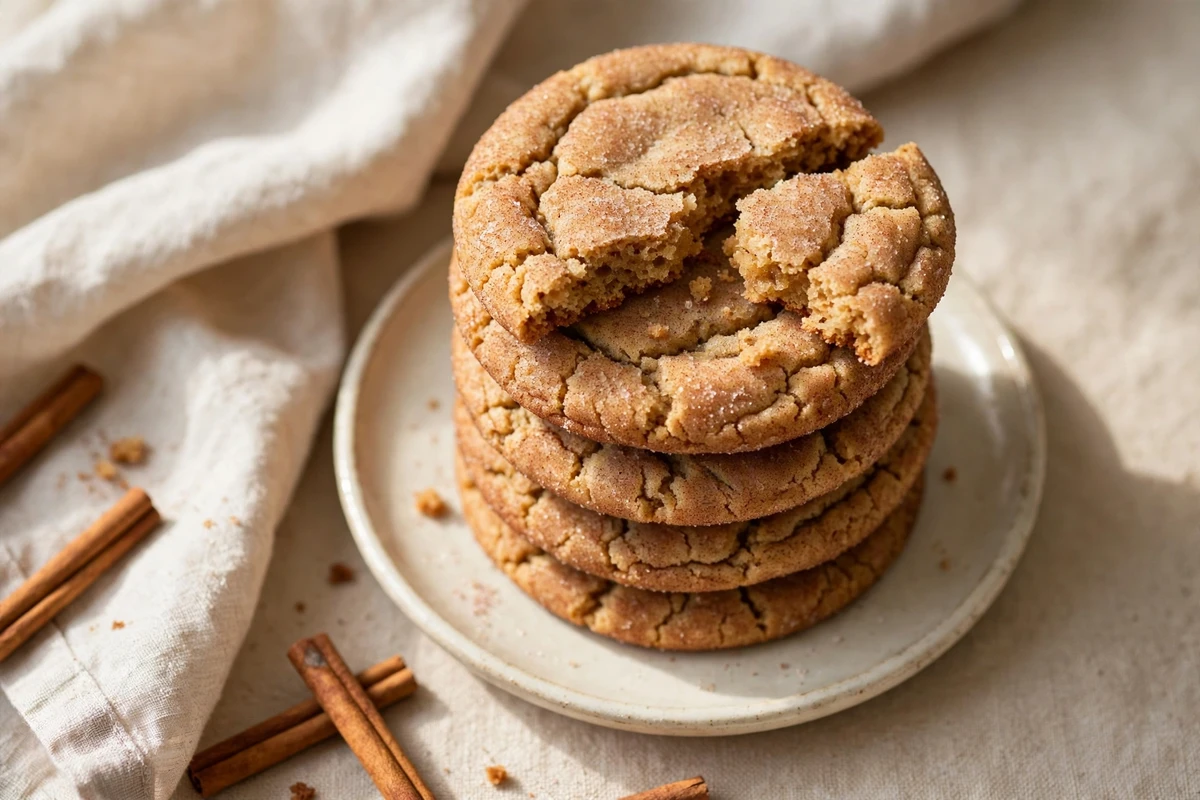
No chilling, no mixer gymnastics, about 55 minutes start to finish.
Why You'll Love This Recipe
- Pantry ingredients only, apart from the cream of tartar
- No dough chilling, so the first sheet is out of the oven in half an hour
- The dough balls freeze raw, which means two cookies on a Tuesday night without making a whole batch
- Makes 30, and they stay soft for four days in a sealed container
Here's the one thing nobody tells you: at the eight minute mark, pull the sheet out and drop it flat onto the stovetop from about four inches up.
The puffed dome collapses, the set surface tears, and you get those deep crackles that the coating settles into. Slide it back in for the last minute or two.
Cookies that never get knocked down often stay smooth and slightly cakey, and no amount of extra baking fixes that.
Read Before You Start
Butter temperature matters more than anything else here. It should be around 65°F, cool enough that your finger leaves a dent but does not sink in. Butter that has gone glossy and soft on a warm counter cannot hold air when you cream it, and the cookies spread into thin discs before the structure sets. If yours is too soft, cut it into cubes and put it back in the fridge for ten minutes.
Weigh the flour, or spoon it into the cup. Scooping the measuring cup straight through the bag packs in an extra 30 to 40 grams, and that single habit is behind most cakey, dry, dome-shaped snickerdoodle cookies. 345 grams is the number.
Ingredient Deep Dive & Notes
Cream of tartar is doing two jobs. It reacts with the baking soda for lift, and it adds the faint sour note that makes the cookie taste like a snickerdoodle instead of a cinnamon cookie. Don't substitute baking powder unless you have to. It leavens fine, but the tang disappears and you lose the thing you came for. Two teaspoons is correct for this quantity of flour and will not taste sharp once baked.
Unsalted butter, one cup. Salted butter works if that's what you have, but drop the added salt to a quarter teaspoon.
Granulated sugar only. Brown sugar sounds like a good idea for chewiness and it is not. The extra moisture and molasses turn the cookie soft in a cakey direction and muddy the cinnamon.
Eggs at room temperature. Cold eggs seize the creamed butter into curdled-looking flecks. Sit them in warm tap water for five minutes if you forgot.
Vanilla extract, two teaspoons. Standard extract is alcohol-based; alcohol-free vanilla or vanilla bean paste substitutes one for one if you'd rather avoid it.
Cinnamon for the coating. Two and a half teaspoons to a quarter cup of sugar is a heavier ratio than most recipes use, on purpose. The coating is a thin layer on the outside of a very sweet dough, so a timid ratio reads as plain sugar.
If you love classic bakery cookies with rich, chewy textures, explore our bakery-tested Chewy Peanut Butter Cookies and festive Christmas Sugar Cookies.
Equipment Needed
- Digital scale. The single best fix for inconsistent cookies.
- 1.5 tablespoon cookie scoop (about 38 grams of dough). Hand-rolling works, but uneven balls bake unevenly.
- Light-colored aluminum baking sheets. Dark nonstick pans absorb more heat and over-brown the bottoms.
- Parchment paper. Not silicone mats, which insulate slightly and give you a paler, softer bottom.
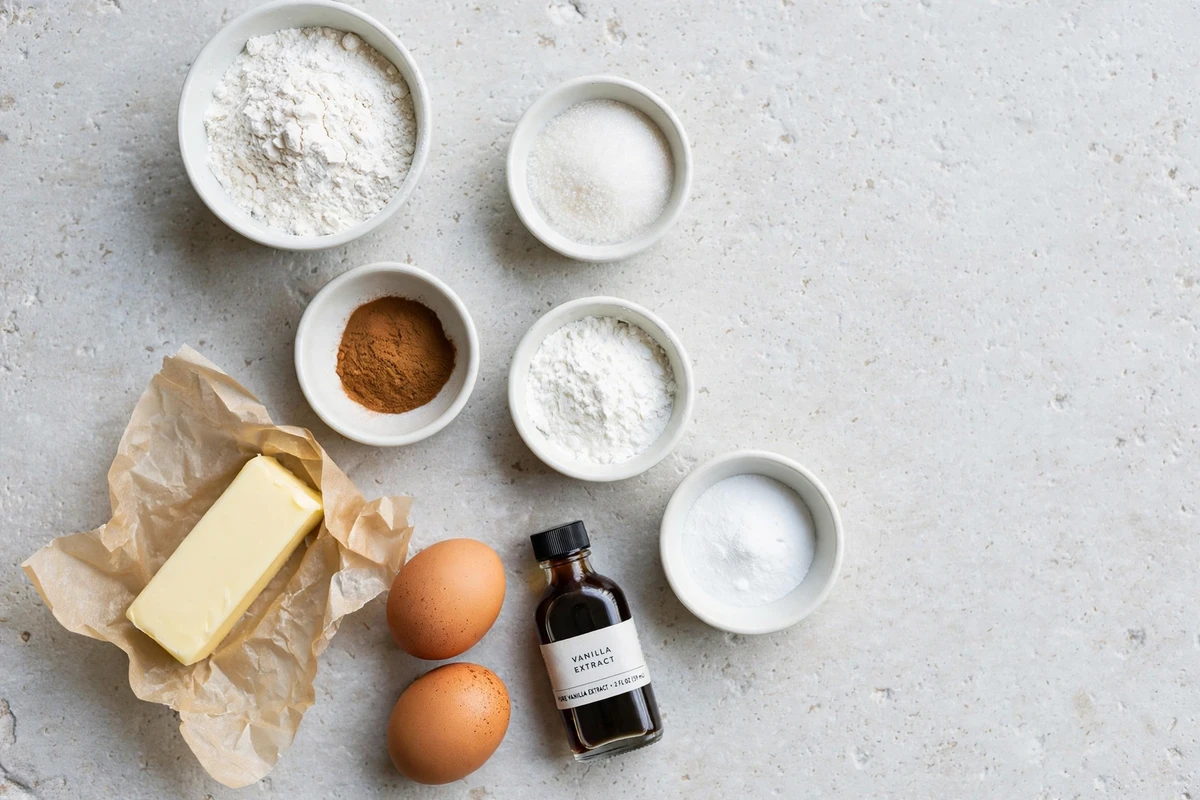
Ingredients for snickerdoodle cookies including flour, butter, sugar, eggs, cinnamon, cream of tartar, baking soda, and vanilla
Detailed Step-by-Step Cooking Guide
Heat the oven and line the sheets
Whisk the dry ingredients thoroughly
Cream the butter and sugar for two to three minutes
Beat in the eggs and vanilla
Add the flour and stop early
Scoop, then roll generously

Rolling cookie dough portions in cinnamon sugar coating on a plate
Bake nine to ten minutes and pull them early
Rest on the sheet for five minutes
Getting the Chewy Center and Crackly Top Right
Finished snickerdoodle cookies should sit about a quarter inch thick, wrinkled and cracked across the top, with a pale gold ring at the edge and a center that stays matte rather than shiny. Bend one in half after ten minutes and it should give before it snaps.
Butter was too warm, or the sheet was still hot from the last batch. Never scoop onto a warm pan. Keep a third pan in rotation, or run the used one under cold water and dry it. If your kitchen is warm, chill the scooped balls for 30 minutes before rolling and baking.
Too much flour, almost every time. Weigh it.
Either they were not knocked down mid-bake, or the dough was overmixed after the flour went in.
Overbaked by two or three minutes. The window between soft and sandy is genuinely narrow at 375°F, so set a timer for eight minutes and watch from there.
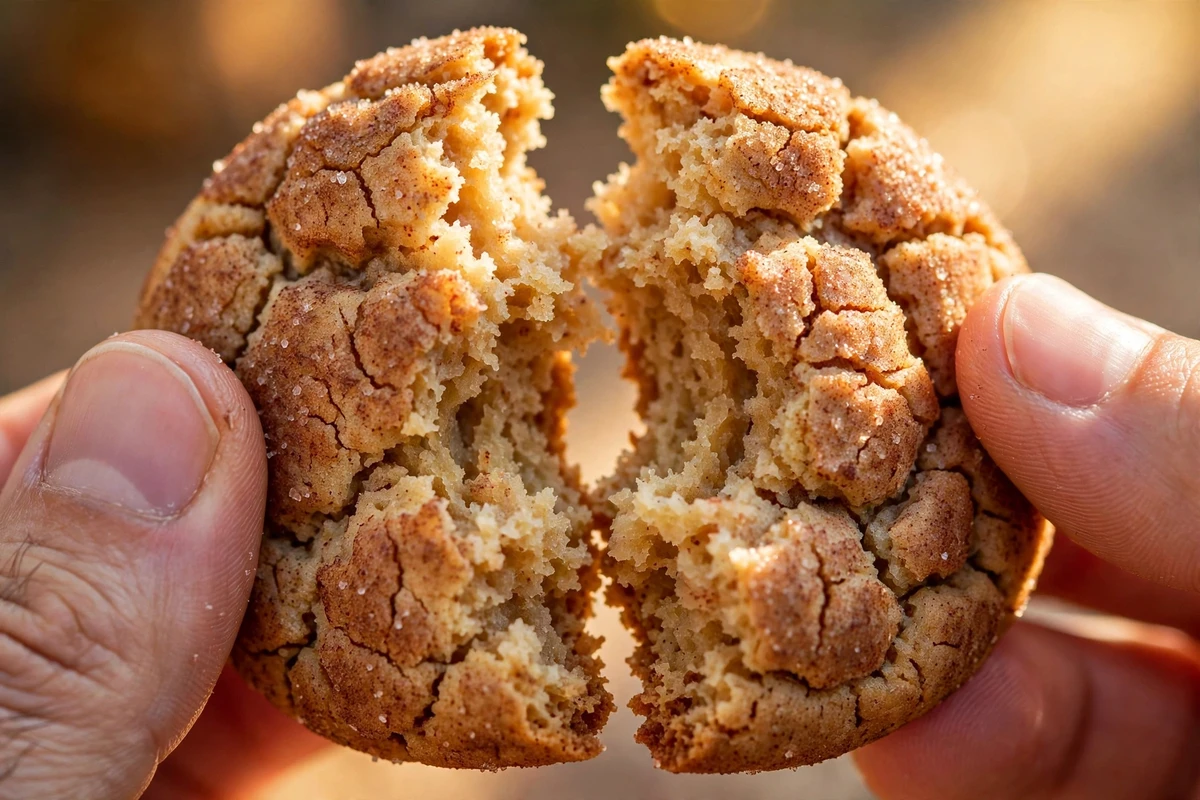
Breaking open a warm chewy snickerdoodle cookie showing the soft center and cracked cinnamon sugar crust
How to Use Snickerdoodle Cookies Beyond the Cookie Jar
How to Serve, Store & Reheat
Best about 20 minutes out of the oven, when the center is still soft but no longer fragile. Cold milk or black coffee; the cinnamon needs something plain against it.
Airtight container at room temperature, four to five days. Adding a slice of sandwich bread to the container keeps them soft past day two. Do not refrigerate. It dries them out faster than the counter does.
Eight to ten seconds in the microwave brings back the just-baked texture. Any longer and the sugar gets hot enough to turn the cookie tough as it cools.
Baked cookies freeze for three months in a sealed container with parchment between layers, thawing at room temperature in about 30 minutes. Raw scooped balls freeze better: freeze them uncoated on a tray, bag them, and roll in cinnamon sugar straight from frozen just before baking, adding two minutes to the bake time.
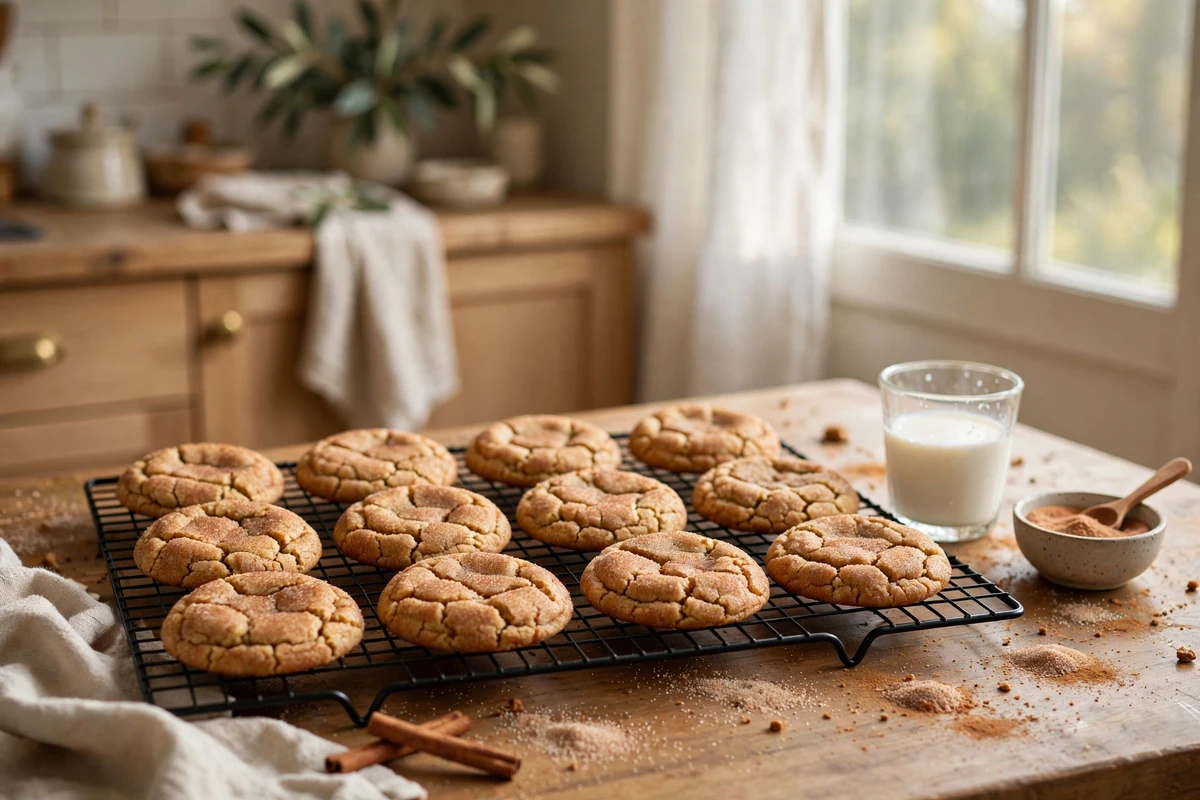
Freshly baked snickerdoodle cookies cooling on a wire rack next to a glass of cold milk and cinnamon sugar
Dietary Variations
Swap the flour for a 1:1 gluten-free baking blend that already contains xanthan gum, by weight rather than volume. Let the scooped dough sit 20 minutes before baking so the starches hydrate, otherwise the cookies bake gritty.
Use stick-form vegan butter, not the soft tub kind, which carries too much water. Chill the dough 30 minutes before scooping; plant butters soften faster in the oven and will spread without it.
Stick vegan butter plus two flax eggs (2 tablespoons ground flaxseed in 6 tablespoons water, rested 10 minutes). The cookies come out denser and a shade darker, and they need the full 30 minute chill.
Cream of tartar is an acid (potassium bitartrate), and its job in this dough is to react with baking soda for lift while lowering the pH. That lower pH is also why the cookies stay pale and set fast instead of browning and spreading, which is the real mechanism behind the classic snickerdoodle look.
Allergen Notice: This recipe contains wheat (gluten), dairy, and eggs. Gluten can be replaced with a 1:1 gluten-free blend, dairy with stick-form vegan butter, and eggs with flax eggs as described above. Check labels on all baking ingredients.
Frequently Asked Questions
Recipe Visual Gallery (5 Full Photos)
Recipe Card & Steps
Ingredients Checklist
Click an item to check it off as you prep
- 2¾ cups (345 g)all-purpose flour, spooned and leveled
- 2 tspcream of tartar
- 1 tspbaking soda
- ½ tspfine salt
- 1 cup (226 g)unsalted butter, softened to about 65°F
- 1½ cups (300 g)granulated sugar
- 2 largeeggs, room temperature
- 2 tspvanilla extract (or alcohol-free vanilla)
- ¼ cup (50 g)granulated sugar (for coating)
- 2½ tspground cinnamon (for coating)
Step-by-Step Instructions
Follow along and mark each step complete as you cook
Preheat the oven to 375°F (190°C) with a rack in the center position. Line two baking sheets with parchment paper.
Whisk the flour, cream of tartar, baking soda and salt together in a medium bowl for about 20 seconds, until evenly combined.
Beat the butter and granulated sugar on medium speed for 2 to 3 minutes, until pale and fluffy. Do not beat longer.
Add the eggs one at a time, beating until each is fully incorporated, then beat in the vanilla. Scrape the bowl.
Add the flour mixture on low speed and mix just until no dry streaks remain, about 30 seconds. Finish folding by hand with a spatula, scraping the bottom of the bowl.
Stir the coating sugar and cinnamon together in a small bowl.
Scoop 1.5 tablespoon portions of dough, roll each into a ball, then roll in the cinnamon sugar to coat completely. Place 3 inches apart, no more than 12 per sheet.
Bake one sheet at a time for 9 to 10 minutes. At the 8 minute mark, remove the sheet and drop it flat onto the stovetop from about 4 inches up to collapse the domes, then return it to the oven.
Pull the cookies when the edges look set and the centers are still puffed and pale. They will look underbaked.
Rest on the hot sheet for 5 minutes, then transfer to a wire rack to cool completely. Cool the sheet fully before scooping the next batch.
Recipe Card Notes & Tips
- Weigh the flour if you can. Scooping the cup through the bag adds enough extra flour to turn these cakey.
- Raw dough balls freeze well uncoated. Roll them in cinnamon sugar straight from frozen and add 2 minutes to the bake.
- Standard vanilla extract is alcohol-based; alcohol-free vanilla or vanilla bean paste substitutes 1:1.
Ratings & Reviews
Leave a Review
Made this recipe? Share your thoughts, tweaks, and honest rating with other home cooks!
Community Reviews (0)
You Might Also Enjoy
More delicious recipes in Desserts.

Classic Butter Cookies Recipe