No-Spread Christmas Sugar Cookies Recipe
You cut a sharp-pointed star, you pull a puffy blob out of the oven. Skip the leavening, cream for 90 seconds instead of five minutes, and freeze the cut shapes before they bake, and the star stays a star.

Both of those are right for a chewy drop cookie. Both of them are why your cutter shapes disappear. Skip the leavening, cream for 90 seconds instead of five minutes, and freeze the cut shapes before they bake, and the star stays a star.
Why You'll Love This Recipe
- Edges stay sharp enough that a snowflake still reads as a snowflake after baking
- The dough gets rolled before it chills, so it never cracks at the edges when you roll it
- Dough freezes for three months, which turns December baking into a one-hour job instead of an afternoon
- Royal icing dries hard and matte, so the cookies can be stacked, boxed and posted
Freeze the cut shapes, not the dough ball. Once the cookies are cut and on the parchment-lined baking sheet, put the whole sheet in the freezer for 15 minutes while the oven heats.
This is a different thing from chilling the dough. Solid frozen butter takes several minutes longer to melt in the oven, and those extra minutes are exactly what the flour and egg need to set the edge in place.
Chilled dough that then sits on the counter for 20 minutes while you cut the rest of the batch has lost the entire benefit by the time it goes in.
Read Before You Start
Roll the dough before you chill it, not after. Almost every recipe tells you to chill a dough ball and then roll it. Cold stiff dough cracks at the edges and forces you to work it back together, which develops gluten and makes the cookies tough. Roll the soft dough flat between two sheets of parchment first, then slide the whole slab into the fridge. You come back to a chilled sheet that's already at the right thickness and ready to cut.
Butter at 65°F, not room temperature. Press a finger into it. It should hold the dent and still feel cool, not greasy or shiny. Warm soft butter starts melting in the oven before the flour has set any structure, and melted fat is what carries the dough outward.
Ingredient Deep Dive & Notes
All-purpose flour (3 cups / 360g). Measure by weight if you can. A heavy cup of scooped flour changes the ratio more than any other ingredient here, and too little flour is the second most common cause of spreading after over-creaming. For drop cookies with intentional chew rather than sharp edges, see our Chewy Peanut Butter Cookies.
No baking powder or baking soda. This is deliberate and it is the part people delete by accident when they adapt a recipe. Leavening makes the cookie rise and then slump outward, which rounds off every corner your cutter made. Without it you get a flat, dense, sharp-edged cookie, which is the point.
Unsalted butter (1 cup / 226g). Full butter, no shortening. Shortening does hold shape better, but it coats the tongue and mutes the flavour, and there's no need for it once the temperature and creaming time are under control.
Granulated sugar (1 cup / 200g). Powdered sugar makes a softer, more crumbly cookie that doesn't hold a crisp edge as well. Granulated is the right call for cut-outs.
Alcohol-free vanilla (2 tsp). Standard vanilla extract is alcohol based, so alcohol-free vanilla is the default here. It behaves identically in the dough.
Meringue powder (3 Tbsp, for the icing). This is what makes royal icing dry hard and stackable, and it avoids the raw egg white question entirely. Buttercream will not do this job. It stays soft, smudges in a box, and the cookies cannot be stacked.
Sprinkles and sanding sugar. Some brands use confectioner's glaze, which is shellac based, so check the label if that matters in your kitchen.
Don't substitute: almond extract into the default dough without noting two things. It's alcohol based like standard vanilla, and it's a nut-allergy flag on a cookie that gets handed around at parties. If you want that classic bakery flavour, use 1/2 teaspoon of an alcohol-free almond flavouring and label the plate.
Equipment Needed
- Two large sheets of parchment for rolling, plus more for lining pans
- Rolling pin guides or two 1/4 inch wooden strips, which keep the thickness even so the whole tray bakes at the same rate
- Metal cutters rather than plastic, since a thinner cutting edge gives a cleaner line
- Piping bags with a small round tip, or squeeze bottles, for the icing
- Light coloured baking sheets. Dark pans absorb more heat and brown the bottoms before the cookies have set
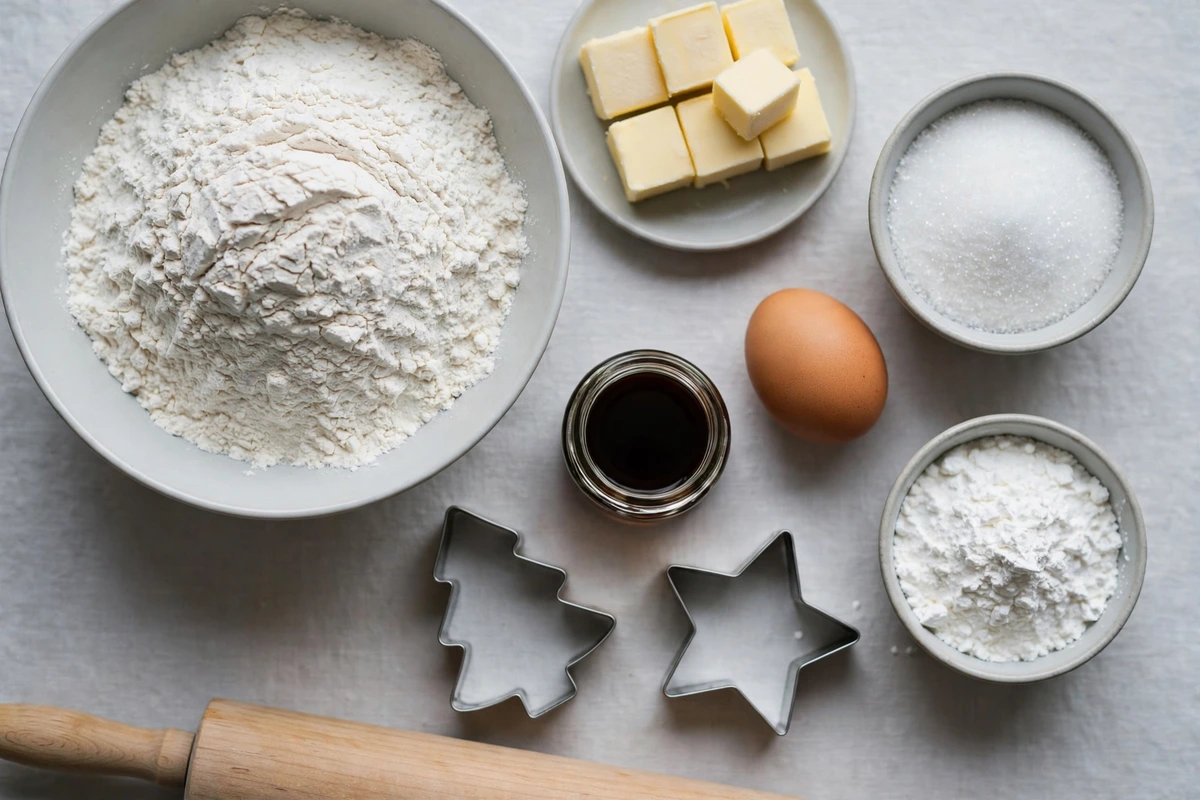
Ingredients for Christmas sugar cookies including flour, butter, sugar, egg, vanilla, and royal icing components
Detailed Step-by-Step Cooking Guide
Preparation & Setup
Whisk the dry ingredients
Cream for 90 seconds, then stop
Add the egg and vanilla
Add the flour in two additions
Roll now, chill after
The step most people skip
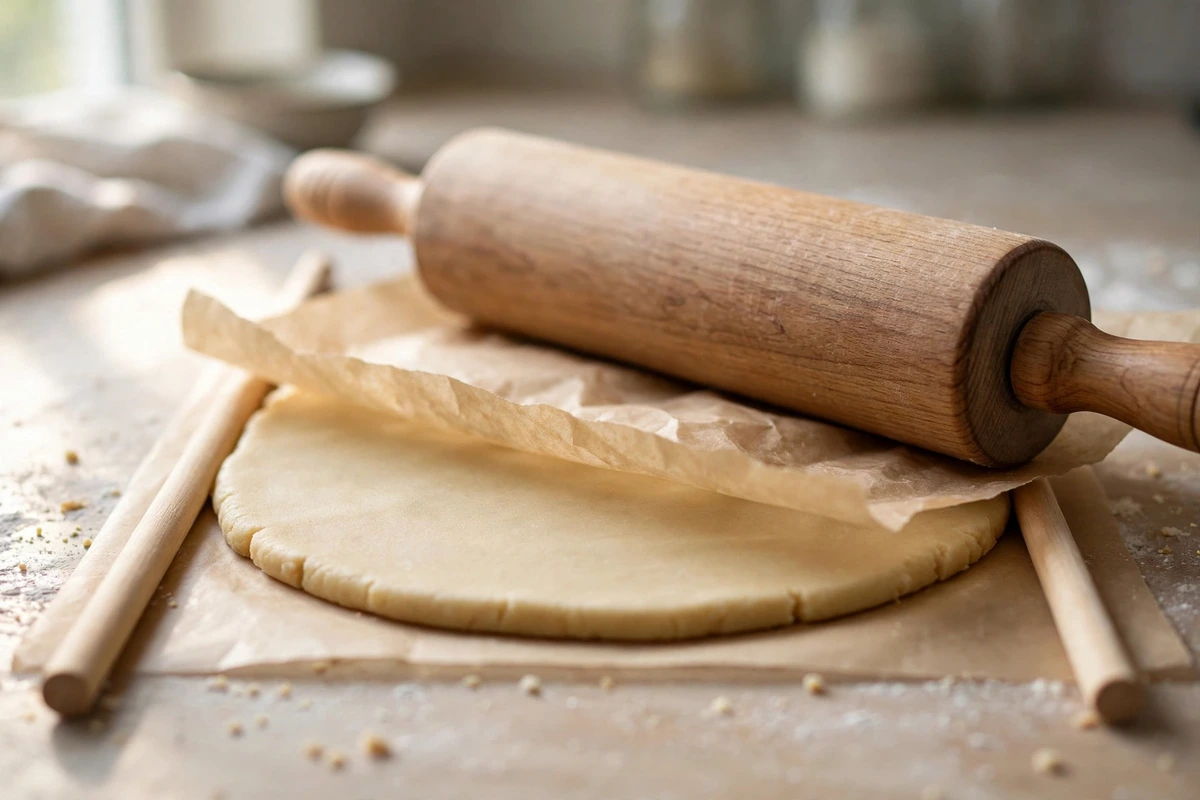
Rolling dough flat between parchment paper and cutting shapes
Bake until matte, not golden
Mix and use the royal icing
Getting the Sharp Edges Right
Work backwards through three things. Was the butter cool to the touch, did you stop creaming at 90 seconds, and did the cut shapes go into the freezer. If all three were right, weigh your flour. A light cup can be 20g short, and across three cups that's most of a quarter cup missing.
Dark or non-stick pans are the usual cause, and so is a rolled thickness under 1/4 inch. Drop the oven to 340°F and add a minute if your oven runs hot.
Too much mixing after the flour went in, or too much re-rolling. Scraps can be re-rolled twice. After that the dough has been worked enough that the texture noticeably changes, so bake the last odd pieces as plain rounds and keep them for yourself.
Air bubbles. After flooding, tap the cookie flat on the counter two or three times and pop any visible bubbles with a toothpick within the first minute, while the surface is still wet.
Humidity, most of the time. A fan blowing gently across the tray for the first hour fixes it, and so does moving the tray somewhere cooler and drier.
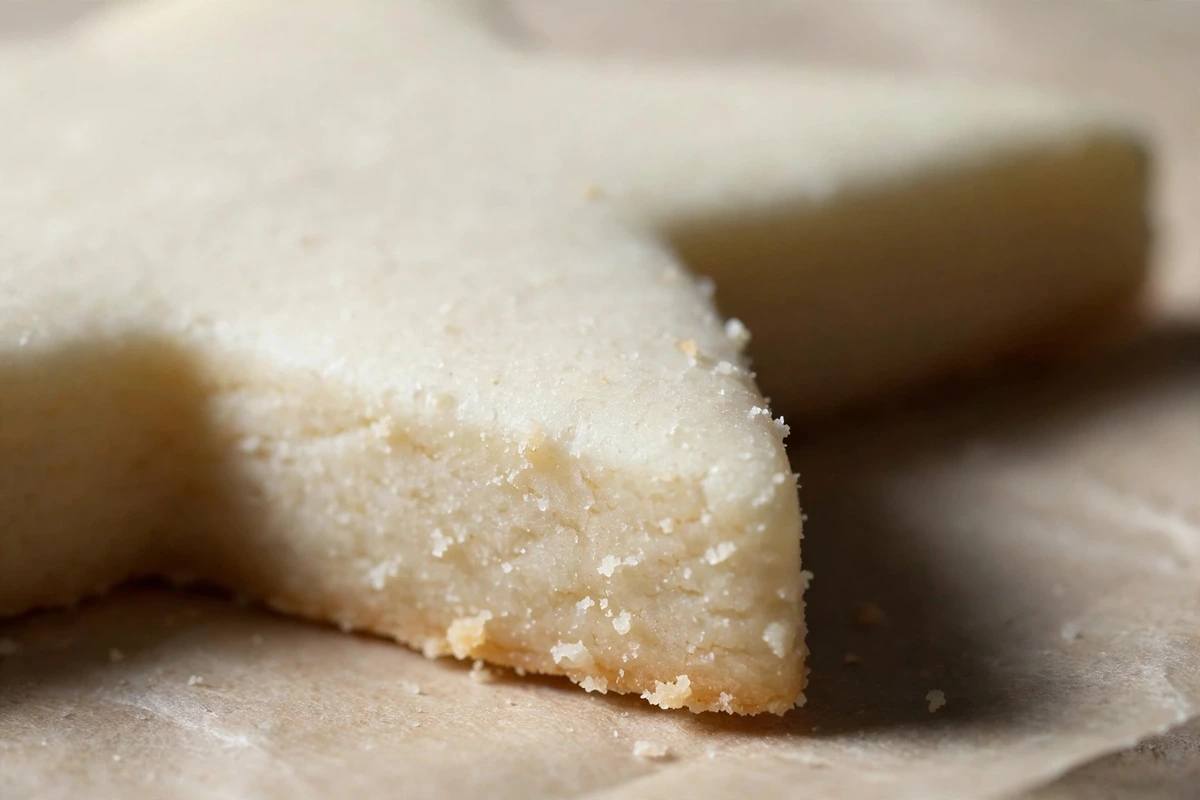
Baked Christmas sugar cookie showing crisp sharp edges with no spreading
How to Use These Cookies
How to Serve, Store & Reheat
Let decorated cookies sit uncovered until the icing is fully hard, then arrange them on a flat tray rather than a mound. Piling soft-iced cookies is how a tree ends up printed on the back of a star. Arrange them on holiday dessert platters alongside cups of festive Christmas Punch.
Airtight at room temperature for up to a week, with parchment between layers. Do not refrigerate decorated cookies. Condensation forms on the icing as they come back to room temperature and the colours bleed into each other.
Not needed, and not recommended once they are iced. Undecorated cookies can be refreshed for 3 minutes in a 300°F oven and cooled again before decorating.
Yes, in two ways. Freeze the rolled dough slabs flat, wrapped, for up to 3 months and cut them straight from the fridge after an overnight thaw. Baked undecorated cookies also freeze for 3 months. Decorated cookies freeze less reliably, so if you must, freeze them fully hardened in a single layer and thaw them still sealed in the container so condensation stays on the lid rather than on the icing.

Decorated Christmas sugar cookies arranged in a festive gift box
Dietary Variations
A firm block-style plant butter works, not a soft tub spread. Chill the cut shapes for 20 minutes instead of 15, since plant butters tend to soften faster.
Replace the egg with 3 tablespoons of cold water plus 1 tablespoon of cornstarch whisked smooth. The cookie is slightly more fragile but holds its shape. For the icing, aquafaba royal icing works but takes noticeably longer to dry hard, so give it a full 12 hours.
Add the finely grated zest of one orange or lemon with the sugar in step 2. Zest adds flavour without adding liquid, which is why it works here when juice would not.
The instruction to cream butter and sugar until light and fluffy is genuinely good advice, for cakes and for drop cookies, where those whipped air pockets expand in the oven and give you lift and a soft open crumb.
A cut-out cookie wants the opposite. Every air pocket you beat in is a small void that expands sideways once the butter melts, softening corners and rounding points.
So the creaming step here isn't lazy or shortened to save time. It's doing a different job: dispersing sugar crystals through the fat without aerating it.
When it looks sandy and combined rather than pale and fluffy, it's right. Recipe Timing Prep: 30 minutes Bake: 22 minutes (two sheets, one at a time) Rest: 1 hour 15 minutes (1 hour slab chill, plus 15 minutes freezing the cut shapes) Total: 2 hours 7 minutes Icing needs a further 6 to 8 hours to dry hard enough for stacking.
That's hands-off and depends on how humid your kitchen is, so it sits outside the total above. <a id="recipe-card"></a>
Allergen Notice: This recipe contains wheat, dairy, and egg (in the dough and, via meringue powder, in the icing). Wheat can be swapped for a 1:1 gluten-free blend that already contains xanthan gum, though the dough will need an extra 10 minutes of chilling. Dairy and egg swaps are above. No nuts are used in the recipe as written, but almond flavouring is a common addition to sugar cookies, so if you are baking for a party, mention what's in them. Ingredient formulations change without notice, so read current labels rather than treating this list as a guarantee for any specific allergy.
Frequently Asked Questions
Recipe Visual Gallery (5 Full Photos)
Recipe Card & Steps
Ingredients Checklist
Click an item to check it off as you prep
- 3 cups(360g) all-purpose flour
- 3/4 tspsalt
- 1 cup(226g) unsalted butter, at 65°F, cubed
- 1 cup(200g) granulated sugar
- 1large egg
- 2 tspalcohol-free vanilla
- 3 Tbspmeringue powder
- 6 Tbspwarm water, plus more to thin
- 4 cups(480g) powdered sugar
- As neededgel food colouring
Step-by-Step Instructions
Follow along and mark each step complete as you cook
Whisk the flour and salt together. Set aside. Do not add any leavening.
Beat the butter and sugar on medium for 90 seconds, until sandy and combined. Do not beat until light and fluffy.
Add the egg and vanilla and mix 30 seconds, scraping the bowl once.
Add the flour mixture in two additions on low speed, stopping as soon as the dry streaks disappear.
Divide the dough in half. Roll each half between two sheets of parchment to an even 1/4 inch. Chill the slabs flat for 1 hour in the fridge or 20 minutes in the freezer.
Cut shapes and transfer to parchment-lined baking sheets, 1 inch apart. Freeze the sheets for 15 minutes. Heat the oven to 350°F.
Bake one sheet at a time for 10 to 12 minutes, until the surface is matte, the edges are set, and only the bottom edge is barely pale gold. The tops should not colour.
Cool on the sheet 5 minutes, then transfer to a rack and cool completely.
Re-roll scraps between parchment, chill again, and repeat. Re-roll no more than twice.
For the icing, whisk the meringue powder into the warm water until foamy. Add the powdered sugar and beat 5 minutes to stiff peaks. Keep a third thick for outlining and thin the rest until a knife line closes over in about 15 seconds.
Outline the cookies, rest 10 minutes, then flood the centres and spread to the edges with a toothpick. Tap flat to release air bubbles.
Dry uncovered 6 to 8 hours before stacking or boxing.
Recipe Card Notes & Tips
- Weigh the flour if possible. A light cup is the most common hidden cause of spreading.
- Butter should hold a dent and still feel cool. Warm butter spreads.
- Dough slabs freeze for 3 months. Thaw overnight in the fridge and cut cold.
- Do not refrigerate decorated cookies. Condensation makes the icing colours bleed.
Ratings & Reviews
Leave a Review
Made this recipe? Share your thoughts, tweaks, and honest rating with other home cooks!
Community Reviews (0)
You Might Also Enjoy
More delicious recipes in Christmas Recipes.