Fudgy Chocolate Peanut Butter Cookies Recipe
Cocoa powder and peanut butter are both thirsty. Put a full cup of each in a cookie and you get something dry that tastes faintly of both. This recipe pulls the peanut butter back and adds the liquid the cocoa needs, which is the whole reason it stays fudgy.
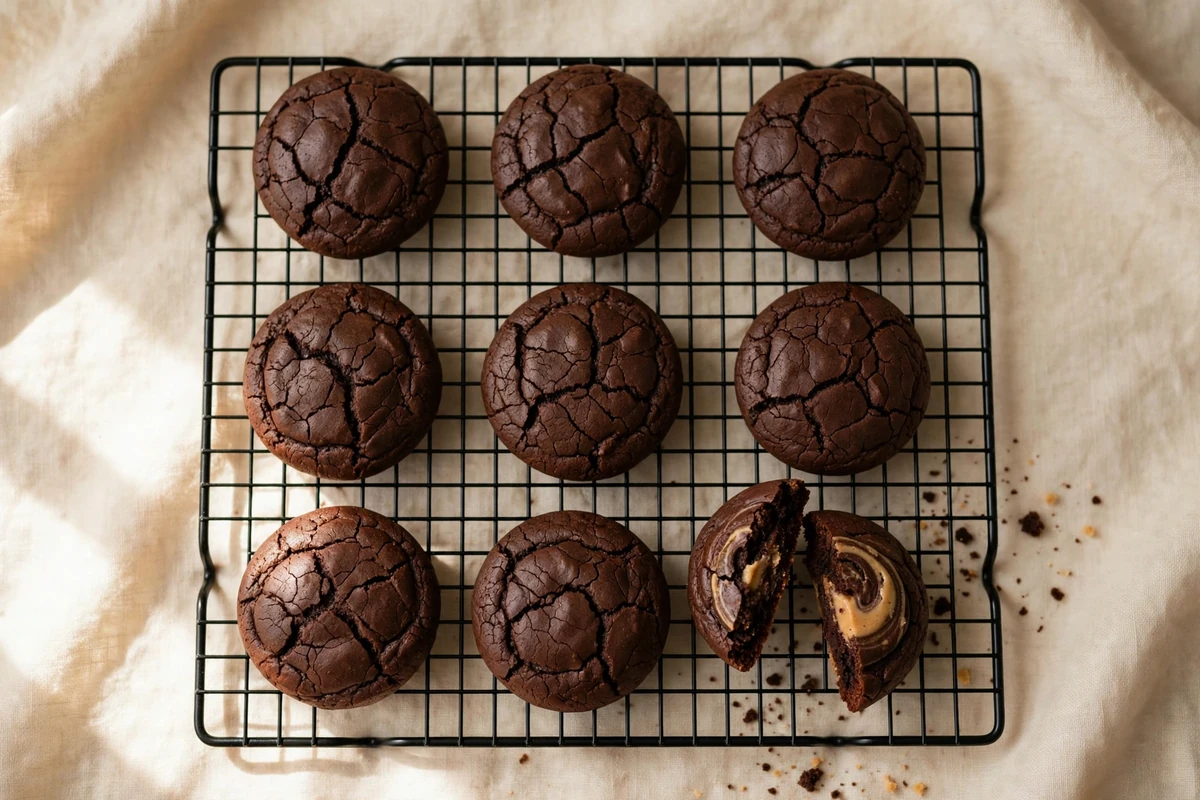
Why You'll Love This Recipe
- Fudgy centre with a crackled top, closer to a brownie than a crisp cookie
- No mixer needed, since the butter goes in melted
- Both flavours come through instead of the peanut butter flattening the chocolate
- Dough freezes as portioned balls, so you can bake a few at a time
Use 2/3 cup of peanut butter, not a full cup. This looks like a mistake in a recipe with peanut butter in the title, and it is the change that makes it work.
Peanut butter fat coats the cocoa particles and physically blocks them from releasing flavour, so a full cup does not give you more peanut flavour, it gives you less chocolate.
It also adds protein that competes with the cocoa for the small amount of water in the dough, which is the dryness problem in one sentence. Two thirds of a cup leaves both flavours standing.
Read Before You Start
Use natural cocoa powder, not Dutch-process, unless you adjust the leavening. Natural cocoa is acidic, and that acid is what the baking soda reacts with. Dutch-process is alkalized, so with soda alone you get a flat, soapy-tasting cookie. The swap is in the FAQs if Dutch is what you have.
The dough will look too wet when you finish mixing. It is meant to. Cocoa powder is roughly a fifth starch and keeps absorbing liquid for the next half hour, which is part of why the chill is 45 minutes rather than 30.
Ingredient Deep Dive & Notes
Unsalted butter, 1/2 cup (113 g), melted. Melted, not softened. Melted butter gives a denser, fudgier crumb because you are not whipping air into it, and it gives you a warm liquid to bloom the cocoa in.
Natural unsweetened cocoa powder, 1/2 cup (43 g). This is the chocolate, so the quality shows directly. Sift it if it has lumps, because cocoa clumps do not break up in a stiff dough and bake into bitter pockets.
Creamy shelf-stable peanut butter, 2/3 cup (172 g). Levelled, not heaped. Natural peanut butter separates and there is already limited liquid here, so the loose oil throws the balance off.
Light brown sugar, 3/4 cup (150 g), packed, plus granulated sugar, 1/3 cup (67 g). The brown sugar holds moisture through the molasses, which is doing real work against two drying ingredients. The granulated sugar gives the top its crackle.
One large egg plus 2 tablespoons whole milk, both at room temperature. The milk is not optional and it is the part most recipes leave out. Cocoa powder absorbs several times its own weight in liquid, so without it the flour has nothing left to hydrate with.
Alcohol-free vanilla extract, 2 teaspoons.
All-purpose flour, 1 1/4 cups (150 g). Less than a plain cookie would use, because the cocoa is acting as part of the dry structure.
Baking soda, 3/4 teaspoon, and fine salt, 1/2 teaspoon. Soda pairs with the natural cocoa. Salt matters more in a chocolate dough than most people allow for.
For the plain version without cocoa, see our Chewy Peanut Butter Cookies, and for the flourless three-ingredient version, check out 3 Ingredient Peanut Butter Cookies.
Equipment Needed
- A 1. 5 tablespoon cookie scoop
- Light-coloured heavy baking sheets. Dark pans make an already dark cookie impossible to read
- A fine sieve, if your cocoa is lumpy
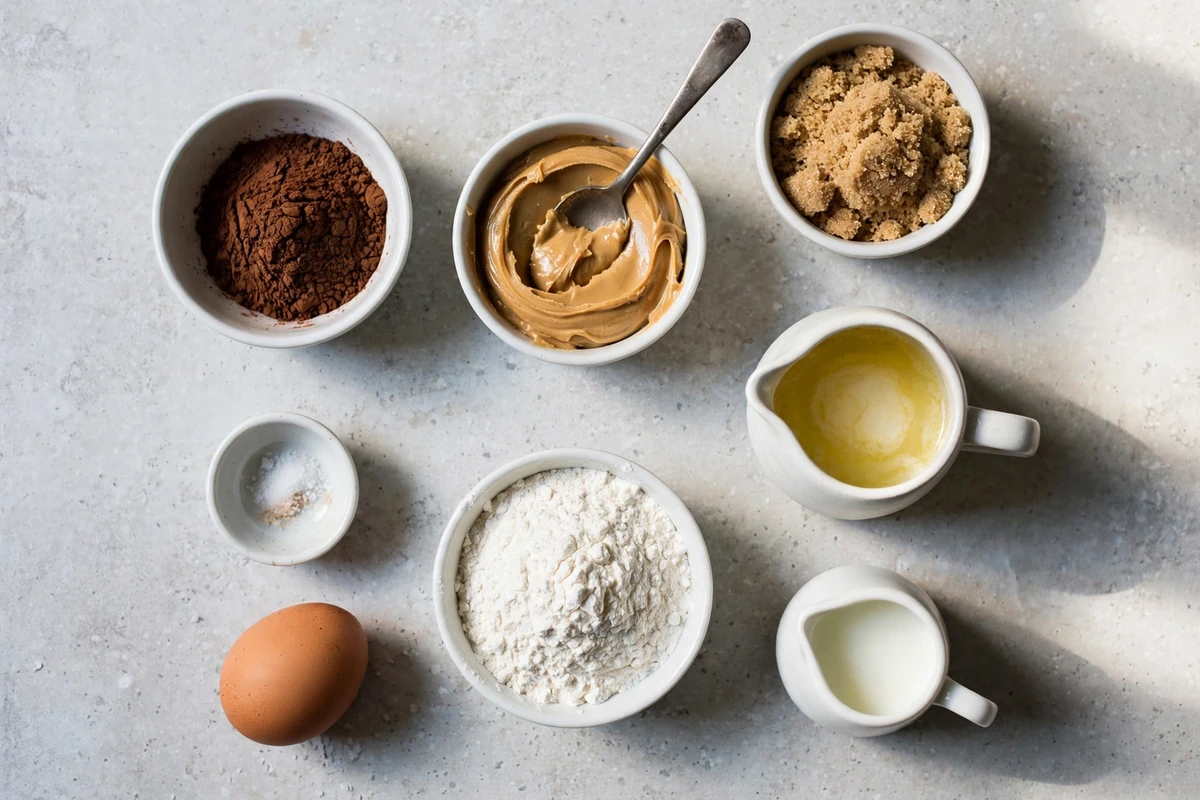
Ingredients for fudgy chocolate peanut butter cookies: cocoa powder, melted butter, peanut butter, brown sugar, flour, egg and milk
Detailed Step-by-Step Cooking Guide
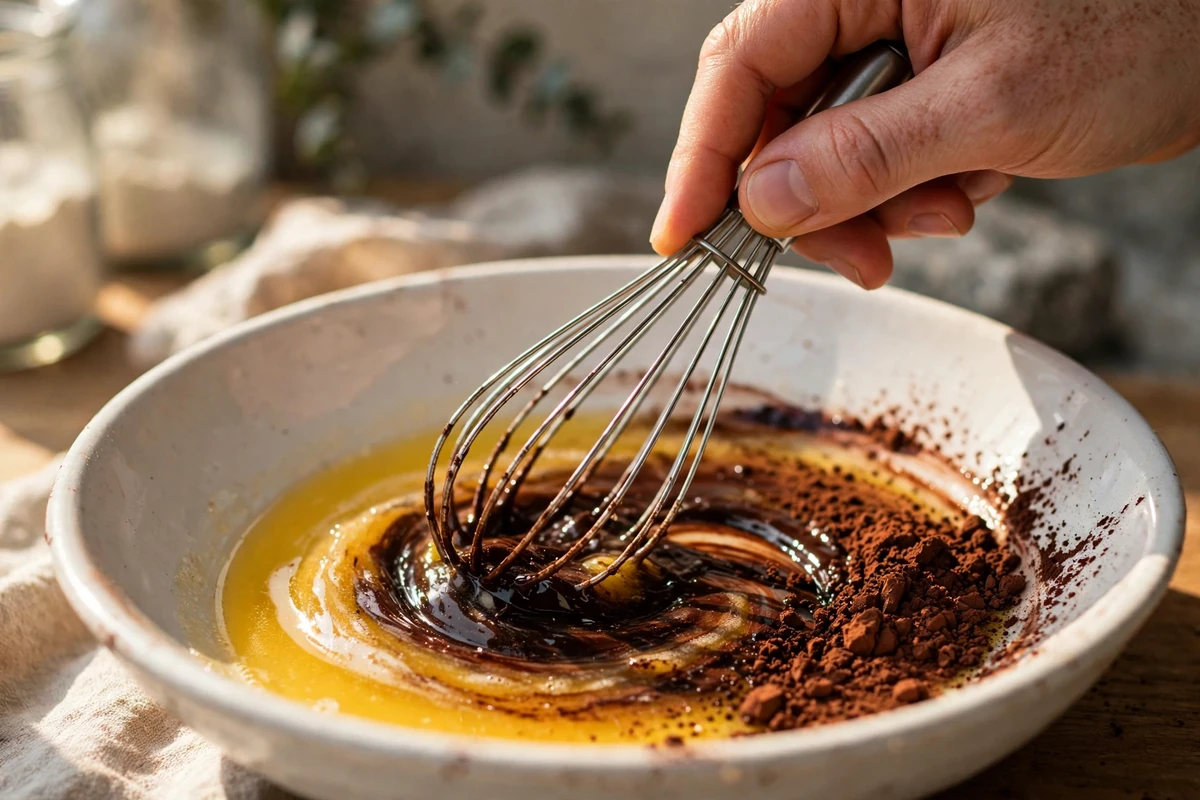
1. Bloom the cocoa in the warm butter
2. Beat in the sugars and peanut butter
3. Add the egg, milk and vanilla
4. Fold in the dry ingredients
5. Chill 45 minutes
Portioned chocolate peanut butter cookie dough balls chilling on a parchment-lined tray
6. Bake 10 to 11 minutes
7. Rest on the sheet, then cool
Getting the Fudgy Texture Right
A chocolate cookie cannot be judged by colour, which is the core problem. It goes in dark brown and comes out dark brown, so the visual cue everyone relies on with a plain cookie is gone. Watch the surface shift from wet and glossy to matte with fine cracks, check that the outer edges look set, and nudge the sheet to see if the centres hold.
Overbaked by a minute or two, or a full cup of peanut butter went in, or the milk was left out. All three point the same direction.
The chill was cut short. Re-chill the remaining scoops for a full hour.
Dutch-process cocoa with baking soda, or unsifted cocoa lumps.
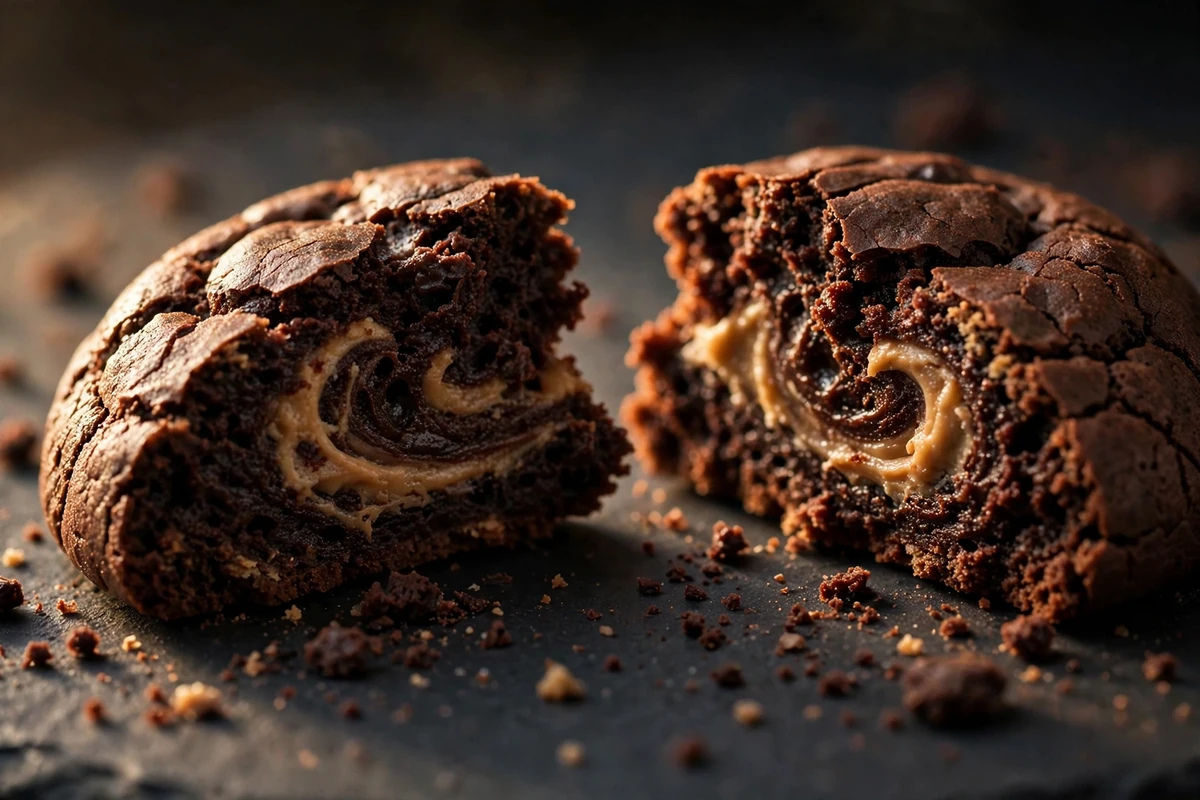
Close up texture of a fudgy chocolate peanut butter cookie broken open showing dense brownie-like center
How to Use These Cookies
How to Serve, Store & Reheat
Room temperature or slightly warm. These are rich, so small is better than large.
Airtight at room temperature up to 5 days. A slice of sandwich bread in the container keeps the centres soft. Do not refrigerate, which firms the butter and dulls the chocolate.
10 seconds in the microwave restores the fudgy centre. In an oven, 3 minutes at 300°F (150°C).
Yes, both ways. Freeze baked cookies in a rigid container up to 3 months and thaw at room temperature for an hour. Better: freeze the scooped dough balls solid, bag them, and bake from frozen at 350°F for 12 to 13 minutes. Frozen dough is actually the easiest way to make these, since the chill step is already done.
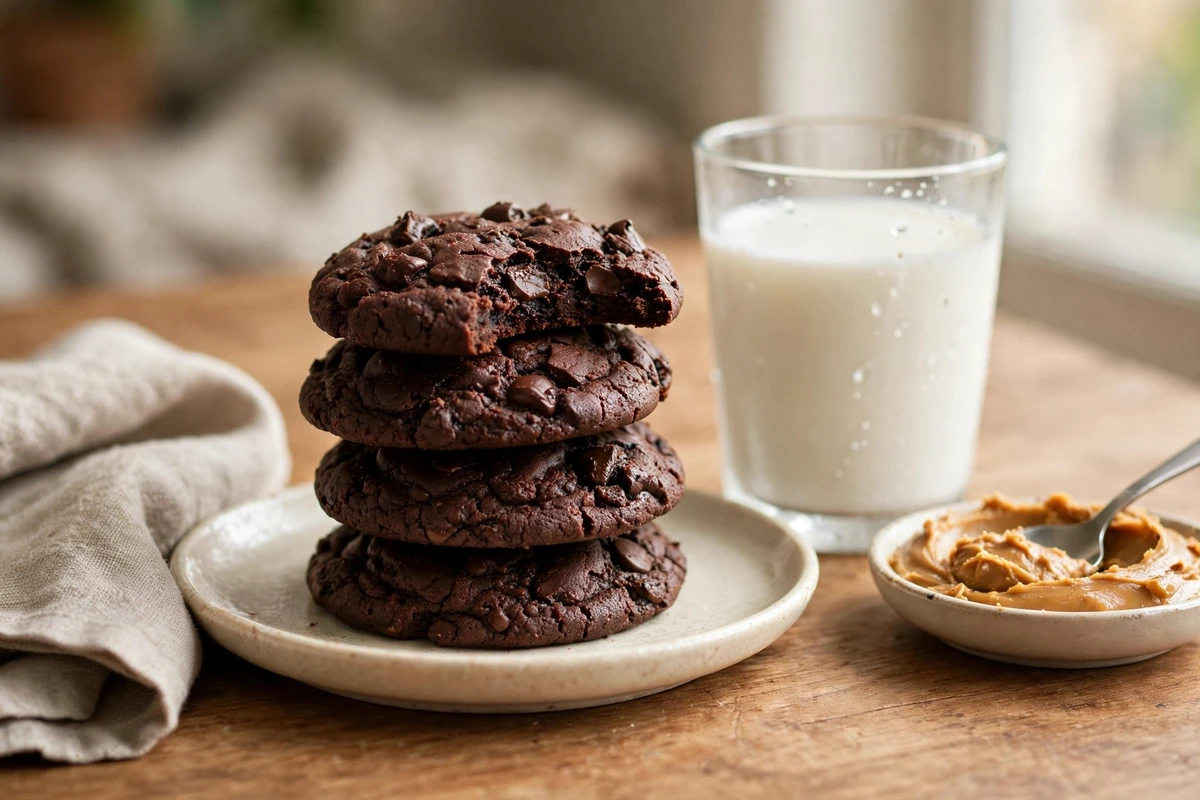
Fudgy chocolate peanut butter cookies served on a dessert plate with a glass of milk
Dietary Variations
A 1:1 blend with xanthan gum, measured by weight. Add an extra tablespoon of milk, since most blends absorb more than wheat flour and this dough has little to spare.
Firm block-style vegan butter in place of the butter and any unsweetened plant milk for the 2 tablespoons. Oat milk works best here because it carries a little more body.
Sunflower seed butter substitutes cup for cup. The soda can turn sunflower butter green as it cools, but the cocoa hides it completely, which is one case where the chocolate version is easier than the plain one.
Cocoa powder is about 20 percent starch and 30 percent fibre, and both are highly absorbent.
A half cup of it will take up several times its own weight in liquid, which is why a dough that includes cocoa needs more moisture than the same dough without it, not less.
Peanut butter pulls in the same direction: it is roughly 25 percent protein, and protein binds water during baking.
Put the two together at full strength with a standard cookie's liquid and there is nothing left to keep the crumb soft. The fix is on both sides.
Two tablespoons of milk adds water back, and dropping the peanut butter to two thirds of a cup removes some of the demand for it.
Allergen Notice: This recipe contains peanuts, dairy (butter, milk), egg, and wheat. Substitutions for each are listed above. Ingredient brands and shared equipment vary, so anyone cooking for a diagnosed allergy should check every label themselves, including cocoa powder, which is sometimes processed alongside milk and nuts. This is not a claim that any version is safe for a specific allergy, and peanut allergies in particular can be severe.
Frequently Asked Questions
Recipe Visual Gallery (5 Full Photos)
Recipe Card & Steps
Ingredients Checklist
Click an item to check it off as you prep
- 1/2 cup(113 g) unsalted butter, melted and cooled slightly
- 1/2 cup(43 g) natural unsweetened cocoa powder, sifted if lumpy
- 2/3 cup(172 g) creamy shelf-stable peanut butter, levelled
- 3/4 cup(150 g) light brown sugar, packed
- 1/3 cup(67 g) granulated sugar
- 1large egg, room temperature
- 2 tbspwhole milk, room temperature
- 2 tspalcohol-free vanilla extract
- 1 1/4 cups(150 g) all-purpose flour
- 3/4 tspbaking soda
- 1/2 tspfine salt
Step-by-Step Instructions
Follow along and mark each step complete as you cook
Whisk the cocoa powder into the warm melted butter until smooth and glossy, about 30 seconds.
Add the peanut butter, brown sugar and granulated sugar. Whisk hard for 1 minute, until smooth and slightly lightened.
Whisk in the egg, milk and vanilla until glossy, about 30 seconds. The mixture will look loose.
In a separate bowl, whisk the flour, baking soda and salt together. Fold into the wet mixture with a spatula until no dry streaks remain. The dough will be soft and sticky.
Scoop 1.5 tablespoon balls onto a tray and refrigerate 45 minutes.
Heat the oven to 350°F (177°C). Space the chilled balls 2 inches apart on parchment-lined sheets. Do not flatten them.
Bake 10 to 11 minutes per sheet. The tops should shift from glossy to matte with fine cracks, edges dry and set, centres still puffed.
Rest on the hot sheet 5 minutes, then transfer to a wire rack to cool completely.
Recipe Card Notes & Tips
- Use natural cocoa with the baking soda. For Dutch-process, replace the soda with 1 1/2 teaspoons baking powder.
- Do not increase the peanut butter past 2/3 cup, and do not skip the milk, since both changes cause the dry crumb this recipe is built to avoid.
- Freeze scooped balls and bake from frozen at 350°F for 12 to 13 minutes.
Ratings & Reviews
Leave a Review
Made this recipe? Share your thoughts, tweaks, and honest rating with other home cooks!
Community Reviews (0)
You Might Also Enjoy
More delicious recipes in Desserts.
Classic Butter Cookies Recipe