Vanilla Cupcake Recipe with a Soft, Bakery-Style Crumb
Vanilla cupcake recipe with a soft, velvety crumb and real vanilla flavor. One bowl of dry ingredients, 20 minutes in the oven, and no dry cupcakes.
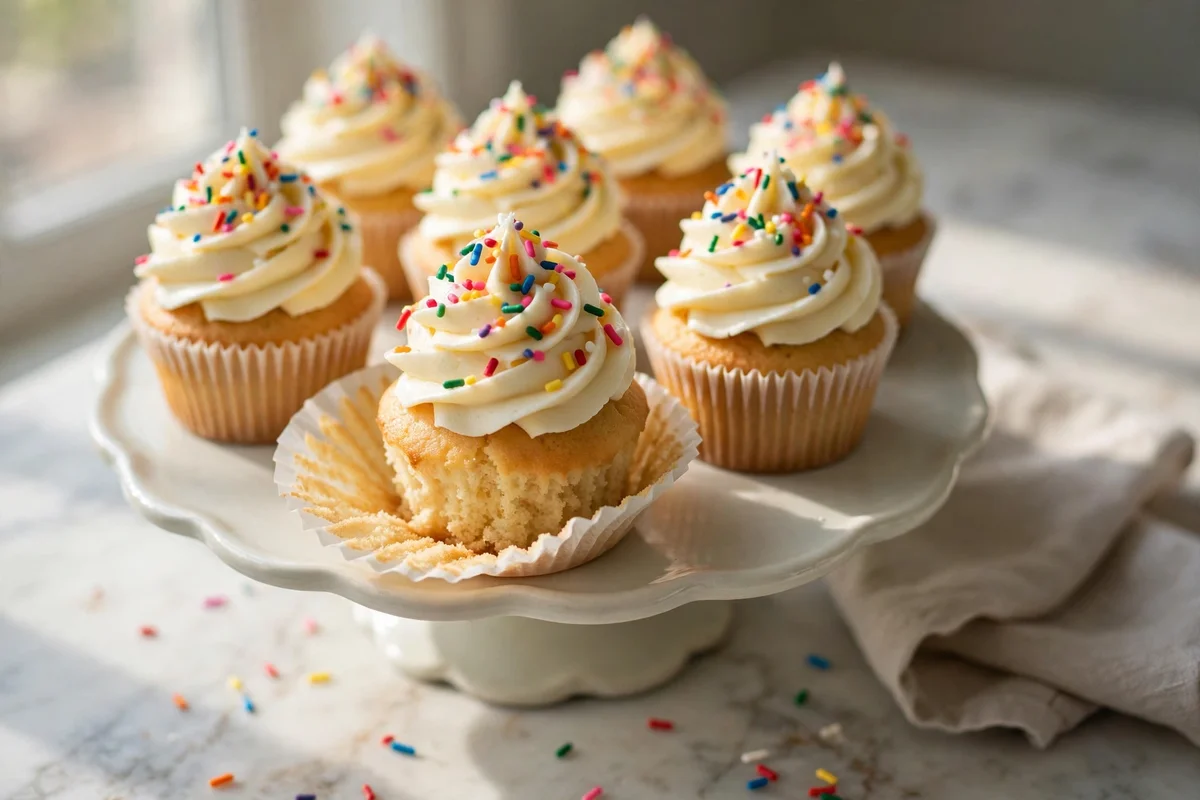
You get a fine, velvety crumb that stays soft for two days, and it takes about 20 minutes of actual work.
Why You'll Love This Recipe
- The reverse creaming method is more forgiving than standard creaming. Slight overmixing will not wreck it.
- Butter for flavor plus a spoonful of oil for moisture, so the cupcakes stay soft even after a night in the fridge.
- Exactly 12 cupcakes from one pan, one bowl of dry ingredients, no second batch.
- Real vanilla flavor instead of faint sweetness, because there is salt and sour cream in the batter to carry it.
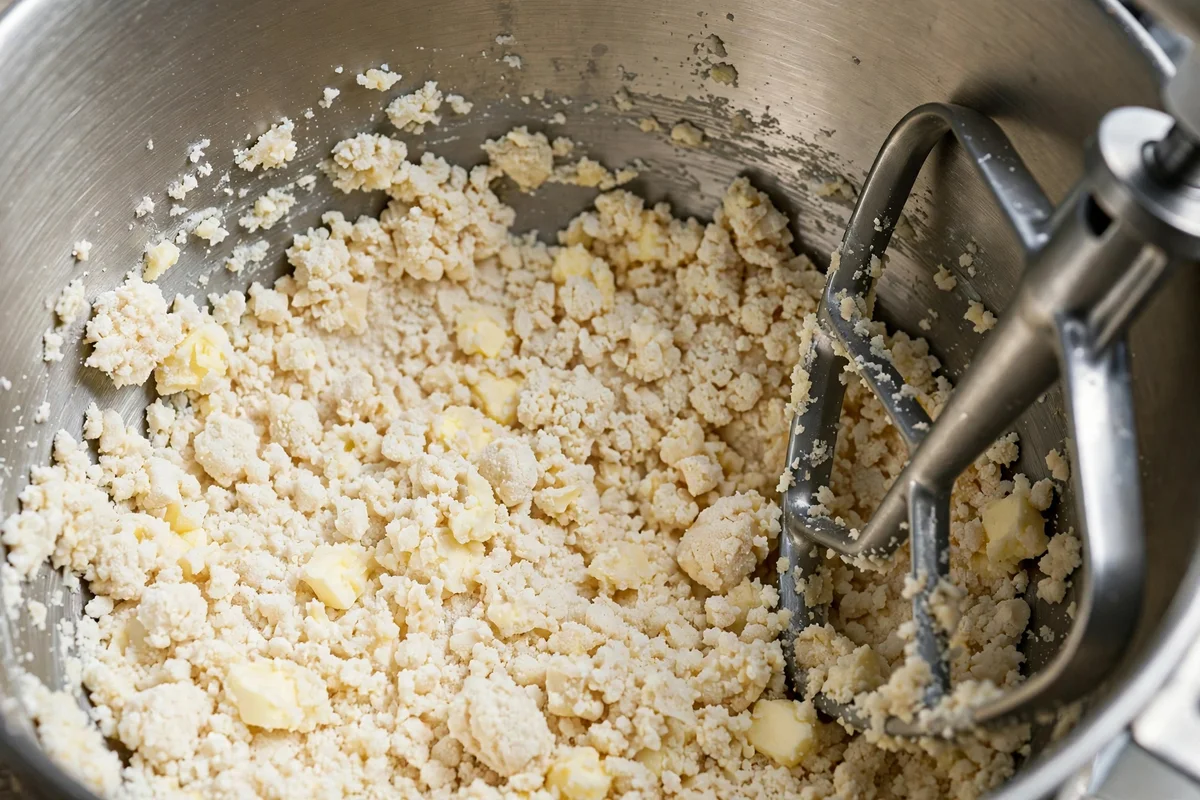
Before a single drop of liquid goes into the bowl, beat the softened butter into the flour, sugar, baking powder and salt until the mixture looks like damp sand and there is no loose flour left anywhere, including the bottom of the bowl.
Give it a full 60 to 90 seconds. That fat coating is what limits gluten development later, and it is the one step that separates a velvety bakery crumb from a homemade one that tastes like a slightly sweet dinner roll. Everything after it is just mixing.
Read Before You Start
Weigh the flour. A cup of cake flour scooped straight from the bag can come in 20 to 30g heavier than a spooned and leveled cup. Across 1½ cups that gap is the whole difference between tender and dry, and it is the most common reason a good recipe fails in someone else's kitchen.
Check the butter with your finger, not the clock. You want it at about 65 to 68°F (18 to 20°C). Press it and it should dent cleanly while holding its shape. Butter that has gone greasy and shiny will not hold air, and the cupcakes bake up heavy with a dense band near the bottom.
Ingredient Deep Dive & Notes
Cake flour has less protein than all-purpose, which is exactly what you want in a cupcake. If you only have all-purpose, measure 1½ cups, remove 3 tablespoons, and replace them with 3 tablespoons of cornstarch, then whisk well.
Unsalted butter carries the flavor. Salted butter varies too much between brands to season a batter this small accurately.
Neutral oil, just one tablespoon, is the moisture insurance. Butter firms up at fridge temperature and oil does not, so a small amount keeps the crumb soft on day two.
Sour cream adds fat and a little acid, which tenderizes the crumb and stops the sweetness from tasting flat. Full-fat plain yogurt works the same way.
Vanilla is the entire point of this vanilla cupcake recipe, so use a good one. Standard vanilla extract is alcohol-based, so choose an alcohol-free extract or a glycerin-based vanilla bean paste if that matters to you. Vanilla bean paste also gives you the visible seed flecks. The same swap works in Classic Butter Cookies and Banana Muffins, which both lean on vanilla in the same way.
Do not substitute self-rising flour for the cake flour. It carries its own leavening and salt in amounts that will not match what is already in this batter, and the cupcakes will dome hard, crack, then collapse in the middle.
Equipment Needed
- Kitchen scale, the single most useful tool here
- Hand mixer or stand mixer with the paddle attachment, not the whisk
- 3-tablespoon cookie scoop for even portioning
- Instant-read thermometer, optional but it removes all guesswork on doneness
- Oven thermometer if you have never checked yours, since ovens running 25°F hot are common
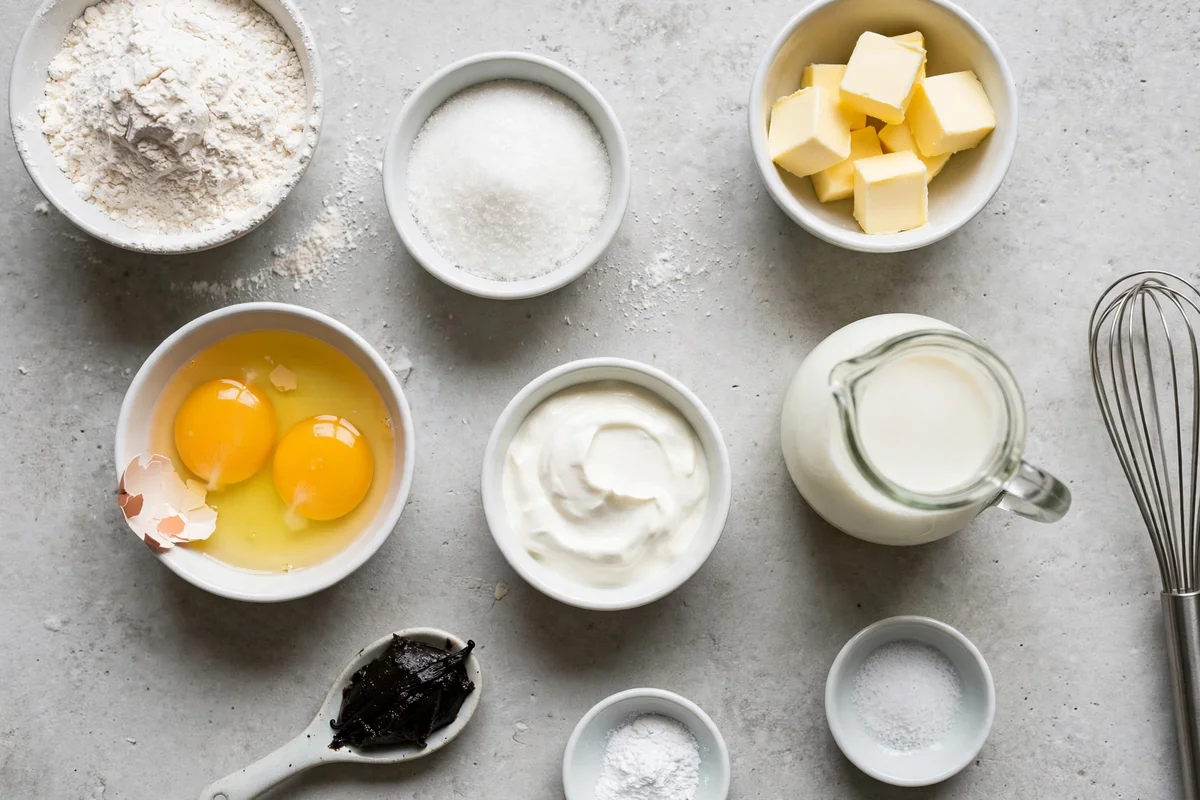
Ingredients for vanilla cupcakes including cake flour, sugar, butter, eggs, sour cream, milk and vanilla in small bowls
Detailed Step-by-Step Cooking Guide
1. Heat the oven and line the pan
2. Whisk the dry ingredients
3. Beat in the butter
Butter beaten into flour and sugar in a mixing bowl until it looks like damp sand
4. Add the oil and half the liquid
5. Add the rest in two additions
6. Portion the batter
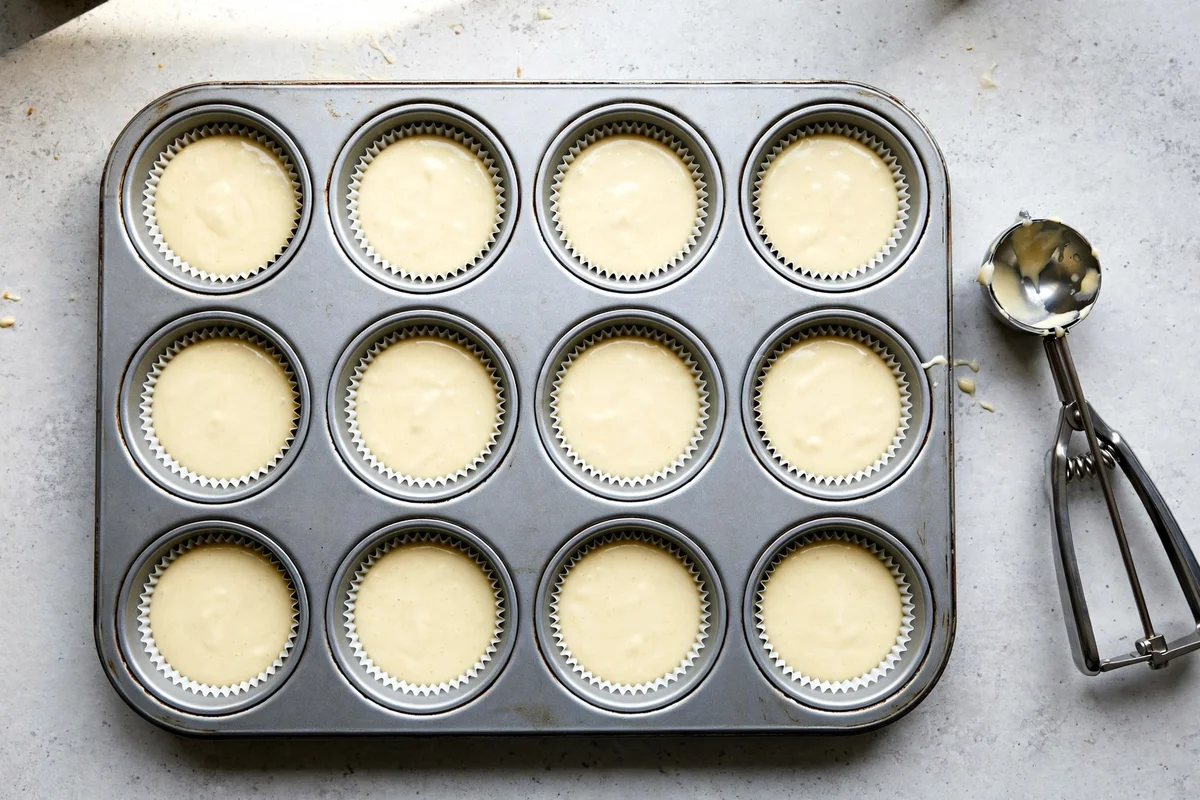
Cupcake batter scooped into white paper liners in a metal muffin pan filled two thirds full
7. Bake and check properly
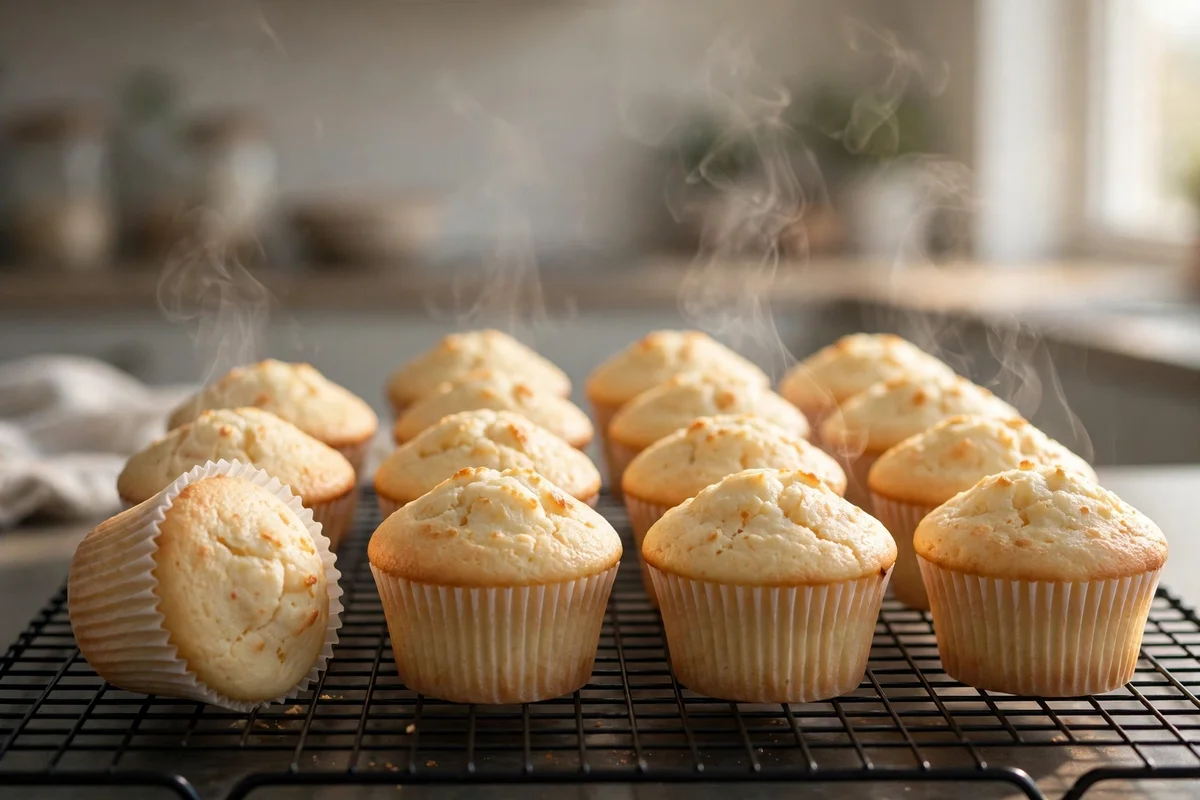
8. Cool completely before frosting
Freshly baked vanilla cupcakes with pale golden domed tops cooling on a wire rack
9. Make the buttercream and frost
Getting the Crumb Right
When a vanilla cupcake recipe goes wrong, the failure usually points straight back to one specific step. Here is how to read yours:
Overmixed after the liquid went in. Next time, stop as soon as the batter is smooth.
Either too much flour or too long in the oven. Weigh the flour and start checking at 17 minutes.
Usually underbaked, occasionally expired baking powder. Test yours with a spoonful of hot water. If it does not fizz hard, replace it.
The oven is too hot. An oven thermometer sorts this out permanently.
The butter was too warm when it went in, so the emulsion broke.
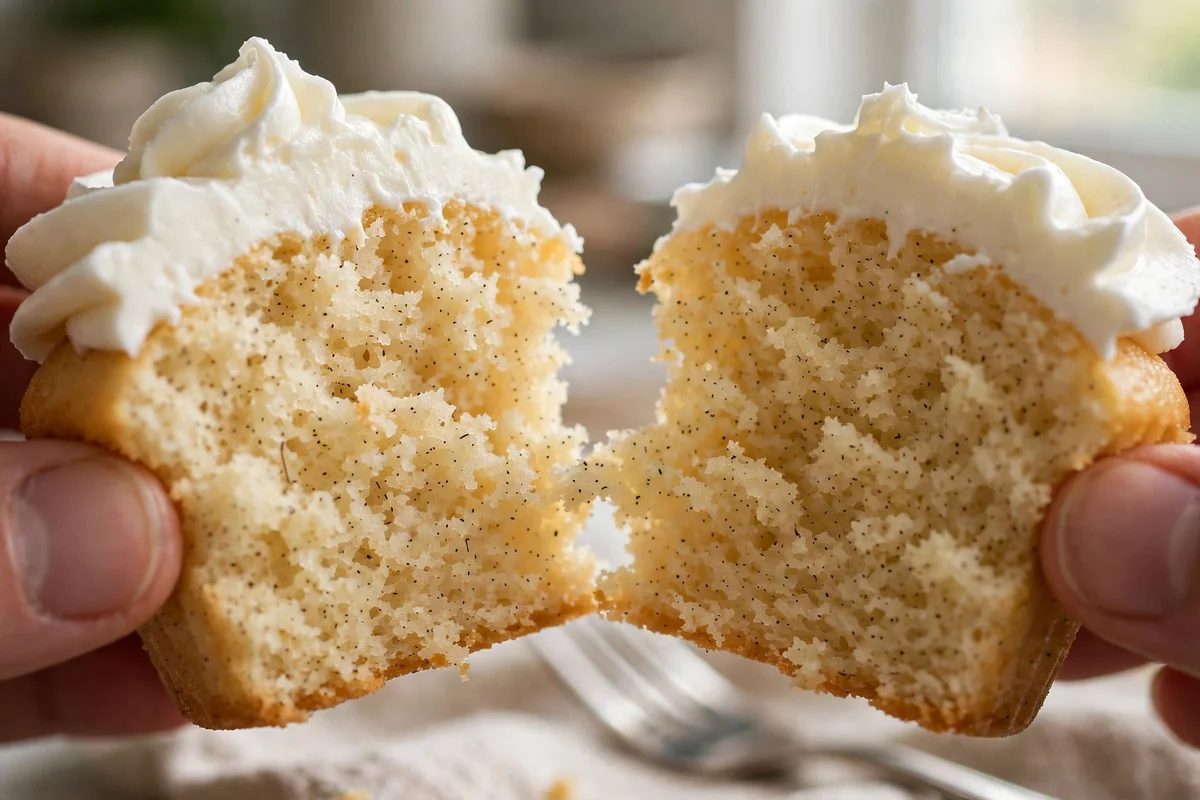
Trapped steam. Cool them completely before storing, and store in a container rather than sealed plastic wrap.
A vanilla cupcake torn in half showing a fine, soft, even crumb with visible vanilla bean flecks
How to Use This Vanilla Cupcake Recipe Beyond Cupcakes
How to Serve, Store & Reheat
Best at room temperature, within a few hours of frosting. Cupcakes served cold taste noticeably less sweet and the crumb feels firm.
Unfrosted, in an airtight container at room temperature for 2 days. Frosted with buttercream, also 2 days at cool room temperature. Above about 78°F (26°C) the buttercream softens and starts to slump, so refrigerate and bring back to room temperature for 30 minutes before serving.
Yes for unfrosted cupcakes, 8 to 10 seconds in the microwave. No for frosted ones, since the buttercream melts immediately.
Yes, unfrosted. Wrap each cupcake in plastic, then bag them, up to 3 months. Thaw at room temperature for an hour and frost after. Freezing frosted cupcakes works but the buttercream surface often sweats as it thaws.
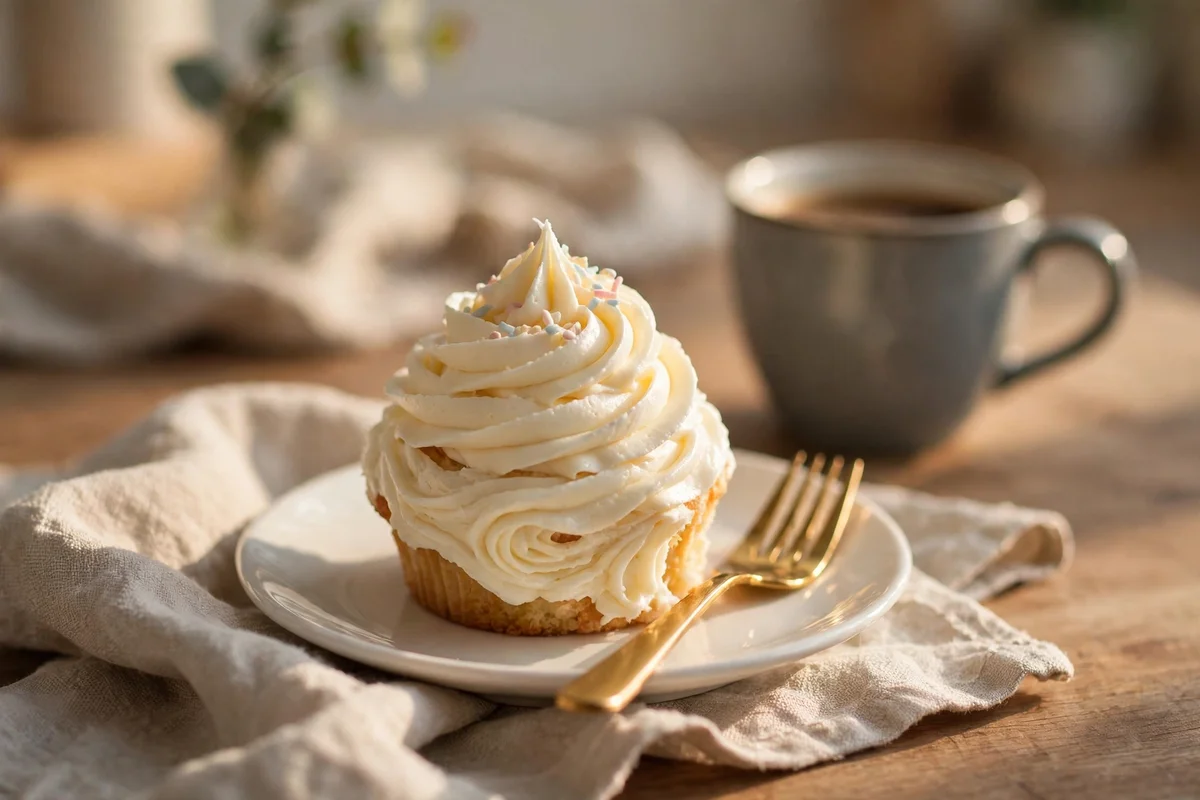
A single frosted vanilla cupcake on a small plate with a fork, ready to serve alongside coffee
Dietary Variations
A 1:1 gluten-free baking blend that already contains xanthan gum swaps in by weight. Let the batter sit 20 minutes before scooping so the starches hydrate, otherwise the crumb feels sandy.
Plant-based butter in block form (not tub spread), unsweetened soy or oat milk, and coconut yogurt in place of the sour cream. Expect a slightly softer crumb.
Drop the batter sugar to 170g and top with lightly sweetened whipped cream instead of buttercream. Frost these the same day, since whipped cream will not hold overnight.
Add a little more salt than feels right. Vanilla is a delicate flavor, and in a batter this sweet it flattens out fast without something to push against it.
The half teaspoon here is doing real work, and cutting it is why some homemade cupcakes taste sweet but not of much else.
If you are using salted butter anyway, reduce the added salt to a quarter teaspoon rather than skipping it entirely.
Allergen Notice: This recipe contains wheat (cake flour), dairy (butter, milk, sour cream), and egg. Swaps: certified gluten-free flour blend for the wheat, plant butter and plant milk for the dairy, and for egg-free baking a commercial egg replacer is more reliable here than flax, because this batter depends on egg protein for structure.
Frequently Asked Questions
Recipe Visual Gallery (7 Full Photos)
Recipe Card & Steps
Ingredients Checklist
Click an item to check it off as you prep
- 1½ cups (180g)cake flour, spooned and leveled
- 1 cup minus 1 tbsp (190g)granulated sugar
- 1½ tspbaking powder
- ½ tspfine salt
- ½ cup (113g)unsalted butter, softened to 65 to 68°F (18 to 20°C)
- 1 tbsp (14g)neutral oil
- ⅓ cup (80ml)whole milk, room temperature
- ¼ cup (60g)full-fat sour cream, room temperature
- 2 largeeggs, room temperature
- 1 tbsp (15ml)alcohol-free vanilla extract or vanilla bean paste
- 1 cup (226g)unsalted butter, softened (for buttercream)
- 3 cups (360g)powdered sugar, sifted (for buttercream)
- 2 to 3 tbspheavy cream or whole milk (for buttercream)
- 2 tspalcohol-free vanilla extract or vanilla bean paste (for buttercream)
- ⅛ tspfine salt (for buttercream)
Step-by-Step Instructions
Follow along and mark each step complete as you cook
Heat the oven to 350°F (177°C) with a rack in the center. Line a 12-cup muffin pan with paper liners.
Whisk the cake flour, sugar, baking powder and salt together in a large mixing bowl for about 20 seconds.
Add the softened butter in chunks. Mix on low, then medium-low, for 60 to 90 seconds until the mixture looks like damp sand and no dry flour remains. Scrape the bowl and paddle.
Whisk the milk, sour cream, eggs and vanilla together in a jug.
Add the oil and half the liquid mixture to the bowl. Beat on medium for 60 seconds until pale, thick and smooth.
Add half the remaining liquid, mix 15 seconds, scrape down, then add the rest and mix just until smooth. Stop mixing.
Scoop about 60g of batter into each liner, filling two thirds full.
Bake 17 to 20 minutes, until the tops spring back to a light press and a toothpick comes out with a few moist crumbs. Center temperature reads 205 to 208°F (96 to 98°C).
Cool in the pan 5 minutes, then transfer to a wire rack and cool completely, about 40 minutes.
For the buttercream, beat the butter alone for 2 minutes until pale. Add the powdered sugar in three additions on low, then the vanilla and salt. Add cream a tablespoon at a time and beat on medium-high for 2 minutes until smooth and spreadable.
Pipe or spread onto fully cooled cupcakes.
Recipe Card Notes & Tips
- No cake flour? Measure 1½ cups all-purpose, remove 3 tablespoons, replace with 3 tablespoons cornstarch, whisk thoroughly.
- Standard vanilla extract is alcohol-based. The alcohol-free version or a glycerin-based vanilla bean paste keeps this recipe alcohol-free.
- Cold dairy and cold eggs will break the batter. Room temperature is not optional here.
- Buttercream too soft to pipe? Chill it 15 minutes and re-whip for 30 seconds.
Ratings & Reviews
Leave a Review
Made this recipe? Share your thoughts, tweaks, and honest rating with other home cooks!
Community Reviews (0)
You Might Also Enjoy
More delicious recipes in Desserts.
Classic Butter Cookies Recipe