Soft Cinnamon Rolls Recipe
The difference between bakery cinnamon rolls and the disappointing homemade kind comes down to two things: how much flour ends up in the dough, and whether you pull the pan at the right moment. Get those right and the centers stay soft for three days. This is a same-day recipe that takes about three hours, most of it hands-off while the dough rises.
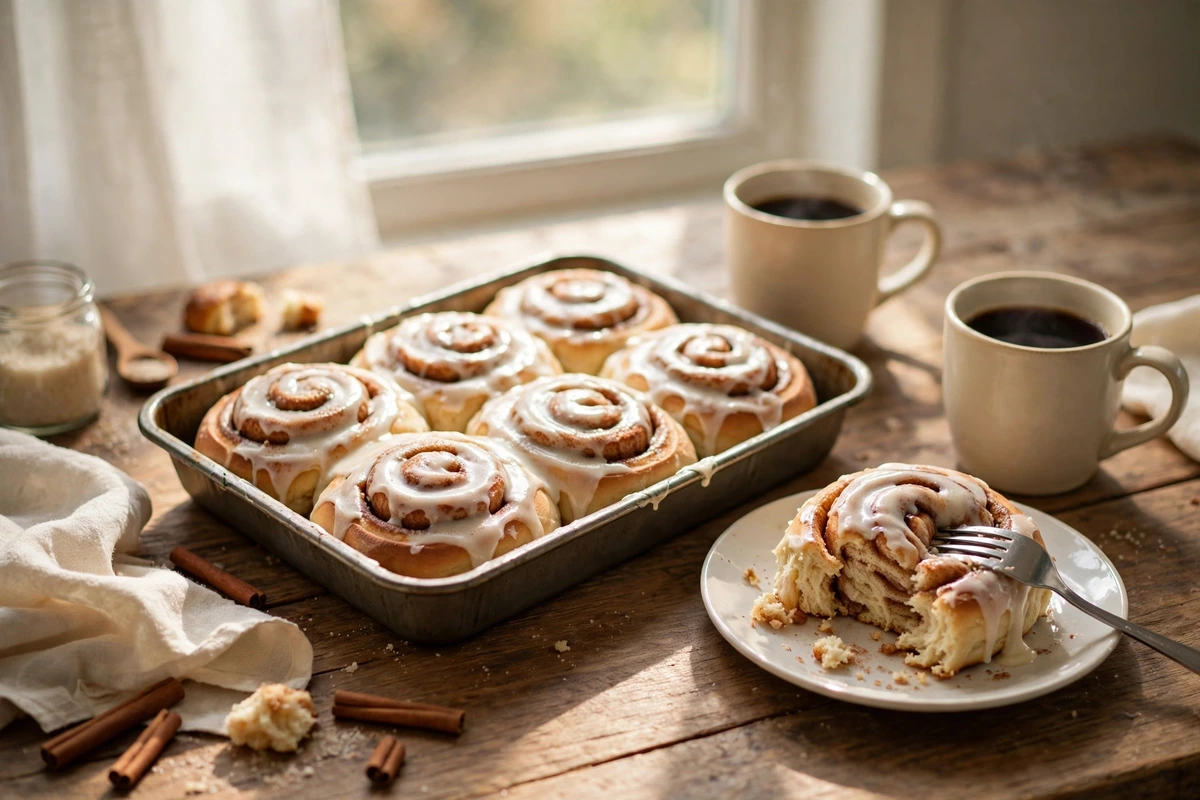
This is a same-day recipe that takes about three hours, most of it hands-off while the dough rises. If mornings are tight, you can shape the rolls the evening before and bake them fresh after a quick counter rise.
Why You'll Love This Recipe
- The crumb stays soft on day two and day three instead of turning into a dry brick.
- The filling is made with softened butter, not melted, so it stays put in the spirals instead of leaking into the pan and burning.
- No bread flour, no stand mixer, and no unusual ingredients required.
- The dough can be shaped the night before and baked in the morning without any change to the recipe.
Right before the pan goes into the oven, pour 1/4 cup of warmed heavy cream over and around the risen rolls.
As they bake, the cream is absorbed into the bottoms and lower spirals, which is what gives you that soft, almost custardy underside instead of a dry base. It sounds odd.
It works, and it's the closest thing there is to a shortcut in this recipe.
Read Before You Start
Weigh the flour, or spoon and level it. Scooping the measuring cup directly into the bag packs in a lot of extra flour, and that single habit is the most common cause of dry, dense rolls. If you're measuring by volume, fluff the flour first, spoon it into the cup, and sweep the top flat.
Rest the dough for ten minutes before rolling. Kneaded dough is tight and springs back the moment you try to shape it. A short rest relaxes the gluten so you can roll a clean rectangle without fighting it.
Ingredient Deep Dive & Notes
Whole milk builds a tender crumb; the fat coats flour proteins and shortens the gluten strands. Warm it to about 110°F. Anything above roughly 120°F starts killing yeast, so use a thermometer rather than guessing.
Instant yeast goes straight into the dry ingredients with no proofing step. Active dry yeast works too, with one change noted in the FAQs.
Eggs at room temperature emulsify into the dough properly. Cold eggs seize the melted butter into little flecks and slow the first rise.
Butter in the filling must be softened, not melted. This is the one thing not to substitute or shortcut. Melted butter soaks into the dough sheet, runs out of the spiral during baking, and pools into burnt sugar at the bottom of the pan. Softened butter holds the brown sugar in place between the layers.
Light brown sugar brings a little molasses, which is what makes the filling taste caramel-like rather than flatly sweet.
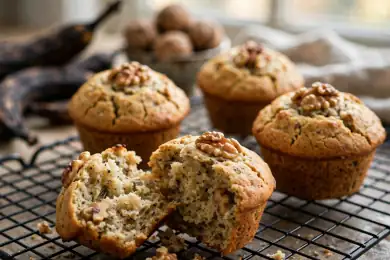
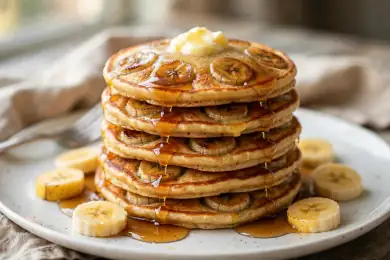
Cream cheese should be full-fat block style. Whipped tub cream cheese carries extra air and water, and the frosting made from it runs straight off warm rolls. If you love baking for weekend mornings, pair these rolls alongside Fluffy Pancakes or a slice of Moist Banana Bread.
Equipment Needed
- Instant-read thermometer (for the milk and for testing the baked rolls)
- Bench scraper, for lifting and dividing the dough
- Unflavored dental floss or plain thread, for cutting clean slices
- 9x13 inch baking pan, light-colored metal or glass. Dark metal pans brown the bottoms fast.
- Rolling pin and a ruler, if you want evenly sized rolls
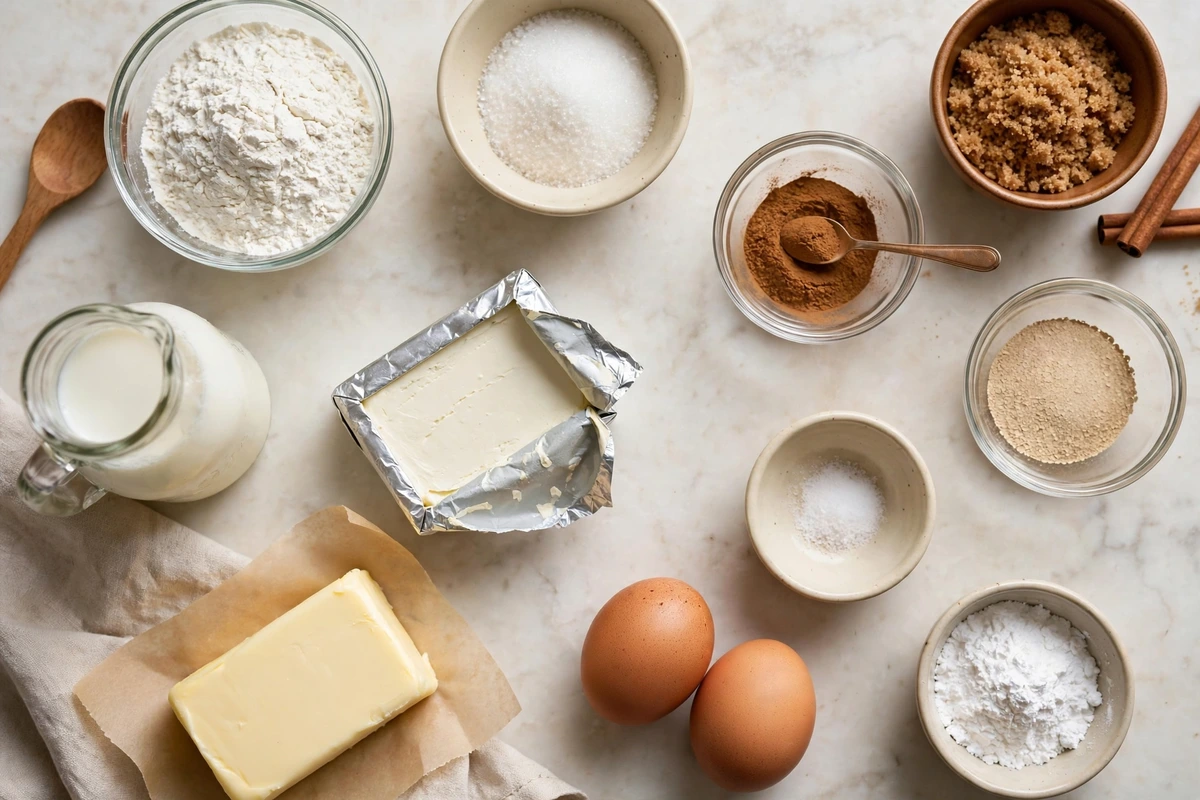
Ingredients for soft cinnamon rolls including flour, milk, yeast, butter, brown sugar, cinnamon, and cream cheese
Detailed Step-by-Step Cooking Guide
1. Mix the dough
2. Knead until the dough is smooth and tacky
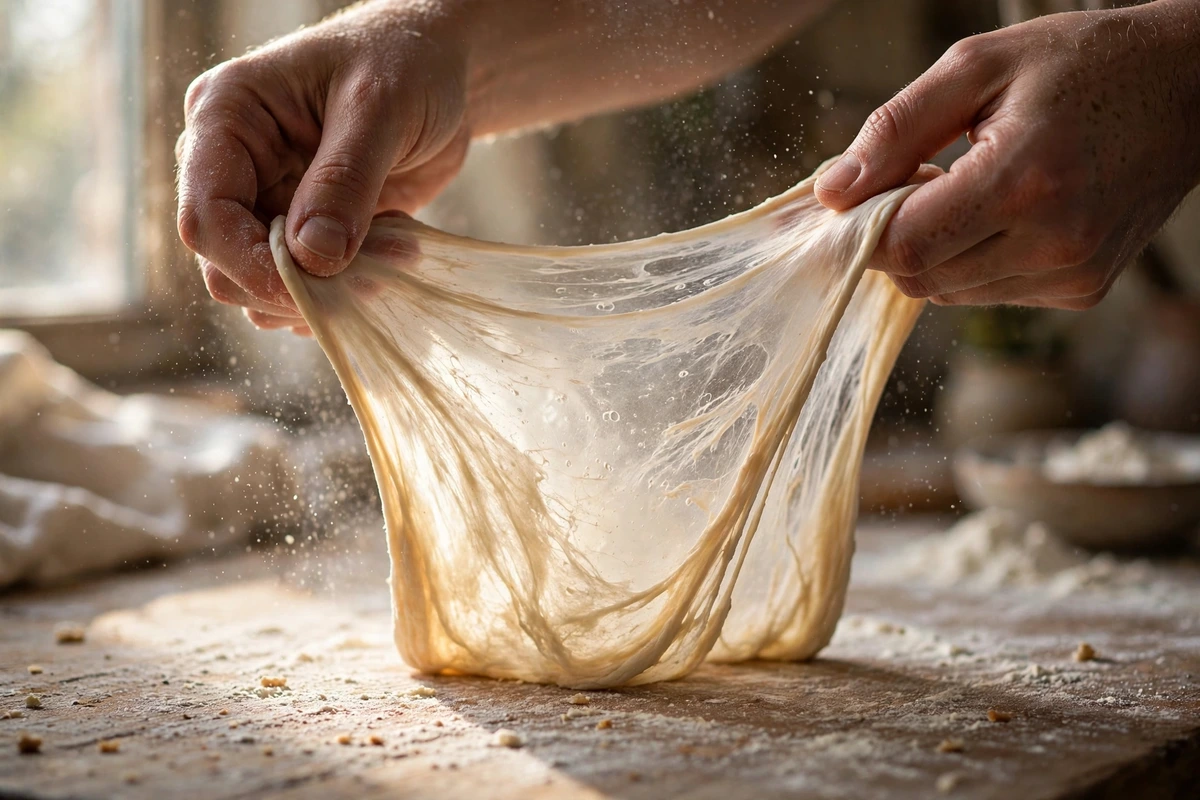
Kneading cinnamon roll dough until smooth and elastic
3. First rise
4. Roll and fill
5. Roll up and cut
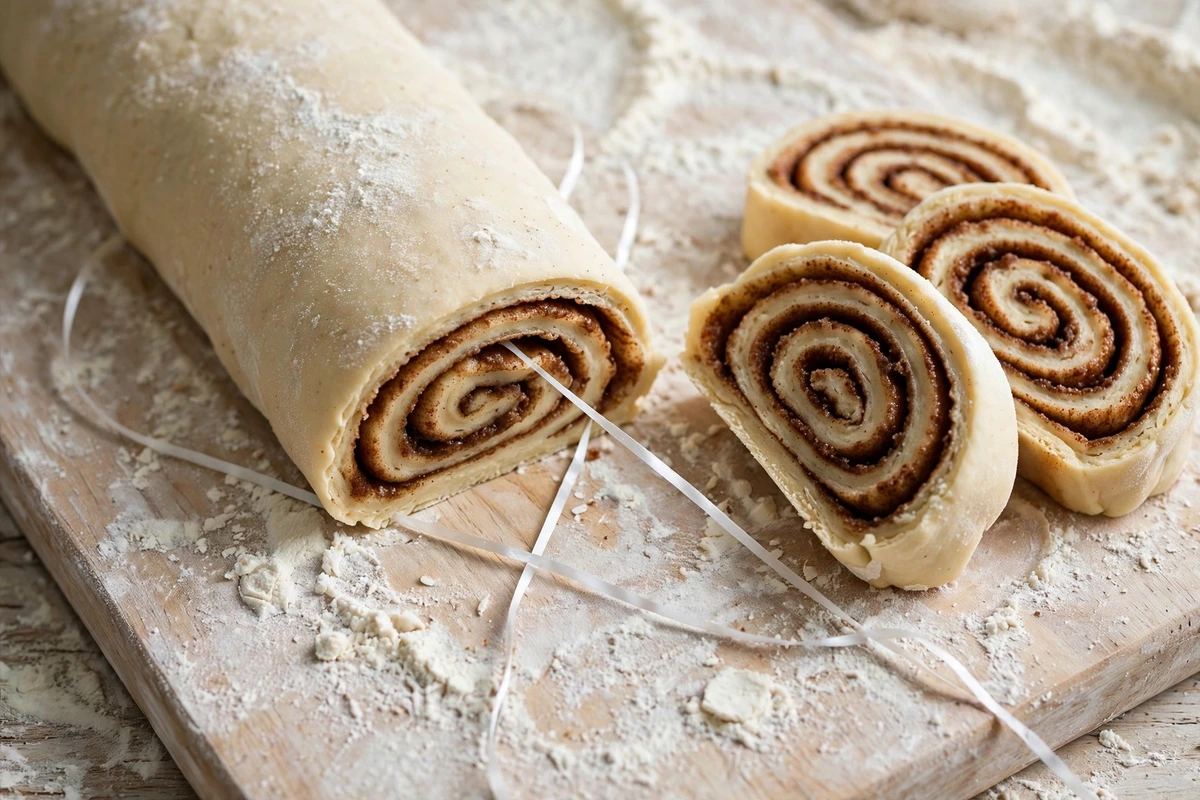
Cutting cinnamon roll dough log into slices using thread before placing in baking pan
6. Second rise and bake
7. Frost while warm
Getting Soft Cinnamon Rolls Right
Baking enriched yeast dough requires balancing flour moisture, rise timing, and doneness temperature. Here is how to diagnose and prevent common issues.
Almost always underbaked, not underrisen. The 190°F check solves this. If the tops are browning too fast before the center gets there, tent the pan loosely with foil for the last five to seven minutes.
Too much flour, usually added during kneading or while rolling. Use a bench scraper and the lightest possible dusting instead of reaching for more flour.
The log wasn't rolled tightly enough, or the seam ended up on the side rather than underneath.
The butter was melted rather than softened, or the filling was spread all the way to the edge of the long side you rolled toward.
The milk was too hot and killed the yeast, or the yeast was past its date. Yeast is cheap; replace it if you're unsure.
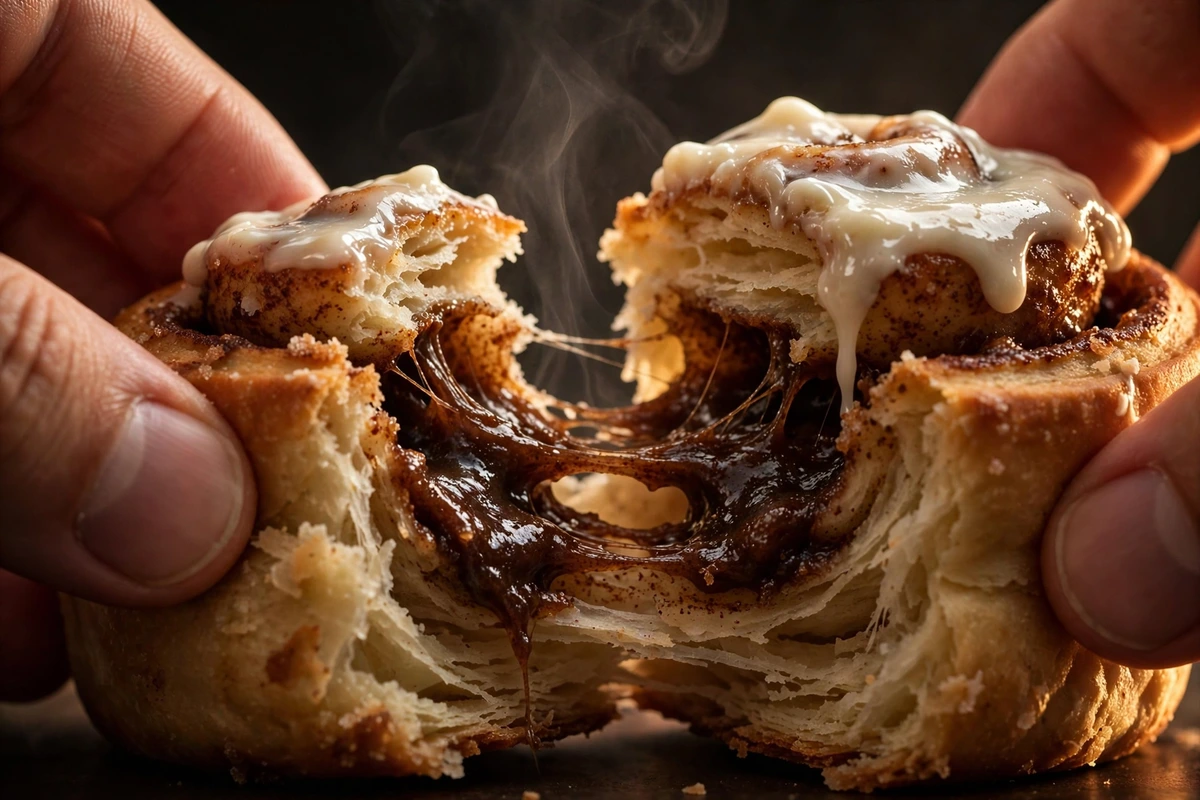
Golden baked cinnamon rolls texture check showing gooey centers and fluffy crumb
What to Do With Leftover Cinnamon Rolls
How to Serve, Store & Reheat
Best warm, within an hour of frosting. Serve straight from the pan rather than plating them individually; the rolls stay softer sitting next to each other.
Because these rolls are topped with cream cheese frosting, cover and refrigerate leftovers promptly, within 2 hours of serving (within 1 hour if the temperature is above 90°F / 32°C). Store in an airtight container in the refrigerator for up to 3–4 days. Reheat individual portions gently until warm. Do not leave frosted rolls at room temperature overnight.
Microwave a single roll for 15 to 20 seconds, or cover the pan with foil and warm at 300°F for about 10 minutes.
Yes, both ways. Freeze baked and cooled unfrosted rolls for up to three months, then thaw and warm before frosting. Or freeze the shaped unbaked rolls in the pan for up to four weeks, thaw overnight in the refrigerator, then let them come to room temperature and finish rising, about 60 to 90 minutes, before baking as written.
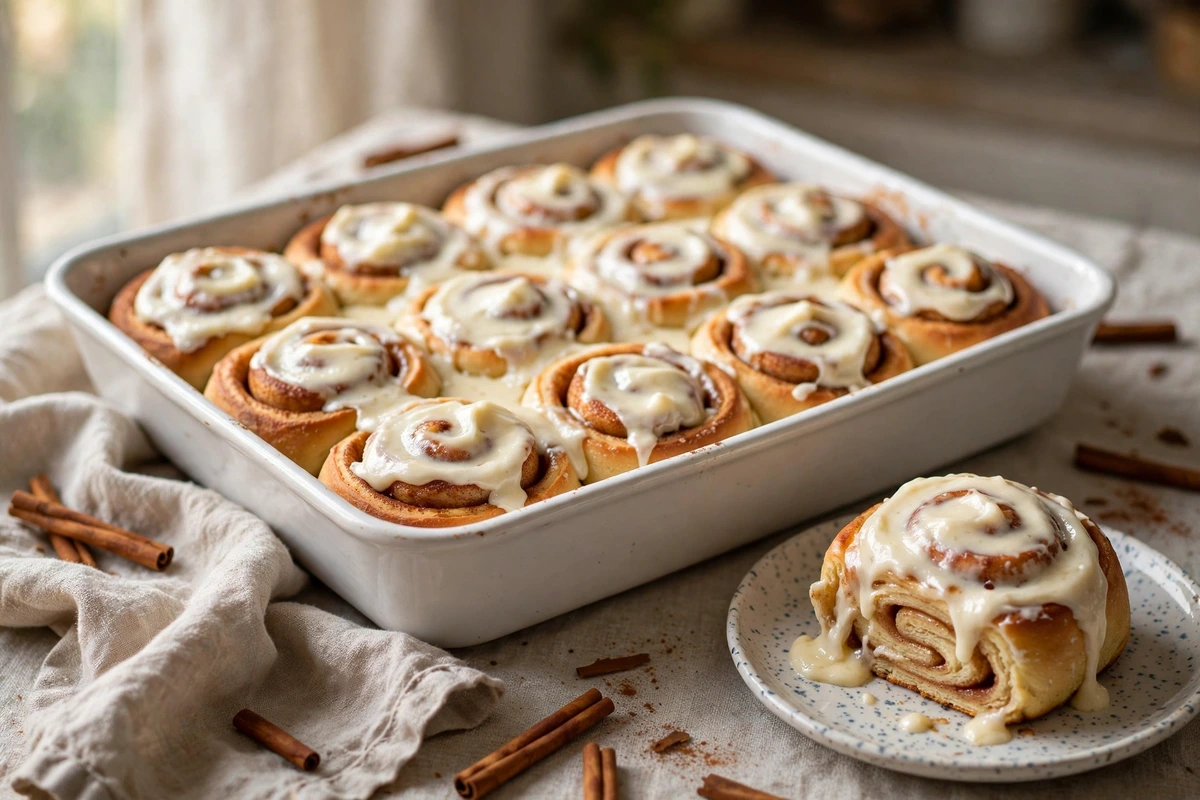
Soft cinnamon rolls topped with cream cheese frosting served warm in a baking pan
Dietary Variations & Adaptations
Swap the milk for unsweetened oat or soy milk and use block-style vegan butter in both the dough and the filling. Avoid tub spreads, which carry more water and make the filling run. Use a dairy-free cream cheese alternative for the frosting, or a simple powdered sugar glaze.
Replace up to a third of the all-purpose flour with white whole wheat. Beyond that the rolls get noticeably heavier and drier.
Cut the filling brown sugar to 1/2 cup and skip the frosting in favor of a thin glaze made from powdered sugar and milk. The cinnamon flavor comes forward when there's less sugar covering it.
Trust the thermometer over the timer and over the color. Enriched dough carries sugar, butter, and eggs, all of which brown the surface quickly through the Maillard reaction and caramelization, well before the interior crumb has set.
That mismatch is exactly why so many cinnamon rolls look perfect and taste raw in the middle.
Fully baked enriched dough lands around 190°F in the center of the pan, and once you've checked it that way a couple of times you'll recognize the right look on sight.
Allergen Notice: This recipe contains wheat (gluten), dairy, and eggs. Wheat: a 1-to-1 gluten-free baking blend can be used, though the dough won't stretch and should be rolled between parchment sheets. Dairy: see the dairy-free swaps above. Eggs: the eggs can be replaced with 6 tablespoons of aquafaba, giving a slightly denser crumb. Always check packaging labels carefully.
Frequently Asked Questions
Recipe Visual Gallery (6 Full Photos)
Recipe Card & Steps
Ingredients Checklist
Click an item to check it off as you prep
- 1 cup (240 ml)whole milk, warmed to 110°F
- 2 1/4 tsp (7 g)instant yeast
- 1/3 cup (67 g)granulated sugar
- 1 tsp (6 g)fine salt
- 4 to 4 1/2 cups (500 to 560 g)all-purpose flour, divided
- 2 largeeggs, room temperature
- 1/3 cup (75 g)unsalted butter, melted and slightly cooled
- 1/3 cup (75 g)unsalted butter, softened (for filling)
- 3/4 cup (165 g)packed light brown sugar
- 2 tbsp (16 g)ground cinnamon
- 1 pinchfine salt (for filling)
- 1/4 cup (60 ml)heavy cream, warmed (poured over rolls before baking)
- 4 oz (113 g)full-fat block cream cheese, softened
- 1/4 cup (57 g)unsalted butter, softened (for frosting)
- 1 cup (120 g)powdered sugar
- 1 tspvanilla extract
- 1 pinchfine salt (for frosting)
- 1 to 2 tbspmilk (to loosen frosting)
Step-by-Step Instructions
Follow along and mark each step complete as you cook
Mix the dry base
Warm the milk to 110°F. In a large bowl, whisk together 4 cups of the flour, the granulated sugar, instant yeast, and salt.
Form a shaggy dough
Add the warm milk, eggs, and melted butter. Stir with a wooden spoon until a shaggy dough forms with no dry flour left at the bottom.
Knead until smooth and tacky
Knead 8 to 10 minutes by hand or 5 minutes with a dough hook, adding the remaining flour a tablespoon at a time only if needed. The dough should be smooth, tacky, and stretch thin without tearing.
First rise
Place in an oiled bowl, cover, and rise in a warm spot for 60 minutes, until doubled and a pressed dent fills back slowly.
Punch down and roll
Punch down and rest 10 minutes. Roll into an 18 by 12 inch rectangle, about 1/4 inch thick.
Fill and press
Spread the softened butter across the dough, leaving a half inch clear along one long edge. Mix the brown sugar, cinnamon, and salt, scatter evenly over the butter, and press gently into the surface.
Roll log and slice
Roll tightly from the long side toward the clear edge, finishing seam side down. Cut into 12 slices with dental floss.
Second rise
Arrange cut side up in a greased 9x13 pan. Cover and rise 45 minutes, until puffy and just touching. Heat the oven to 350°F during the last 20 minutes.
Cream pour and bake
Pour the warmed heavy cream over the risen rolls. Bake 22 to 25 minutes, until golden and the center roll reads 190°F. Tent with foil if the tops darken early.
Frost and serve
Cool 15 minutes. Beat the cream cheese and butter until smooth, add the powdered sugar, vanilla, and salt, then loosen with milk. Spread over the warm rolls and serve.
Recipe Card Notes & Tips
- To make these overnight: complete through step 8, then refrigerate the covered pan instead of the second rise. Take it out 45 to 60 minutes before baking so the rolls warm up and finish rising, then continue from step 9.
- Active dry yeast can replace instant. Stir it into the warm milk with a teaspoon of the sugar and wait 5 to 10 minutes for it to foam before mixing.
- A light-colored pan is better than dark metal, which browns the bottoms before the centers set.
Ratings & Reviews
Leave a Review
Made this recipe? Share your thoughts, tweaks, and honest rating with other home cooks!
Community Reviews (0)
You Might Also Enjoy
More delicious recipes in Breakfast.