Easy Breakfast Casserole with Biscuits Recipe
A breakfast casserole with biscuits, sausage and cheddar, ready in 75 minutes. Cut-side-up biscuits are the trick to a base that isn't doughy.

Why You'll Love This Recipe
- Under 90 minutes, total. No overnight step, no thawing frozen anything. Decide at 8am, eat at 9:30.
- Two cans of biscuits do the heavy lifting. The base of this dish costs a few dollars and takes 5 minutes to prep.
- The tops stay flaky. Most versions drown the dough. This one doesn't, so you get real biscuit texture instead of dumplings.
- Feeds twelve from one pan with ingredients that are already in most fridges.
Here's the one thing nobody tells you: the biscuits go in cut-side up, in a single layer, and the custard gets poured around them rather than over them.
Almost every version of this recipe tells you to scatter the dough pieces in and pour egg over the whole thing. That's how you get a doughy middle.
Submerged dough can't brown, can't release steam, and can't rise properly, so it sets into something closer to a wet dumpling than a biscuit.
Instead: quarter the biscuits, lay the pieces cut-side up so the exposed layers face the oven, and pour the custard slowly at the edges of the dish so it flows underneath and comes up only partway around each piece.
You want maybe two thirds of each piece sitting in egg and the top third dry. Those dry tops brown, flake and stay recognizably biscuit. The bottoms soak up custard and bind the whole casserole together.
You get both textures in one dish, which is the entire point of using biscuits instead of bread.
Read Before You Start
Cut the salt in the custard roughly in half compared to a normal egg bake. Canned biscuit dough is heavily salted, and so is breakfast sausage. Between the two, this dish arrives with most of its sodium already built in. Half a teaspoon of kosher salt for eight eggs will look wrong in the bowl and taste correct on the plate. Adding a full teaspoon out of habit is the single most common way this casserole comes out too salty to eat much of.
Keep the dough in the fridge until the second you cut it. Refrigerated biscuit dough softens fast at room temperature, and soft dough smears under a knife instead of slicing. Smeared pieces have their layers compressed shut, so they steam into dense little pucks rather than puffing. Open the cans, cut, and get everything into the dish while the dough is still cold and firm.
Ingredient Deep Dive & Notes
Two cans of refrigerated buttermilk biscuits, about 12 oz each (20 biscuits total). Standard-size, not the oversized "grands" style. Standard biscuits quarter into pieces that bake through in the same 45 minutes the custard needs. The oversized ones give you chunks with a thick raw core unless you cut each into eight, at which point you've made extra work for the same result. Don't substitute crescent roll dough here. It has no structural gluten development to speak of, and it dissolves into the custard instead of holding as distinct pieces.
1 pound bulk chicken or beef breakfast sausage. Standard recipes call for pork sausage. Chicken or beef breakfast sausage works exactly the same, since the sage, black pepper and fennel in the seasoning blend are carrying the flavor. Buy a bulk roll rather than links so it crumbles.
8 large eggs and 1 cup whole milk. Far less liquid than a bread strata uses, and that's deliberate. The custard here is a binder holding biscuit pieces together, not the body of the dish. More on the ratio in the Chef's Note. Whole milk, not skim, because fat is what keeps the set tender rather than rubbery.
8 oz sharp cheddar, shredded from a block. Pre-shredded bags are coated in potato starch or cellulose to stop clumping, and that coating goes grainy in custard while pushing oil out during the melt. Two minutes on a box grater fixes it. One cheese is enough here, since the biscuits and sausage are doing plenty already.
One yellow onion, cooked first. Raw onion releases water straight into the eggs while they bake, and in a low-liquid custard like this one that shows up immediately as a wet layer. Cook it in the sausage fat until the pan looks dry. Same rule for anything else you add.
2 tablespoons butter for the dish. Be generous, including the sides. Biscuit dough sticks harder than bread or potato does.
For an overnight bread-based version, see Make-Ahead Breakfast Casserole. For a crispy potato crust, try Hashbrown Breakfast Casserole.
Equipment Needed
- 9x13 inch baking dish, glass or ceramic, at least 3 quarts. Metal browns the biscuit bottoms faster, so start checking at 38 minutes.
- A sharp knife or bench scraper for cutting cold dough cleanly. A dull knife compresses the layers instead of cutting them.
- Box grater for the cheese.
- Instant-read thermometer. The only reliable way to know a dough-and-custard dish is cooked through in the center.
- No foil needed. This one bakes uncovered the whole way, which is part of why the tops brown.
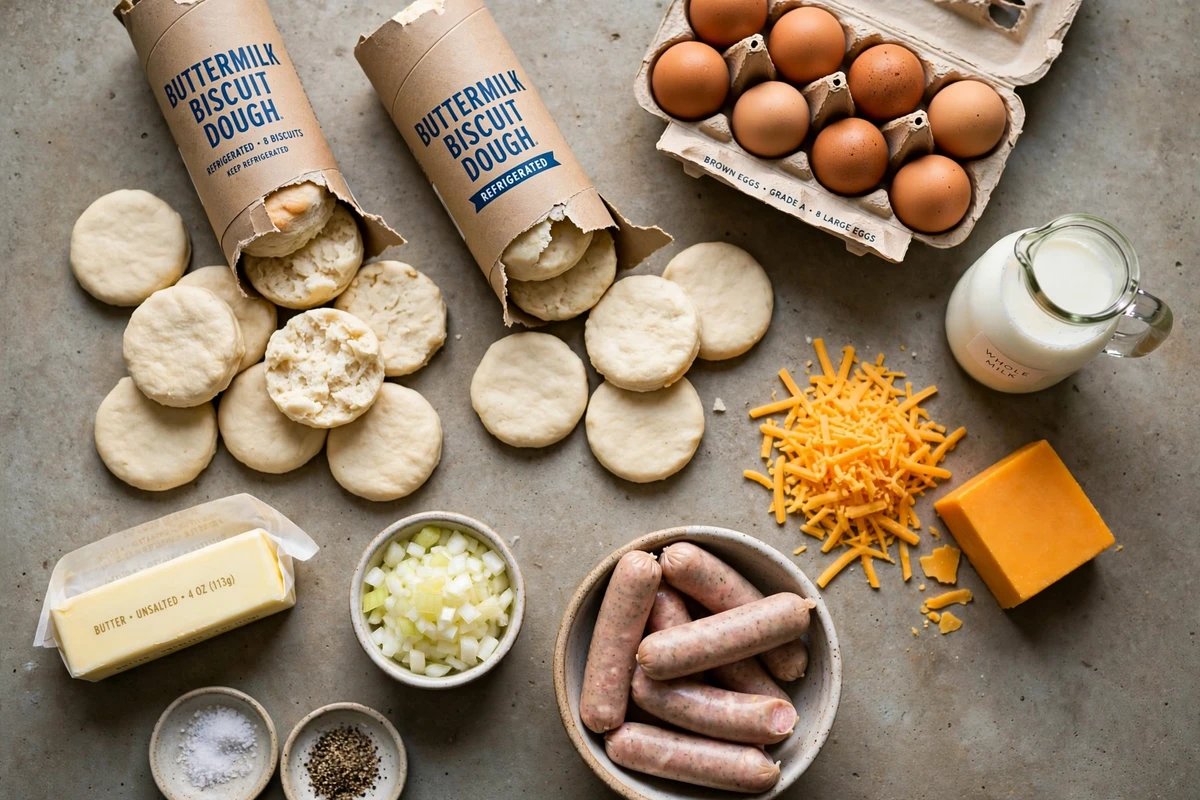
Ingredients for breakfast casserole with biscuits including biscuit dough, breakfast sausage, eggs, milk, and cheddar cheese
Detailed Step-by-Step Cooking Guide
Preparation & Setup
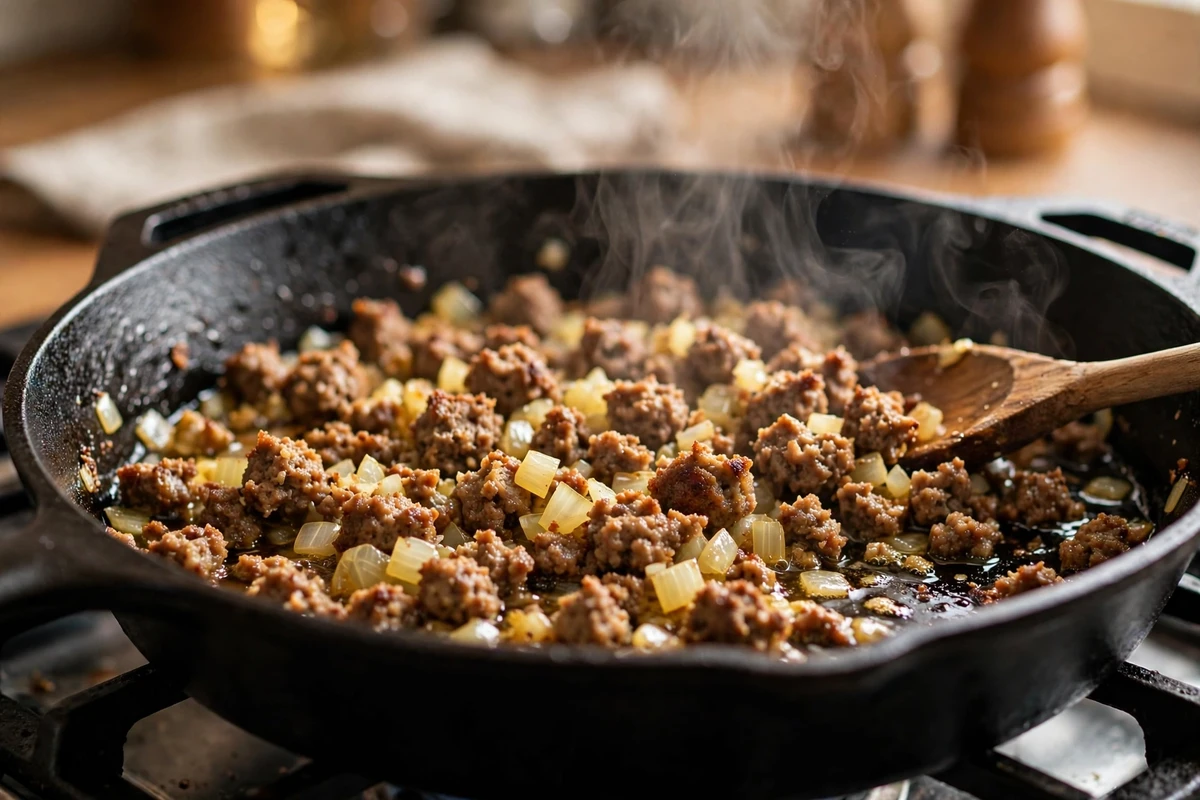
Browning breakfast sausage crumbles and softening diced onion in a skillet
Cook the sausage and onion
Whisk the custard
Cut the biscuits cold
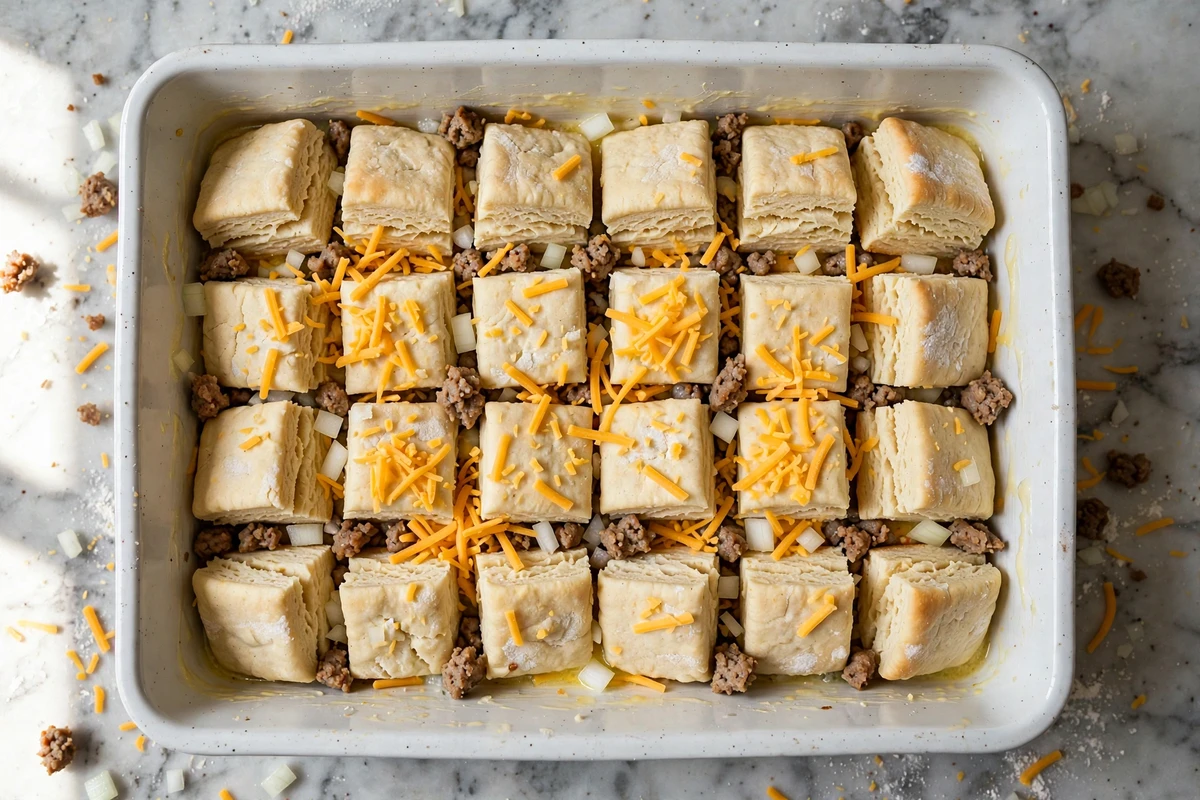
Arranging raw cut biscuit quarters with browned sausage and cheese scattered in the gaps
Arrange the biscuits cut-side up
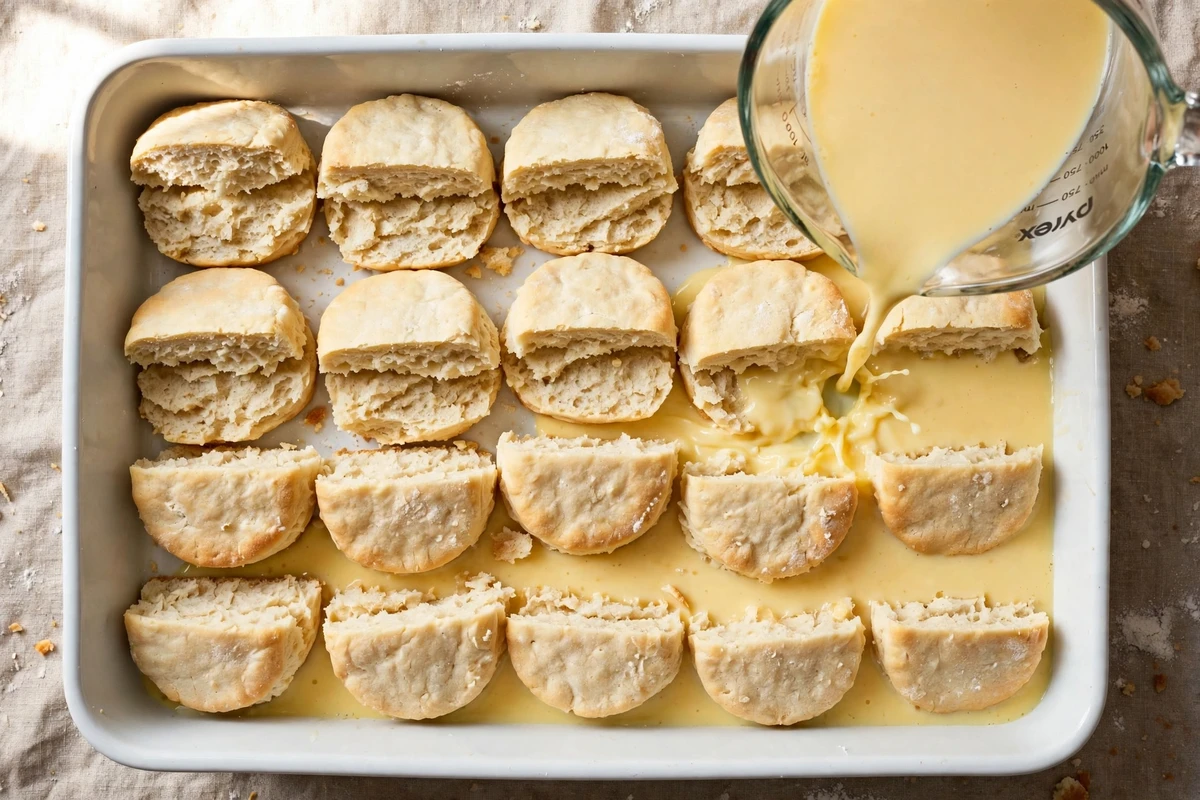
Pouring the egg and milk custard slowly around the biscuits into the baking dish
Pour the custard around the edges
Pouring egg custard around the biscuit edges leaving the biscuit tops exposed
Bake uncovered
Rest ten minutes
Getting the Biscuits Cooked Through
What it should look like: Puffed, golden, clearly defined biscuit pieces sitting above a set layer of egg, with browned cheese in the gaps. Break one open from the center of the pan and you should see dry, flaky interior layers. A square lifts out holding together, with a soft custardy base and a crisp top.
The pieces were cut too large, laid too thick, or fully submerged in custard. All three trap raw dough where heat can't reach it. Return it uncovered for another 8 to 10 minutes and check the center piece again. If it's still gluey after that, the fix is in the next attempt: smaller pieces, single layer, custard only two thirds of the way up.
Baked covered, or the custard was poured over the tops. Give it 5 to 8 more minutes uncovered to dry and brown the surface.
The custard broke. Egg proteins tightened from heat and squeezed out the milk they were holding. This is a temperature problem, so resist the instinct to raise the oven to 400°F to speed the biscuits along. Hold at 350°F and add time instead.
Sausage fat that didn't get drained. Pour off all but a tablespoon after browning, and blot the crumbles on paper towel.
Canned biscuits and breakfast sausage both carry a lot of sodium before you add any. Next time drop the custard salt to ¼ teaspoon and taste a cooked sausage crumble before deciding whether it needs more.
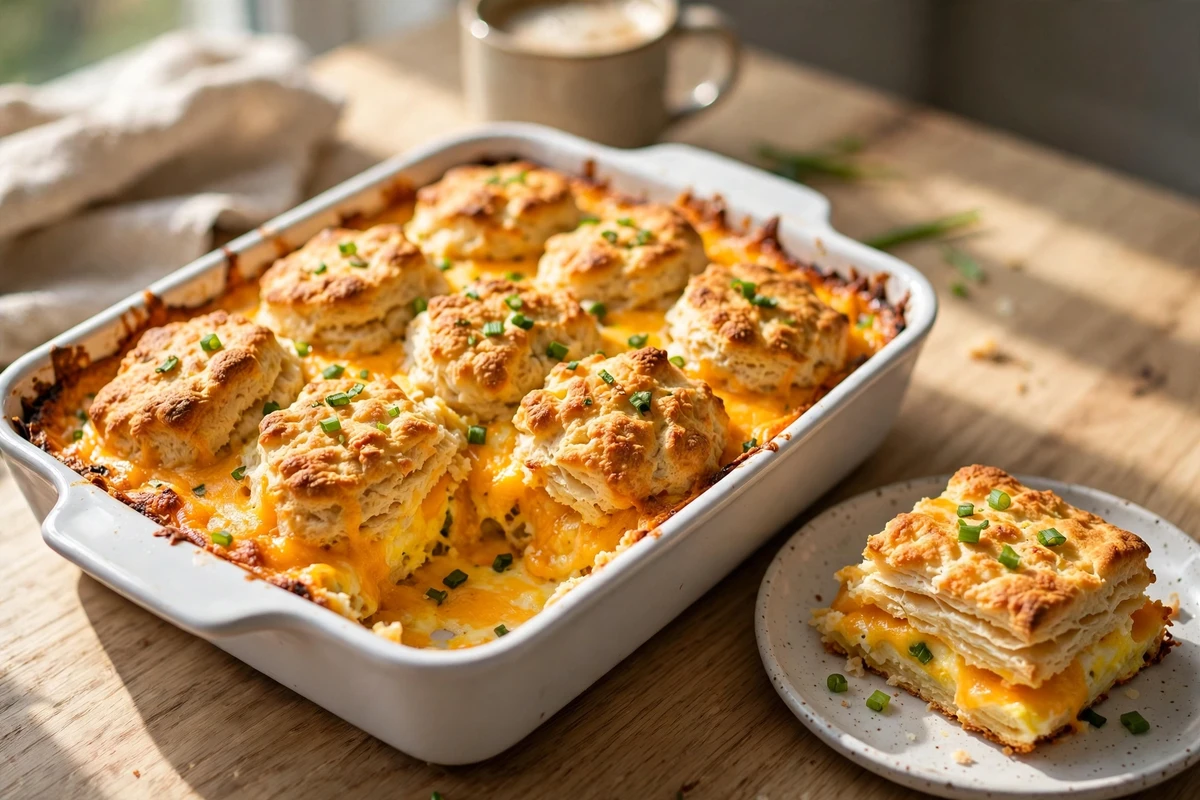
Baked golden brown breakfast casserole in baking dish with a square portion on a plate
How to Use Leftovers
How to Serve, Store & Reheat
Cut into 12 squares in the pan after the 10 minute rest, cutting along the seams between biscuit pieces where you can so the squares hold together. Sliced green onions add color and cut the richness. Hot sauce, salsa, sausage gravy or plain butter all work alongside. Fruit and coffee finish the table.
Cool to room temperature within two hours, then cover tightly or move squares to an airtight container. Refrigerate up to 3 days. That's a day shorter than a bread-based casserole, because the biscuit texture falls off noticeably by day four. Egg dishes shouldn't sit out longer than two hours, or one hour if the room is above 90°F.
Single squares, for texture: air fryer at 375°F for 5 to 6 minutes, or a dry skillet over medium, covered, 4 to 5 minutes. Single squares, for speed: microwave 60 to 75 seconds, loosely covered. Fast, but the biscuit goes soft. Whole pan: uncovered at 325°F for 18 to 22 minutes, until the center reaches 165°F. Leave the foil off so the tops crisp back up.
Baked only, and it's the weakest of the three casserole styles at this. Cool completely, wrap squares individually in plastic then foil, freeze up to 2 months. Thaw overnight in the fridge and reheat in an air fryer to recover as much texture as you can. Expect the biscuits to come back softer than they went in, since the layers absorb moisture during thawing. Freezing it unbaked doesn't work at all. The chemical leavening in the dough activates on contact with the wet custard and is spent long before the casserole ever reaches an oven, so it bakes up flat and dense.
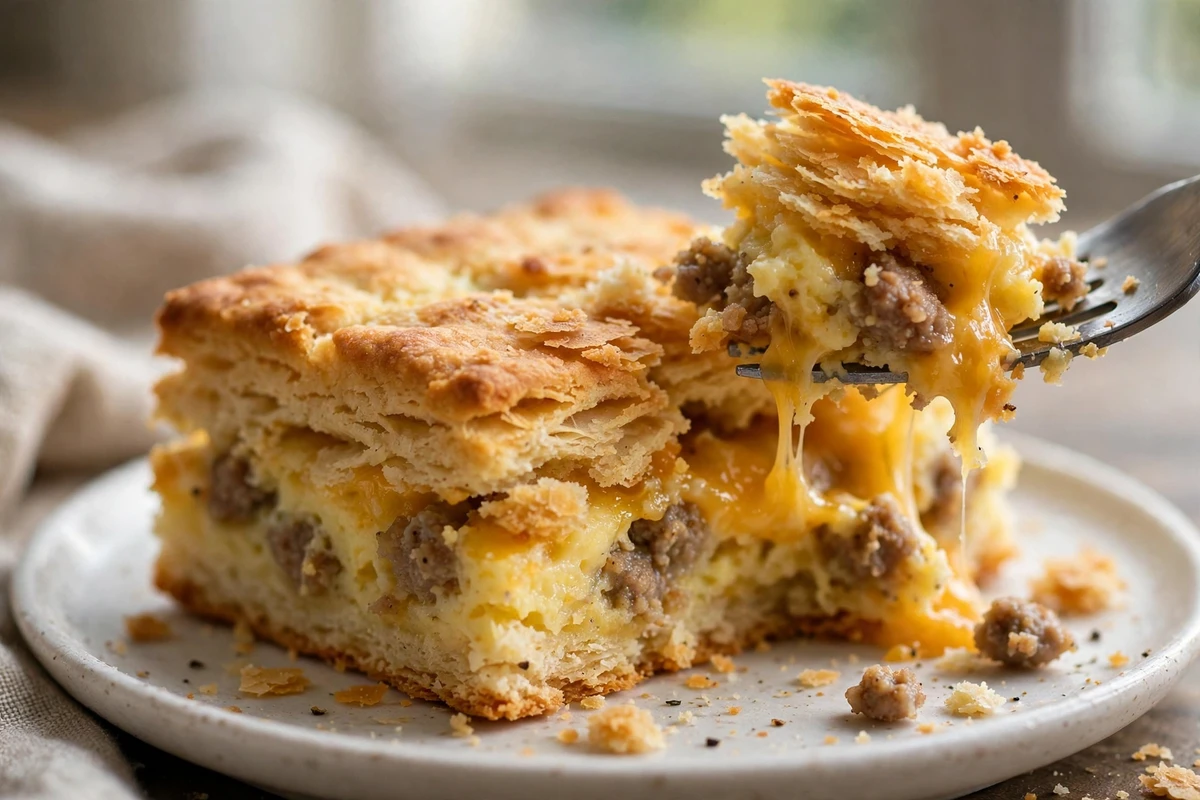
Fork lifting a bite of breakfast casserole showing flaky biscuit layers and melted cheese
Dietary Variations
Use a refrigerated or frozen gluten-free biscuit dough, cut into quarters the same way. Gluten-free doughs brown faster and dry out sooner, so drop the oven to 340°F and start checking at 35 minutes. They also hold together less well when cut cold, so expect rougher edges on the pieces.
Unsweetened oat milk sets closest to whole milk in the custard. Use olive oil or a dairy-free stick to grease the dish, and a dairy-free cheddar-style shred added only in the last 12 minutes of the bake, since most plant-based cheeses seize instead of melting over a longer bake. Check the biscuit dough label too, as many refrigerated doughs contain butter or buttermilk solids.
Drop the sausage and use 8 oz of mushrooms cooked down hard until the pan is dry, plus ½ teaspoon of ground sage and ¼ teaspoon of fennel seed to replace the seasoning the sausage was carrying. Add a pinch more salt, since you've also removed a major salt source.
Use one can of biscuits instead of two and increase the eggs to 10 with 1¼ cups milk. You get more egg and less dough, which brings the calories and sodium down meaningfully. Arrange the fewer biscuit pieces spaced out rather than trying to cover the pan.
This is the one casserole in the category you genuinely cannot make ahead, and the reason is worth understanding rather than just accepting. Refrigerated biscuit dough is chemically leavened.
Baking powder in the dough reacts in two stages, once when it gets wet and again when it gets hot. The moment you cut the dough and pour custard around it, stage one has started and a clock is running.
Leave the assembled dish in the fridge overnight and by morning that first reaction is spent, the dough has gone slack from sitting in liquid, and what comes out of the oven is dense and flat.
Practical rule: from the first cut to the oven door, aim for under 15 minutes. That's also why I cook the sausage and whisk the custard before touching the cans.
If you want to prep ahead, cook the sausage and onion the night before and refrigerate them. Whisk the custard, cut the dough and assemble in the morning.
That takes about 8 minutes and gets you everything except the biscuit compromise.
Allergen Notice: This recipe contains eggs, dairy (butter, milk, cheese) and wheat (biscuit dough). Some refrigerated biscuit doughs also contain soy, usually as soybean oil or soy lecithin. Substitutions for dairy and wheat are covered above. There's no workable egg substitute here, because the custard is what binds the biscuit pieces into a casserole rather than a tray of separate biscuits. Formulations change between brands and cross-contact happens at the facility level, so check the labels on your biscuit dough, sausage and cheese yourself. I can't tell you this recipe is safe for any specific allergy. Anyone cooking for a diagnosed allergy should verify every product independently.
Frequently Asked Questions
Recipe Visual Gallery (7 Full Photos)
Recipe Card & Steps
Ingredients Checklist
Click an item to check it off as you prep
- 2 cans (about 12 oz each)refrigerated buttermilk biscuits, standard size, 20 biscuits total
- 1 lbbulk chicken or beef breakfast sausage
- 1 mediumyellow onion, diced
- 8 ozsharp cheddar, shredded from a block (about 2 cups)
- 2 tbspunsalted butter, for the dish
- 8 largeeggs
- 1 cupwhole milk
- ½ tspkosher salt
- ½ tspblack pepper
- ½ tspgarlic powder
- 2green onions, thinly sliced
Step-by-Step Instructions
Follow along and mark each step complete as you cook
Cook the sausage in a large skillet over medium heat, breaking it into crumbles, until browned with no pink remaining (165°F for poultry sausage). Transfer to a paper-towel-lined plate and pour off all but 1 tbsp of fat.
Cook the onion in the reserved fat for 6 to 8 minutes, until translucent and no liquid pools in the pan. Set aside with the sausage to cool.
Heat the oven to 350°F and butter a 9x13 baking dish generously, including the sides.
Whisk the eggs in a large bowl until completely uniform. Add the milk, salt, pepper and garlic powder, and whisk until frothy on top.
Take the biscuit dough straight from the fridge and cut each biscuit into quarters with a sharp knife, pressing straight down. You'll have about 80 pieces.
Arrange the pieces cut-side up in a single layer in the dish, close together but not overlapping. Scatter the cooled sausage, onion and two thirds of the cheddar into the gaps between pieces.
Pour the custard slowly along the edges of the dish so it runs underneath and rises about two thirds of the way up the biscuit pieces. Leave the tops dry and exposed. Scatter the remaining cheddar over the top.
Bake uncovered at 350°F for 40 to 45 minutes, until the biscuit tops are deeply golden and puffed, the cheese has browned in patches, and a thermometer in the center reads 160°F.
Break open a biscuit piece from the middle of the pan to confirm it's dry and flaky inside, not gluey. If it isn't, return the dish uncovered for 8 to 10 minutes.
Rest 10 minutes. Top with sliced green onions and cut into 12 squares.
Recipe Card Notes & Tips
- Go light on salt. Canned biscuits and breakfast sausage are both high in sodium before you add any. Half a teaspoon for 8 eggs is correct here even though it looks low.
- Don't assemble ahead. The leavening in the dough activates the moment it meets the custard. Assembled and refrigerated overnight, it bakes up flat and dense.
Ratings & Reviews
Leave a Review
Made this recipe? Share your thoughts, tweaks, and honest rating with other home cooks!
Community Reviews (0)
You Might Also Enjoy
More delicious recipes in Breakfast.