Tuna Pasta Salad Recipe with Creamy Dill Dressing
Tuna pasta salad that stays creamy for days, not dry. Get the pasta-to-dressing ratio, the chilling trick, storage rules, and a full recipe card.
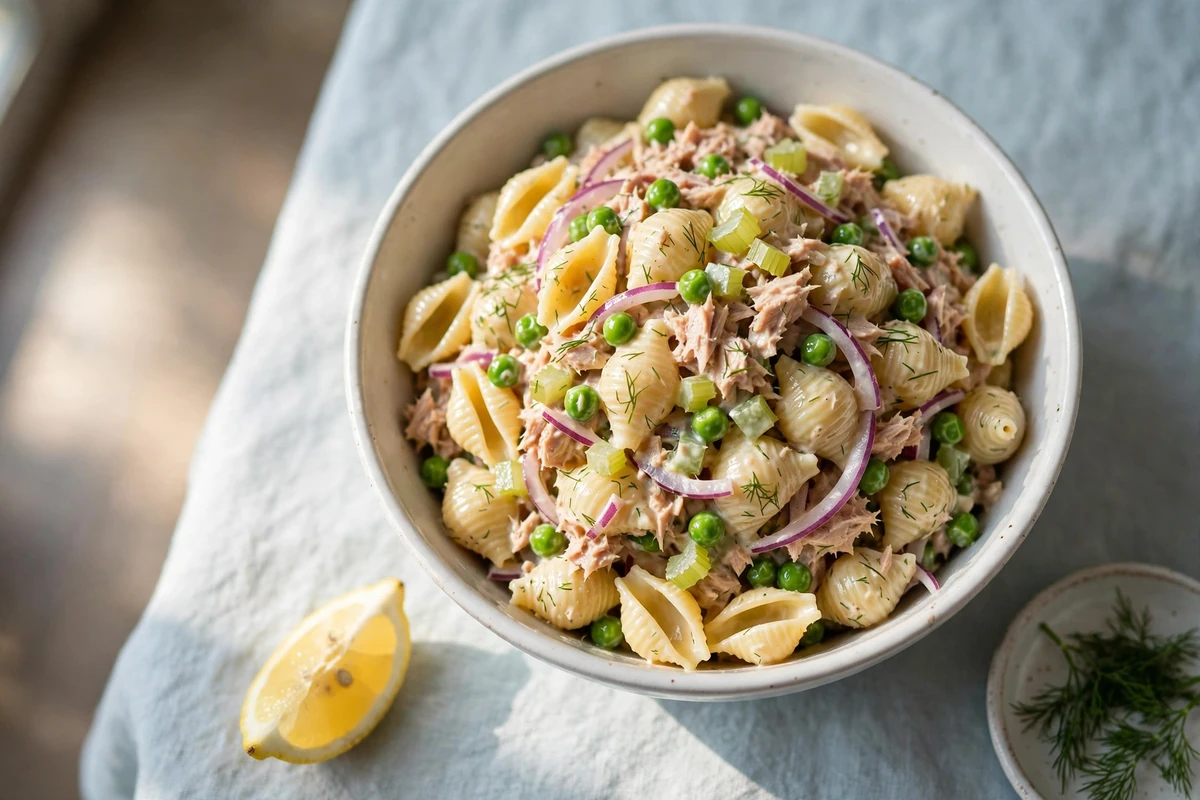
Why You'll Love This Recipe
- It holds up. The dressing is built to survive an overnight rest, so it is genuinely make-ahead rather than best-in-the-first-ten-minutes.
- Pantry ingredients. Two cans of tuna, a box of pasta, mayo, and whatever crunchy vegetable is in the drawer.
- No oven. Ten minutes of boiling is the only heat involved.
- It scales cleanly. Double it for a potluck without recalculating anything except the bowl size.
Hold back a quarter of the dressing. Mix the salad with three-quarters of it, chill, then stir the reserved dressing in right before serving.
Cooked pasta keeps absorbing liquid for hours as its starch re-crystallises, which is exactly why day-two pasta salad looks dry.
Instead of overdressing at the start (which makes it soupy for the first hour), you top it up at the end. This one change is the difference between a salad that peaks in the bowl and one that peaks on the table.
Read Before You Start
Cook the pasta one minute past al dente, then cool it flat. Pasta firms up as it chills, so a perfect al dente bite at the stove turns chalky in the fridge. And do not dump hot pasta into a bowl to cool, because the pile steams itself and goes gummy. Spread it on a sheet pan in a single layer instead and it cools in about five minutes.
Season the pasta, not just the dressing. Bland pasta salad is almost always bland pasta wearing a well-seasoned coat. Salt the boiling water properly (a full tablespoon), then toss the drained, cooled pasta with a little lemon juice and a pinch of salt before any mayo goes near it.
Ingredient Deep Dive & Notes
Pasta. Medium shells or elbow macaroni. You want a shape with a hollow or a curve that traps dressing, because smooth shapes like penne let it slide off. Rotini and ditalini also work. Skip long pasta entirely. For the same shape logic applied to a zesty vinaigrette version, see our Italian Pasta Salad.
Canned tuna. Two 5-ounce cans, drained hard. Press the lid down over the sink and count to ten, because leftover packing liquid is the single biggest cause of a dressing that turns watery overnight. Tuna in olive oil gives a richer result and a softer flake; tuna in water gives a cleaner, lighter salad and lets the dill and lemon come forward. Either is correct. Chunk light and solid white both work, though solid white holds bigger flakes.
Mayonnaise plus sour cream. Mayo alone is heavy and a little flat. Swapping a quarter of it for sour cream adds acidity and thins the coating just enough to spread evenly. Plain whole-milk Greek yogurt does the same job.
Mustard. Use yellow or whole-grain. Classic Dijon is made with white wine, so if you are keeping the recipe alcohol-free, check the label or use one of the alternatives. This is the one ingredient in the whole list that quietly fails a halal check if you grab it on autopilot.
Fresh dill. Not a garnish. Dill is what makes this taste like a deli salad rather than mayonnaise with pasta in it. Dried dill is a weak substitute at roughly one-third the volume, and parsley alone changes the dish more than people expect.
Frozen peas. Thawed, never cooked. They soften slightly in the dressing and add sweetness that balances the acid.
Don't substitute: the fresh lemon juice. Bottled lemon juice has a dull, slightly bitter edge that mayonnaise amplifies rather than hides. Vinegar is not a swap either, because it reads as sharp instead of bright here. For a heavier, tangier pickle-forward direction, explore our Dill Pickle Pasta Salad. For another easy make-ahead summer side, see our Creamy Cucumber Salad.
Equipment Needed
- A rimmed sheet pan, for cooling the pasta flat in a single layer.
- A colander with small holes so shells and peas do not escape.
- A large mixing bowl with plenty of room to fold without mashing tuna into paste.
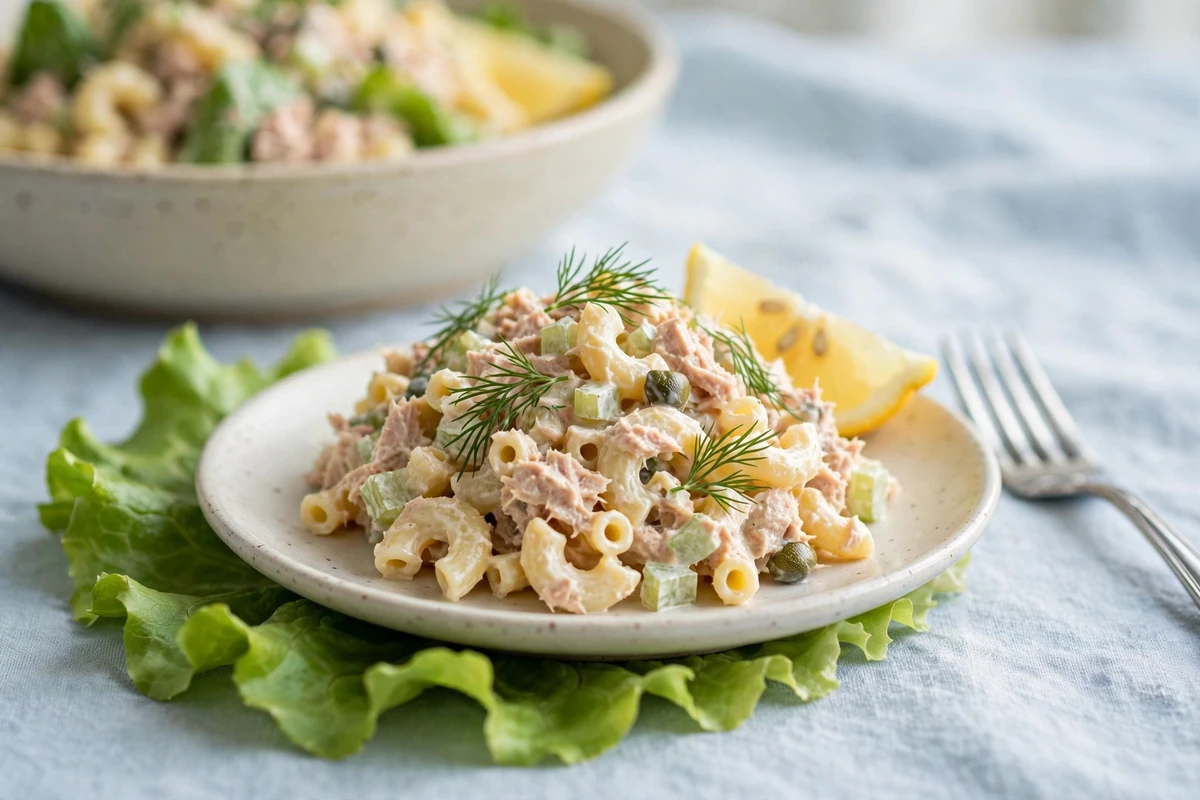
Tuna pasta salad plated with elbow macaroni, flaked tuna, diced celery, fresh dill sprigs, and lemon wedge on lettuce
Detailed Step-by-Step Cooking Guide
Boil & Cool Pasta Flat
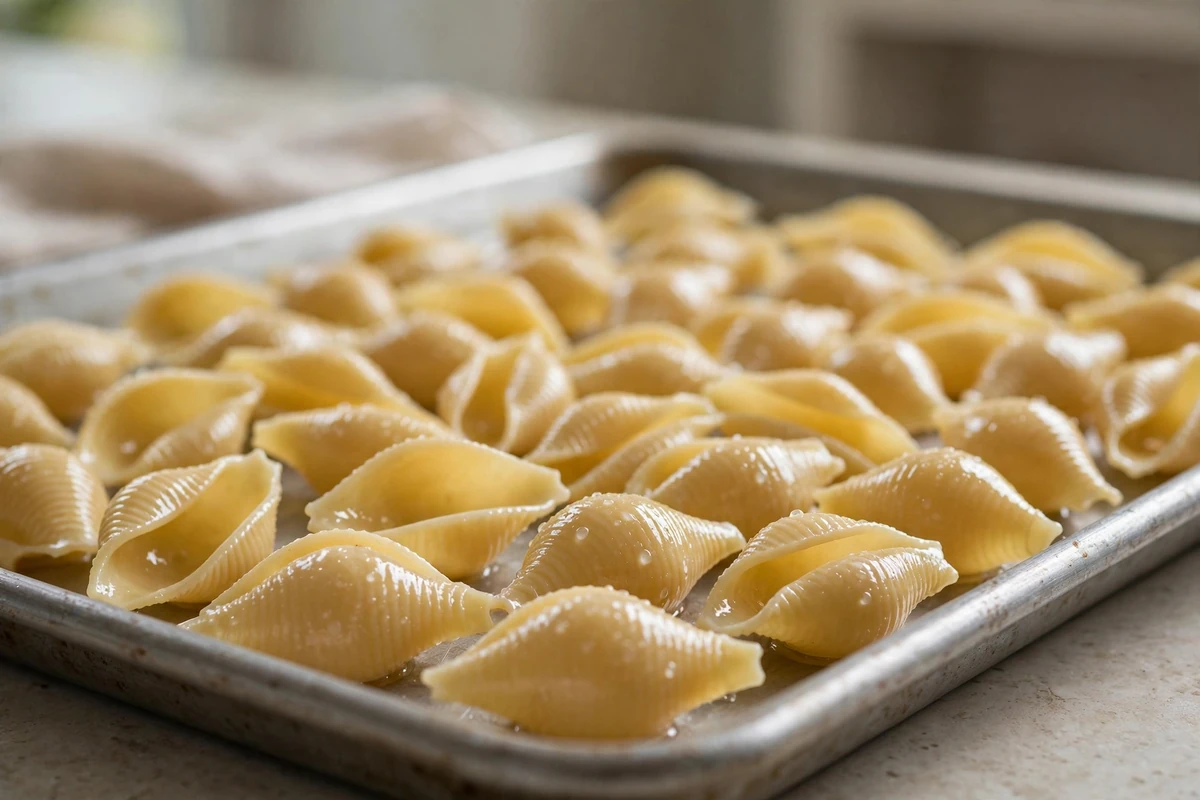
Cooked pasta shells rinsed with cold water and spread in a single layer on a rimmed sheet pan to cool
Flake Tuna & Whisk Dressing
Pre-Season Pasta & Fold
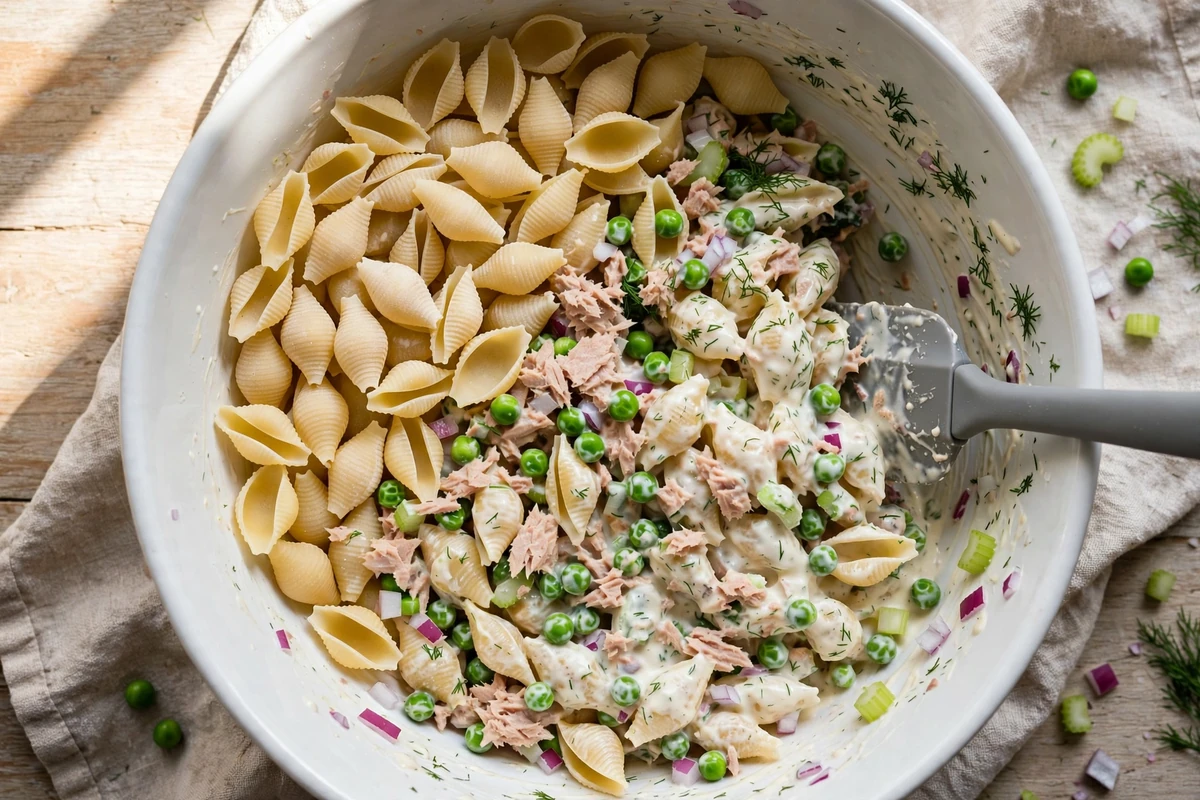
Folding flaked tuna, green peas, celery, and creamy dill dressing into pasta shells in a large bowl
Chill & Add Reserved Dressing
Getting Your Tuna Pasta Salad Creamy, Not Gluey
Common pitfalls when making chilled tuna pasta salad and how to resolve them easily.
Underdrained tuna or wet celery. Press tuna lids firmly over sink to squeeze out all liquid. If already watery, stir in 2 tbsp mayonnaise to rebuild body.
Pasta absorbed dressing during chilling. Fold in the reserved quarter of dressing, or whisk 2 tbsp mayo with 1 tsp lemon juice and stir through.
Cold dulls flavor perception. Let salad rest 15 minutes at room temperature before testing and making final salt adjustments.
Pasta was not rinsed or cooled in a single flat layer. Surface starch turned into glue. Always rinse cold and cool flat.
Over-flaking or stirring too aggressively. Break into fingernail-sized flakes and fold with a rubber spatula.
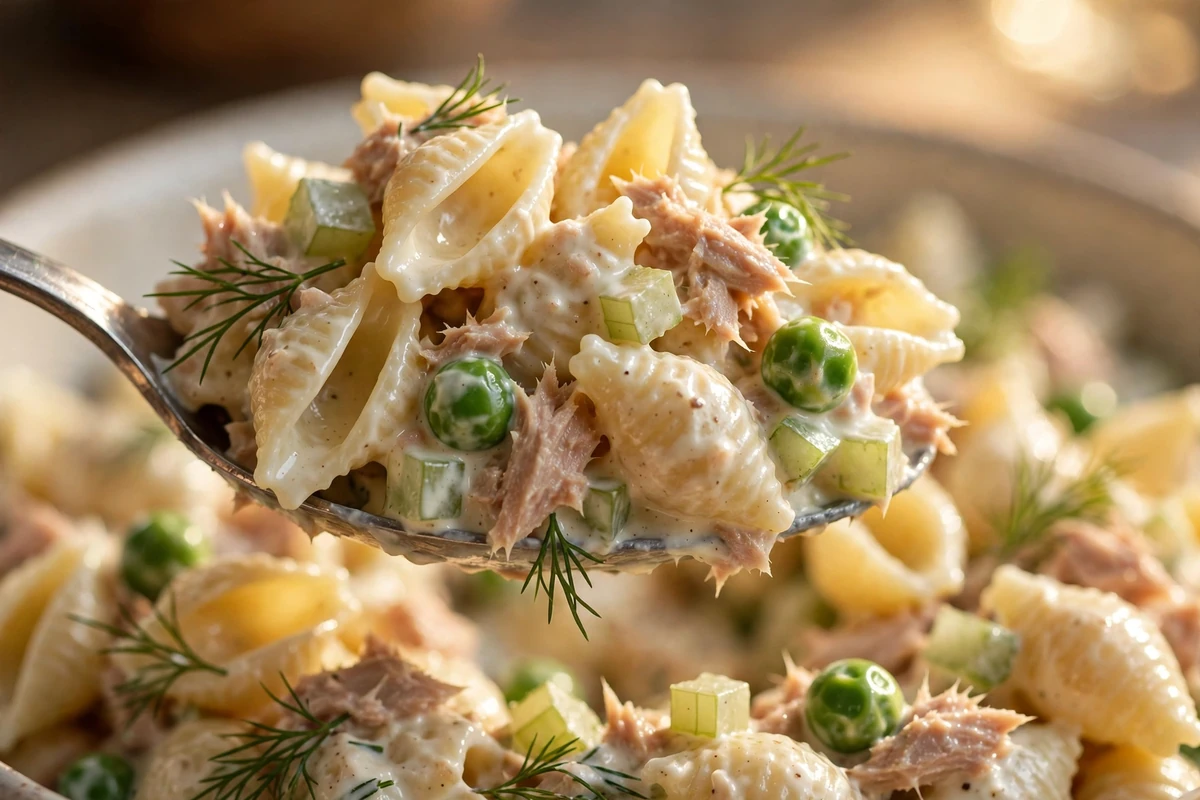
Silver spoon lifting creamy tuna pasta salad showing dressing coating the hollows of the pasta shells with flaked tuna and peas
How to Use This Salad Beyond the Bowl
How to Serve, Store & Reheat
Take out 15 minutes before serving, stir in reserved dressing, and garnish with fresh dill and black pepper. Keep perishable salads out for no more than 2 hours (1 hour above 90°F); use an ice bath for picnics.
Refrigerate in an airtight container for up to 3 days. Press plastic wrap directly onto the surface to prevent drying.
No. Mayonnaise splits into an oily mess when heated. Serve cold or cool room temp only.
No. Mayonnaise separates on thawing and pasta turns mealy.
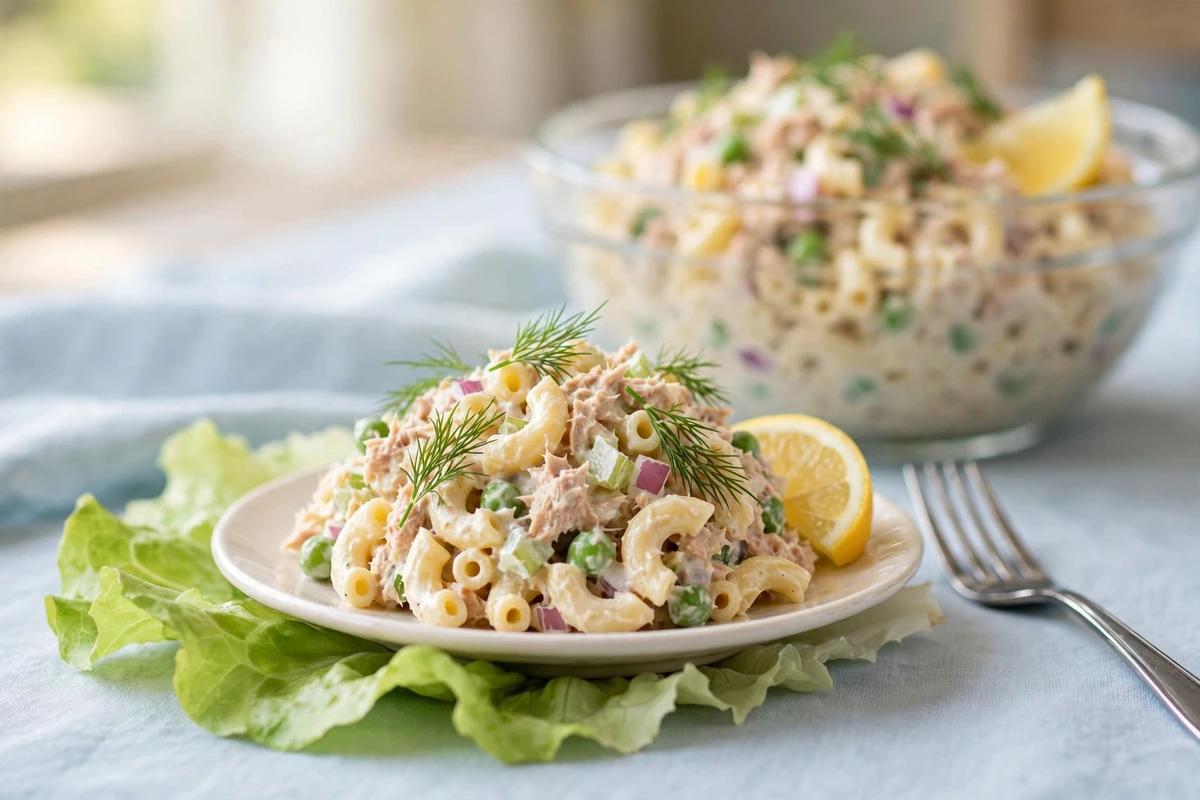
Plated creamy tuna macaroni salad garnished with fresh dill and lemon wedge with serving bowl in the background
Dietary Variations
Use short corn-and-rice blend pasta cooked to the shorter end of package time. Rinse and cool flat as usual.
Omit sour cream and use 1 cup dairy-free mayonnaise with an extra teaspoon of lemon juice.
Replace sour cream and half the mayo with whole-milk Greek yogurt for higher protein and a tangier profile.
Taste this twice, and taste it warm-ish the second time. Cold suppresses how strongly you register salt, acid and fat, which is why a bowl that seemed perfectly seasoned at mixing time can taste muted straight out of the fridge, and why people over-salt cold salads trying to fix it.
Let it come up for 15 minutes before your final adjustment. The other thing worth knowing: the dressing looks slightly too loose when you first fold it in. That is correct.
The pasta has not finished absorbing yet, and a salad that looks perfect at minute one will look dry at minute sixty.
Allergen Notice: This recipe contains fish (tuna), wheat (pasta), egg (mayonnaise), milk (sour cream), and mustard. Always check labels on canned fish and mayonnaise.
Frequently Asked Questions
Recipe Visual Gallery (6 Full Photos)
Recipe Card & Steps
Ingredients Checklist
Click an item to check it off as you prep
- 12 oz (340 g)medium pasta shells or elbow macaroni
- 1 Tbspkosher salt, for the pasta water
- 3/4 cup (170 g)mayonnaise
- 1/4 cup (60 g)sour cream or plain whole-milk Greek yogurt
- 2 Tbspfresh lemon juice, divided
- 1 Tbspyellow or whole-grain mustard
- 1/2 tspgarlic powder
- 1/2 tspfreshly ground black pepper
- 1/4 tspfine salt, plus more to taste
- 2 cans (5 oz / 142 g each)tuna, drained very well
- 2 ribscelery, diced small (about 1 cup / 120 g)
- 1/2 smallred onion, finely diced (about 1/2 cup / 75 g)
- 3/4 cup (100 g)frozen peas, thawed
- 1/4 cup (10 g)fresh dill, chopped
- 1/4 cup (40 g)diced dill pickles (optional)
Step-by-Step Instructions
Follow along and mark each step complete as you cook
Bring a large pot of water to a rolling boil. Add 1 tablespoon kosher salt, then the pasta. Cook 1 minute past the low end of the package al dente time, until the pasta bends easily and shows no white core when bitten in half.
Drain and rinse the pasta under cold running water for about 30 seconds, tossing, until cool to the touch. Spread it in a single layer on a rimmed sheet pan and set aside.
Press the lids firmly onto the tuna cans and drain off all liquid. Tip the tuna into a bowl and break it into fingernail-sized flakes with a fork. Do not mash.
Whisk the mayonnaise, sour cream, 1 tablespoon of the lemon juice, mustard, garlic powder, black pepper and 1/4 teaspoon fine salt until completely smooth.
Dice the celery small. Finely dice the red onion, rinse it under cold water for 30 seconds and pat dry.
Transfer the cooled pasta to a large bowl and toss with the remaining 1 tablespoon lemon juice and a pinch of salt. Let it sit 1 minute.
Add the tuna, celery, onion, peas, dill and pickles (if using). Pour over three-quarters of the dressing and fold gently with a spatula, lifting from the bottom, until evenly coated with no dry pockets. Refrigerate the reserved dressing separately.
Cover and chill at least 30 minutes. Before serving, fold in the reserved dressing, let the salad sit out 15 minutes, then taste and adjust salt.
Recipe Card Notes & Tips
- Traditional Dijon mustard is made with white wine. Use yellow or whole-grain mustard to keep the recipe alcohol-free.
- Tuna in olive oil gives a richer salad; tuna in water gives a lighter one. Both work.
- Reserving a quarter of the dressing is what keeps the salad creamy on day two. Do not skip it.
- Keeps 3 days refrigerated in an airtight container. Do not freeze, and do not reheat.
Ratings & Reviews
Leave a Review
Made this recipe? Share your thoughts, tweaks, and honest rating with other home cooks!
Community Reviews (0)
You Might Also Enjoy
More delicious recipes in Salads & Sides.