Pesto Pasta Salad Recipe That Stays Bright Green
Pesto pasta salad that stays green for days, not hours. The 15-second basil trick, the right pasta shape, and how to keep it from drying out.
Why You'll Love This Recipe
- The basil gets blanched for 15 seconds before blending, which keeps the color bright for three days instead of three hours.
- Green beans and peas cook in the same pot as the pasta, so there is one pot and one colander to wash.
- It is genuinely better made a few hours ahead, which makes it a real potluck dish rather than a last-minute scramble.
- No mayonnaise, so it holds up much better on an outdoor table than a creamy salad does.
Blanch the basil for 15 seconds before it goes in the food processor. Basil leaves contain polyphenol oxidase, the same enzyme that browns a cut apple.
The moment you bruise or blend the leaves, that enzyme meets oxygen and starts turning the pesto dark. A quick dip in boiling water followed by an ice bath deactivates it.
Drop the leaves in for 15 seconds, until they go vivid green and just collapse, then straight into ice water, then squeeze them dry hard in a towel.
The squeeze matters as much as the blanch: wet basil dilutes the pesto and makes it separate.
Read Before You Start
Cook the pasta about a minute past al dente. Pasta firms up as it chills, because the starch recrystallizes in the fridge. Pasta that was perfectly al dente warm reads as slightly hard and chalky cold. That extra minute is not sloppiness, it is compensation.
Do not rinse the pasta under cold water. Spread it on a sheet pan with a tablespoon of olive oil instead. Rinsing washes off the surface starch that helps pesto cling, and you end up needing more oil to make up for it. The sheet pan cools it just as fast and keeps the sauce grip.
Ingredient Deep Dive & Notes
Fresh basil, not dried. This is the one ingredient with no substitute at all. Dried basil has none of the volatile aromatics that make pesto taste like pesto, and it will turn the sauce grey and dusty. If fresh basil is not available, make a different salad; our Dill Pickle Pasta Salad uses no herbs at all and works year round.
Extra virgin olive oil, and a decent one. Two thirds of a cup goes in undiluted and uncooked, so it is the loudest flavor after the basil. A harsh, bitter supermarket oil stays harsh and bitter in the finished bowl.
Parmesan, with a rennet caveat. Parmigiano-Reggiano and most Italian-style hard cheeses are made with animal rennet, and the source varies by producer. If that matters for your table, look for a hard cheese labeled with microbial or vegetable rennet, sold as vegetarian Parmesan-style cheese in most supermarkets.
Pine nuts, toasted. Raw pine nuts taste like nothing. Toasted, they are the roundest flavor in the pesto. Walnuts are the closest substitute and slightly more bitter, almonds are milder and sweeter. Both work.
Lemon juice instead of vinegar. Fresh lemon does the acid work and adds aromatics that vinegar does not, and it also keeps this recipe alcohol-free without needing a wine vinegar substitute.
Green beans and peas. They go into the pasta water, so they cost nothing extra in time. Frozen peas are honestly better than fresh for this, since they are picked and frozen at peak sugar.
Short, twisted pasta. Fusilli, rotini, gemelli, or casarecce. Those grooves are where the pesto actually stays. For a zesty cured-meat alternative tossed in homemade vinaigrette, see our Italian Pasta Salad. If you prefer cheese-filled pasta in lemon herb dressing, explore our Tortellini Pasta Salad.
Equipment Needed
- Food processor (not a blender) to pulse without overheating the basil and garlic.
- Rimmed sheet pan for cooling the pasta fast and flat in a single layer.
- Spider or slotted spoon for lifting blanched vegetables without dumping the pot.
- Clean kitchen towel for wringing the blanched basil leaves completely dry.
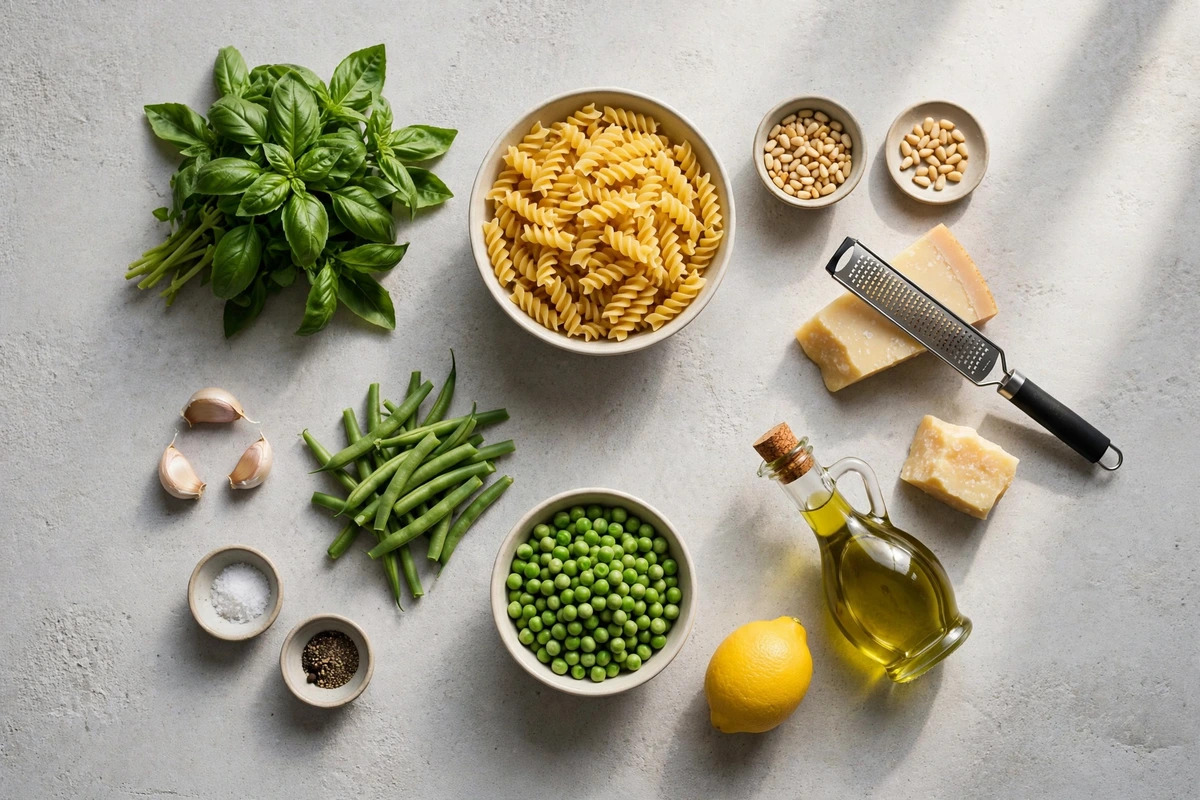
Ingredients for pesto pasta salad including fresh basil, fusilli, green beans, peas, pine nuts, Parmesan, lemon, olive oil, and garlic
Detailed Step-by-Step Cooking Guide
Toast Pine Nuts & Blanch Basil
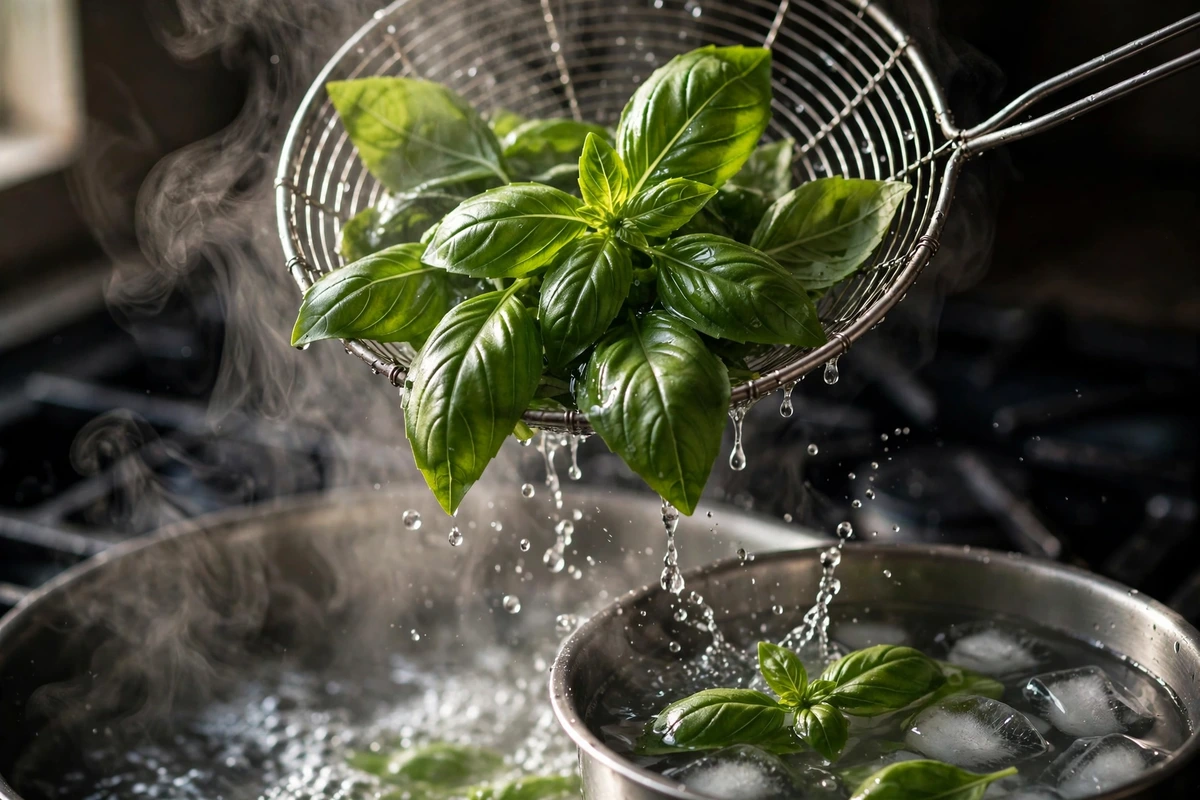
Blanching fresh basil leaves in boiling water and shocking them in an ice water bath
Cook Vegetables & Pasta
Blend Pesto Sauce
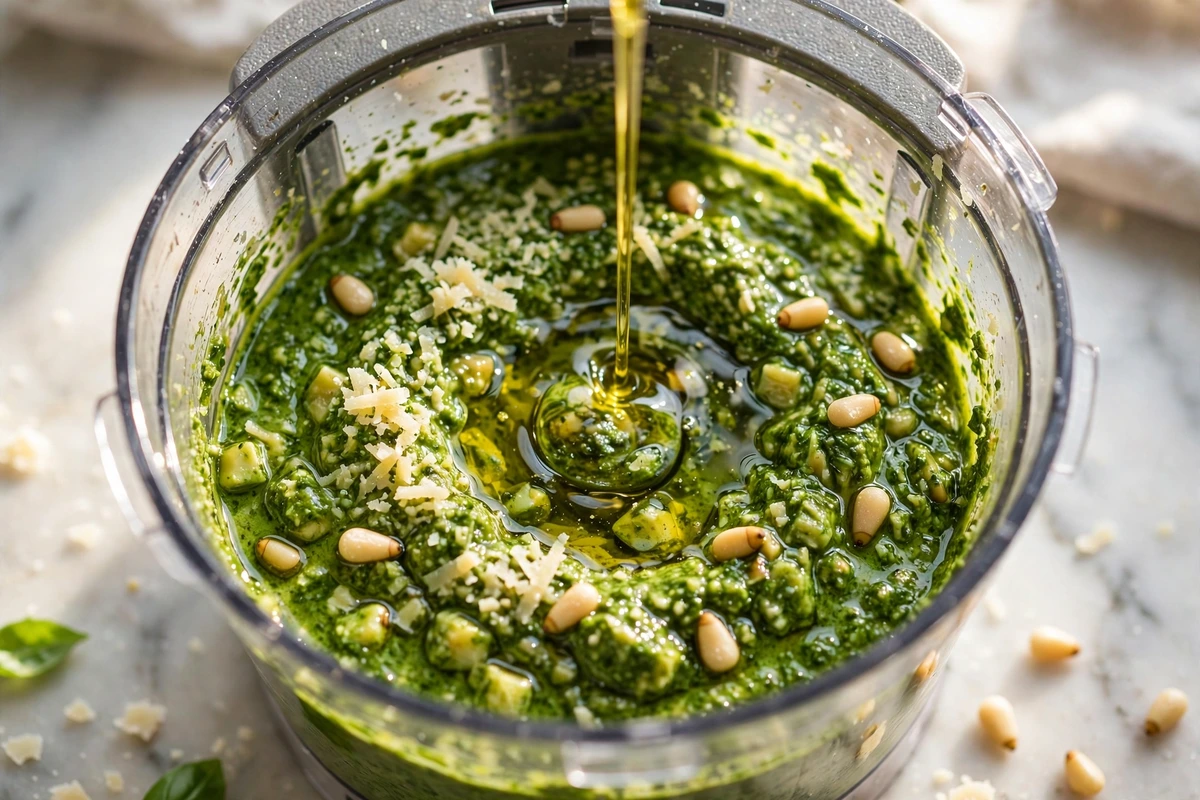
Streaming extra virgin olive oil into food processor bowl with pulsed basil, pine nuts, and Parmesan
Two-Stage Dressing & Chill
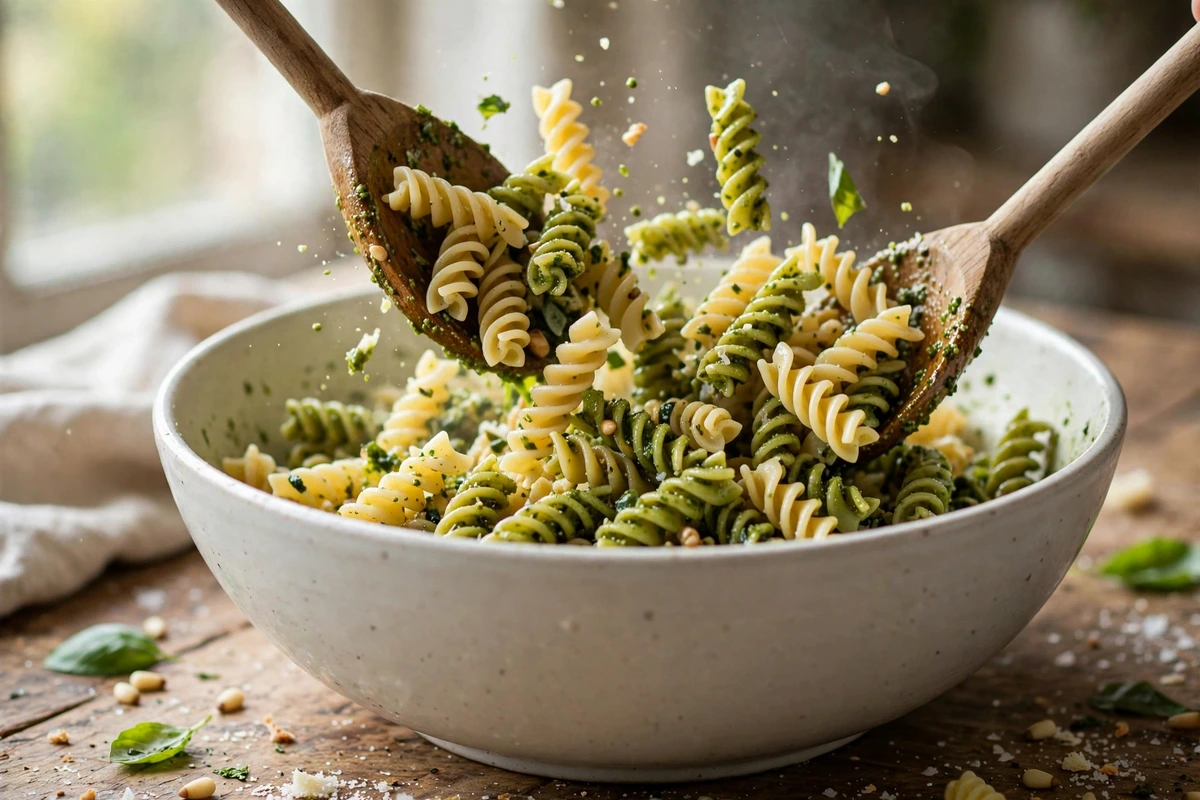
Tossing warm fusilli pasta with bright green homemade basil pesto in a mixing bowl
Wake Up & Garnish
Getting the Texture and Color Right
Four common pesto pasta salad pitfalls and the science-backed fixes for each.
Chilled pasta absorbs liquid and olive oil thickens. Stir in 2 tablespoons reserved pasta water at room temperature to loosen it without adding greasy oil.
High-speed blenders rupture olive oil polyphenols, and older garlic germs add harshness. Use a food processor and remove the inner green germ from garlic.
Confirm basil was wrung completely dry before processing. Store leftovers with plastic wrap pressed directly against the surface to block air contact.
Cold suppresses salt and acid perception. Serve at cool room temperature and adjust with a pinch of sea salt and lemon squeeze.
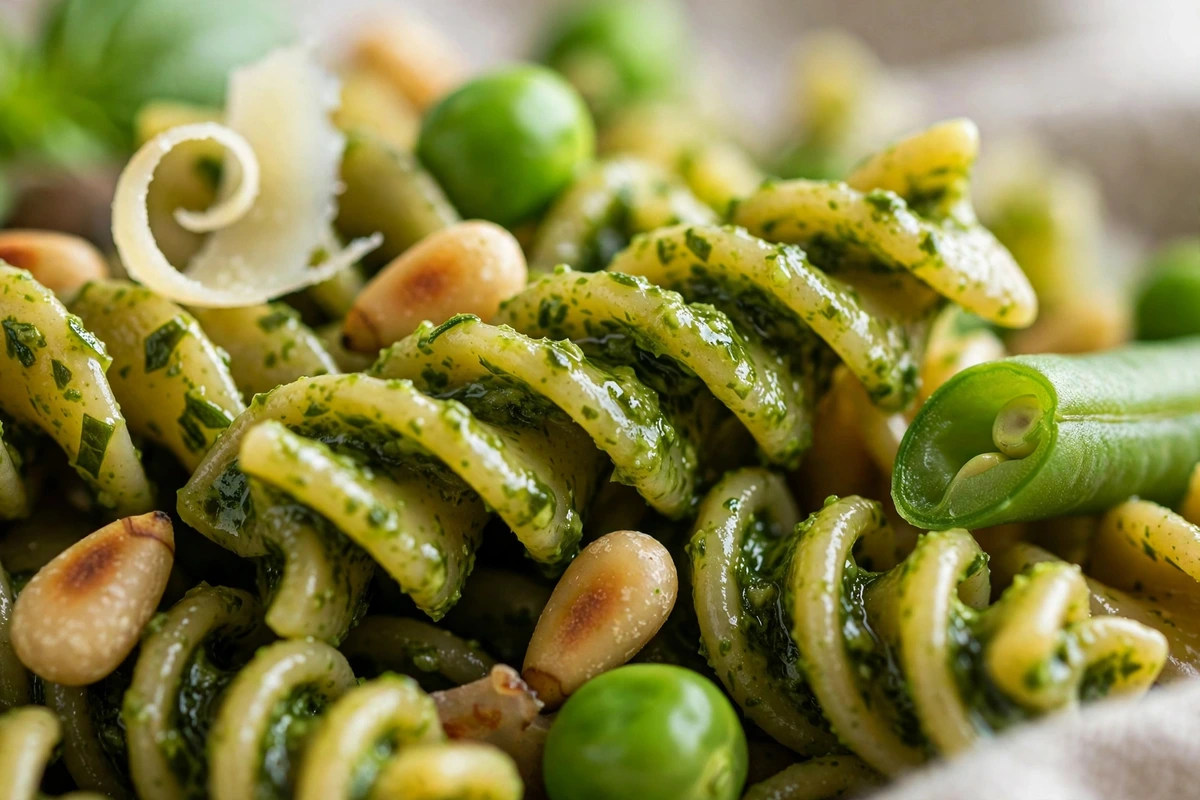
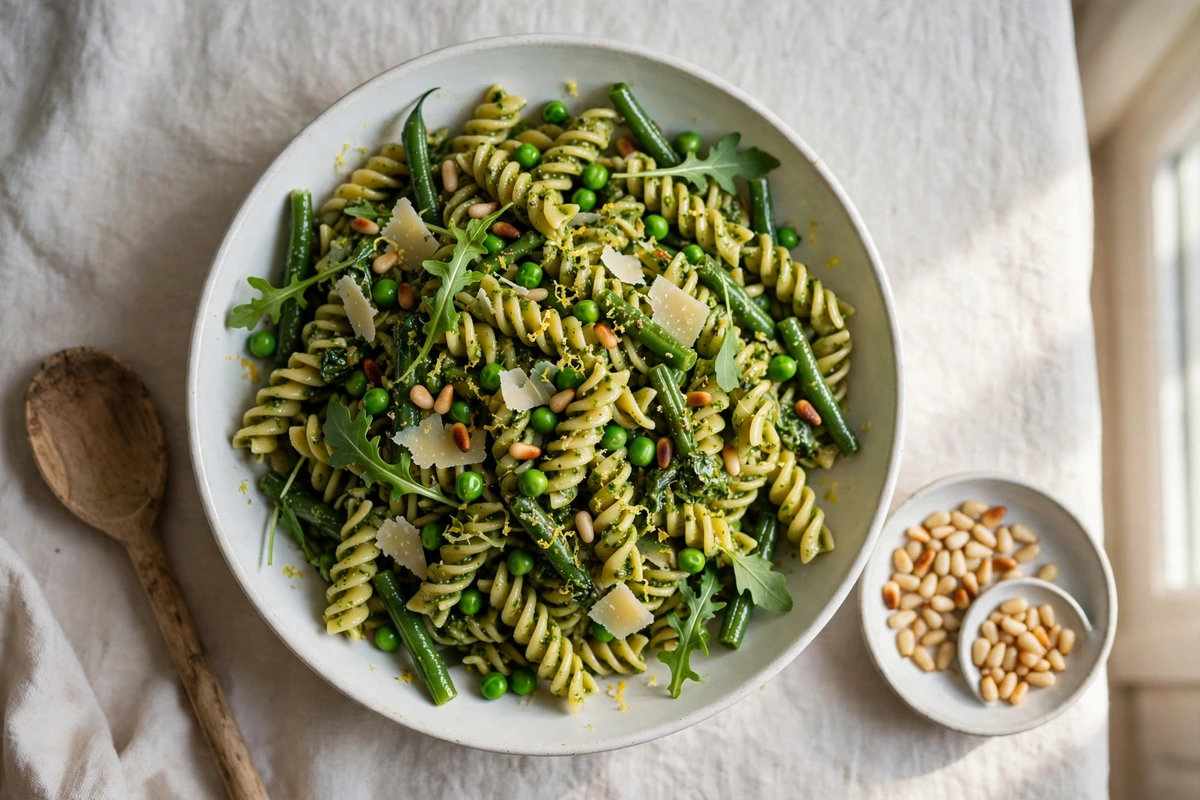
Close-up texture of pesto-coated fusilli spirals with crisp green beans, tender peas, and toasted pine nuts
How to Use This Pesto Elsewhere
How to Serve, Store & Reheat
Serve at cool room temperature, not straight from the fridge. Take out 20 minutes before serving. Holds up outdoors, but set over a bowl of ice on hot days.
Refrigerate in an airtight container for up to 4 days. Color holds bright for 3 days thanks to blanching. Add arugula only to individual servings.
Do not reheat. This is a cold salad, and heating will dull the pesto and make the cheese grainy. Stir in a splash of water or oil to revive.
No. Cooked pasta turns mushy upon thawing. Freeze the blanched pesto separately in ice cube trays instead.
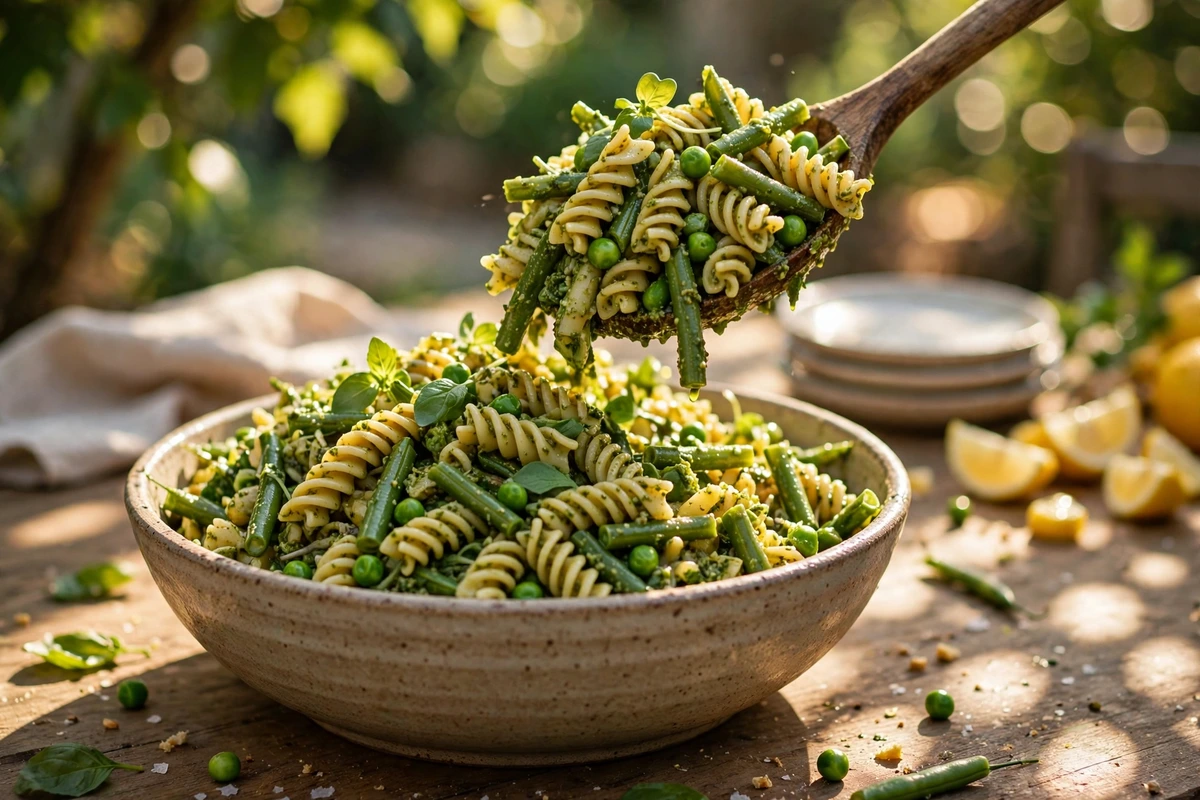
Plated pesto pasta salad served outdoors on a rustic wooden dining table
Dietary Variations
Replace Parmesan with 3 tablespoons nutritional yeast plus 1/4 teaspoon extra salt, and skip shaved cheese garnish.
Swap pine nuts for 1/3 cup raw sunflower seeds or hulled pumpkin seeds toasted in a dry skillet.
Use corn and rice blend short pasta, cook strictly to package time, and rinse briefly.
Fold in 200 g drained fresh mozzarella pearls and 250 g halved cherry tomatoes after chilling. For a classic Caprese version with balsamic dressing, see our Caprese Pasta Salad.
Taste this cold, right before it goes on the table, and expect to add more salt and more lemon than feels right. Cold temperatures suppress how strongly we perceive salt and acid.
A pesto pasta salad that tasted perfectly balanced while the pasta was still warm will read as noticeably flat straight from the fridge. This trips up more people than any technique problem in the recipe.
The usual mistake is fixing that flatness with more pesto, which makes the bowl heavier and oilier without solving anything. Start with a quarter teaspoon of salt and a squeeze of lemon, stir, and taste again.
Nine times out of ten that is the entire fix.
Allergen Notice: This recipe contains tree nuts (pine nuts), milk (Parmesan), and wheat (pasta). Pine nuts can be swapped for sunflower or pumpkin seeds, Parmesan for nutritional yeast, and pasta for certified gluten-free rotini.
Frequently Asked Questions
Recipe Visual Gallery (7 Full Photos)
Recipe Card & Steps
Ingredients Checklist
Click an item to check it off as you prep
- 1 lb (450 g)fusilli, rotini, gemelli or casarecce
- 2 tbspkosher salt, for the pasta water
- 1 tbspextra virgin olive oil, for cooling the pasta
- 8 oz (225 g)green beans, trimmed and cut into 1-inch pieces
- 1 cup (140 g)frozen peas
- 2 oz (60 g)baby arugula
- 1/4 cup (20 g)shaved Parmesan, for serving
- 1lemon, zested
- 1 cupreserved pasta water (you will use about 6 tablespoons)
- 3 packed cups (60 g)fresh basil leaves
- 1/2 cup (60 g)pine nuts, divided
- 2 medium clovesgarlic, germ removed
- 1/2 cup (45 g)finely grated Parmesan
- 2/3 cup (150 ml)extra virgin olive oil
- 2 tbspfresh lemon juice
- 3/4 tspfine sea salt
- 1/4 tspblack pepper
Step-by-Step Instructions
Follow along and mark each step complete as you cook
Prepare a large bowl of ice water and set it beside the stove. Bring a large pot of unsalted water to a rolling boil.
Toast the pine nuts in a dry skillet over medium heat for 3 to 5 minutes, shaking often, until nutty and pale gold. Tip onto a plate. Reserve 2 tablespoons for garnish.
Blanch the basil leaves in the boiling water for 15 seconds, until vivid green and wilted. Lift into the ice bath. Once cold, wring the leaves dry in a clean towel until compact and barely damp.
Blanch the green beans in the same water for 3 minutes, until bright green and snappy. Add the frozen peas for the final 60 seconds. Lift both into the ice bath, then drain and pat dry.
Add the kosher salt to the pot. Cook the pasta 1 minute past the package al dente time. Reserve 1 cup of the pasta water, then drain.
Spread the pasta on a rimmed sheet pan in a single layer, toss with 1 tablespoon olive oil, and cool 15 minutes until barely warm.
Pulse the squeezed basil, remaining pine nuts, garlic, grated Parmesan, sea salt, and black pepper in a food processor 8 to 10 times. With the motor running, stream in the olive oil until just combined, about 20 seconds. Pulse in the lemon juice.
Toss the barely warm pasta with two thirds of the pesto, then loosen with 3 to 4 tablespoons of reserved pasta water until glossy and evenly coated. Fold in the green beans and peas. Cover and refrigerate at least 30 minutes.
Remove from the fridge 20 minutes before serving. Stir in the remaining pesto with 2 more tablespoons of pasta water, then fold in the arugula and lemon zest. Top with shaved Parmesan and the reserved pine nuts.
Recipe Card Notes & Tips
- Keep the reserved pasta water until the salad is served. It is the only correct way to loosen the salad after chilling.
- Store leftover pesto with plastic wrap pressed to the surface, or freeze in ice cube trays for up to 3 months.
- Add arugula only to the portion being served, since it wilts within hours in the dressing.
- For a vegetarian-certified version, choose a hard cheese made with microbial or vegetable rennet.
Ratings & Reviews
Leave a Review
Made this recipe? Share your thoughts, tweaks, and honest rating with other home cooks!
Community Reviews (0)
You Might Also Enjoy
More delicious recipes in Salads & Sides.