Easy Korean Rice Cake Soup Recipe (Tteokguk)
Korean rice cake soup with chewy oval rice cakes in a light sesame beef broth, finished with egg ribbons, green onions and roasted seaweed. The traditional New Year soup, made in one pot.
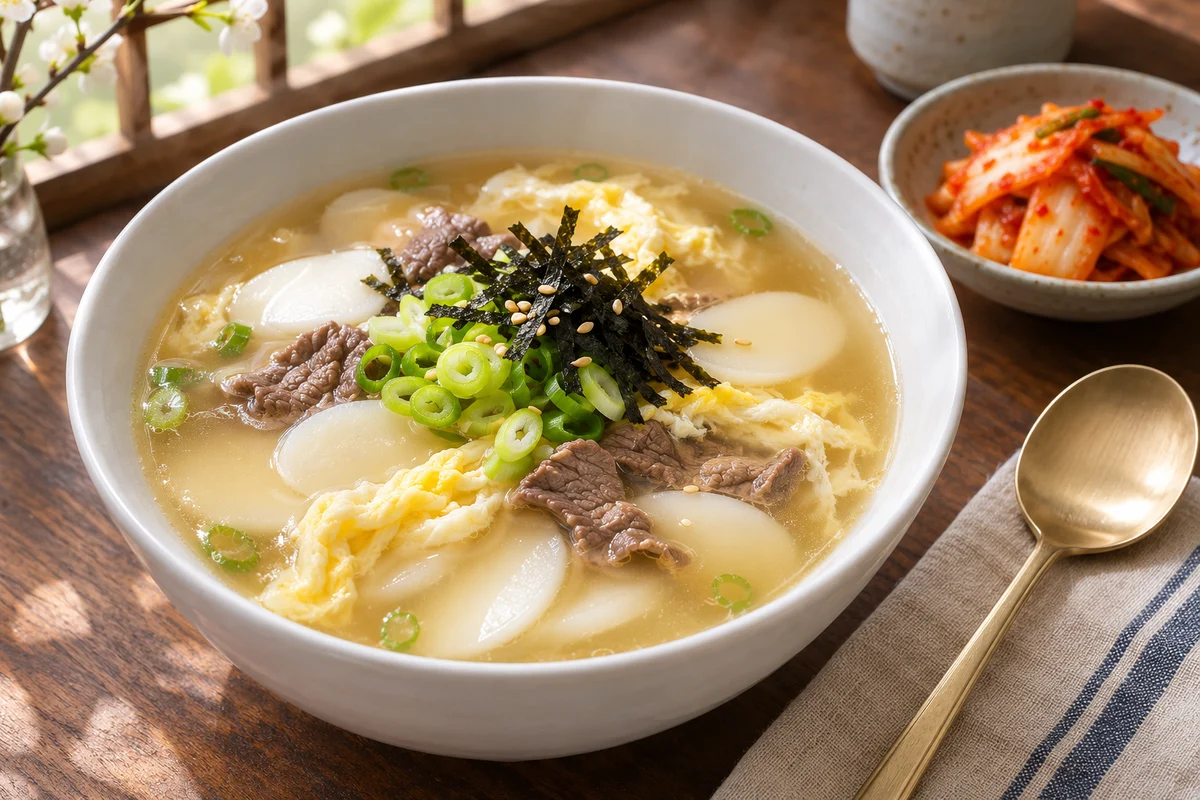
Korean rice cake soup is thin coins of chewy rice cake simmered in a light, garlicky beef broth, then finished with soft egg ribbons, green onions and strips of roasted seaweed. In Korea it's the bowl people eat on New Year's morning (tteokguk, also spelled dduk guk), and an old saying holds that you don't turn a year older until you've finished one. This version builds its broth in one pot, and it's set up so the rice cakes stay springy instead of turning to paste.
Why You'll Love This Korean Rice Cake Soup
- One pot, short ingredient list. The beef seasons its own broth, so there's no separate stock to make.
- The rice cakes keep their bite. They go in last and are timed to the table, which is where most bowls go wrong.
- Mild and filling. Gentle enough for anyone at the table, substantial enough to be the whole meal.
- Good for a crowd. The broth can be made a day or two ahead, and the rice cakes cook in five minutes once guests sit down.
Here's the one thing nobody tells you: season the broth before the rice cakes go in, and make it a little saltier than you'd sip on its own.
Rice cakes are plain rice dough with very little salt, and as they soften, the outer layer of each slice takes on the liquid around it. Season early and they cook in flavor.
Season late and the broth tastes right while the rice cakes taste like nothing.
Read Before You Start
Soak the rice cakes, but not for an hour. Refrigerated and frozen rice cakes harden in the bag, and 20 minutes in cold water lets them soften evenly. Much longer and the slices can crack. Fresh, soft rice cakes from a Korean market skip the soak.
Cook the rice cakes for the table, not the pot. Korean rice cake soup doesn't hold, so set out the bowls and garnishes before the rice cakes go in. Leave a finished pot on the stove for 15 minutes and you'll lose a good part of the broth to swollen, splitting rice cakes.
Ingredient Notes
Korean rice cake soup has a short ingredient list, so each item has a job.
Sliced rice cakes (tteokguk tteok): Thin ovals cut from garaetteok, a long cylinder of regular (non-glutinous) rice dough, sold refrigerated or frozen at Korean and most Asian grocery stores. Don't substitute Japanese mochi or any glutinous "sweet" rice cake. Glutinous rice is almost entirely amylopectin, the starch that turns soft and stretchy when hot, so those cakes slump and fuse together in boiling broth. Regular rice contains amylose, which keeps these slices firm and chewy. Many brands list a little grain alcohol as a preservative and a few add wheat starch, so read the label if either matters to you.
Beef: Brisket is traditional for a long-simmered broth. For this quicker version, use brisket, chuck or sirloin sliced 1/8 inch thick across the grain, the same thin cut you'd use for a stir-fry like Sha Cha Beef Fried Rice. Thin slices flavor the broth fast and stay tender in a 20-minute simmer. If you cook halal, buy halal-certified beef.
Soup soy sauce (guk-ganjang): Lighter in color and saltier than regular soy sauce, it seasons Korean rice cake soup without turning the broth brown. Korean markets label it "soy sauce for soup." Regular soy sauce works in a pinch (see the FAQs). Some brands of both list alcohol, so check the label.
Toasted sesame oil: The beef cooks in it, which gives the broth its nutty base, and it's the same bottle that dresses Bibim Guksu (Korean Spicy Mixed Noodles). Keep the heat at medium, since toasted sesame oil scorches and turns bitter at high heat.
Garlic: A teaspoon seasons the beef. The rest goes in with the rice cakes so its fresh bite makes it to the table.
Eggs: Two beaten eggs drizzled into the pot make soft ribbons. For the traditional look, cook them as thin yellow and white sheets instead (step 6).
Green onions, roasted seaweed (gim), sesame seeds and black pepper: Seaweed adds a briny, toasty note the mild broth needs, and black pepper is the classic last seasoning. Plain roasted sheets or seasoned snack seaweed both work.
Water: Plain water is enough since the beef builds the broth. For more depth, replace up to half of it with unsalted beef stock and taste before salting.
Equipment Needed
- 5- to 6-quart pot or Dutch oven with a lid
- Fine-mesh skimmer: for clearing foam off the broth (a wide spoon works too)
- Kitchen scissors: for cutting the seaweed into thin strips
- Small nonstick skillet: only for the traditional egg sheets
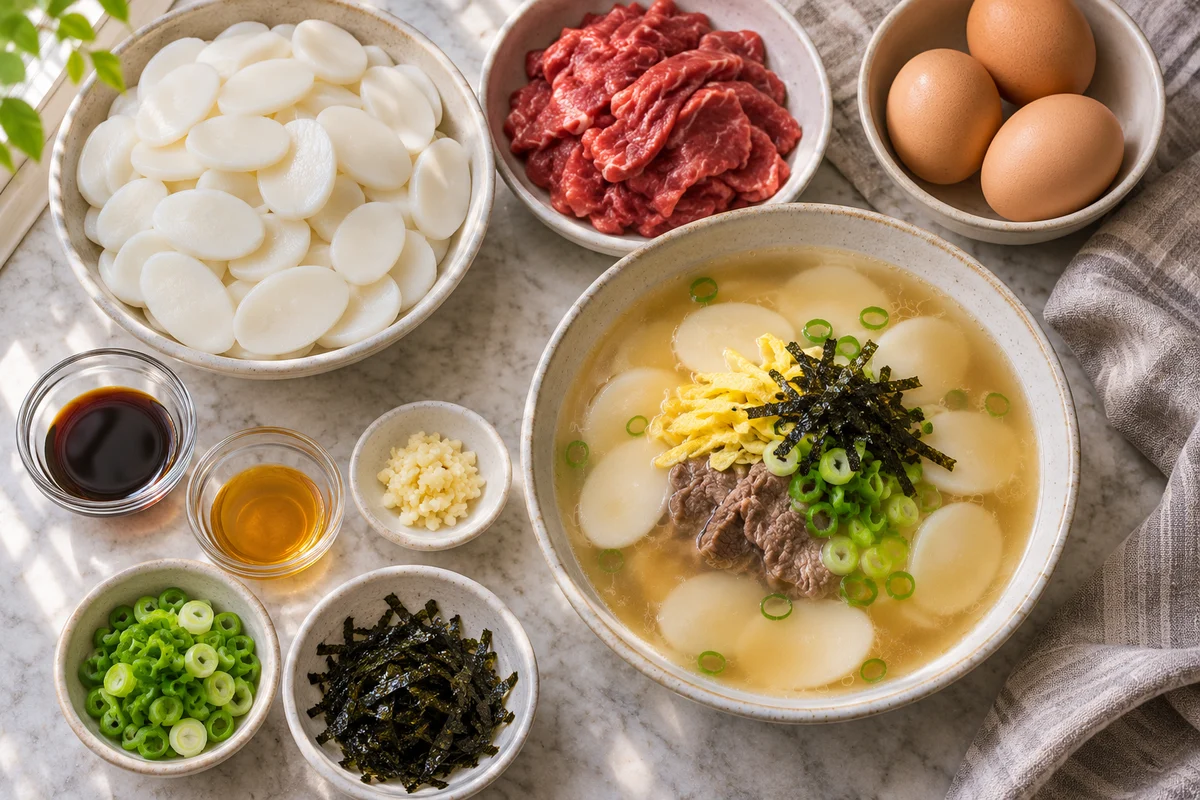
Ingredients for Korean rice cake soup: sliced rice cakes, beef, eggs, soup soy sauce, sesame oil, garlic and seaweed
How to Make Korean Rice Cake Soup
Soak the rice cakes
Preparation: Start the rice cakes soaking, then slice the beef and green onions, mince the garlic, beat the eggs and cut the seaweed. Once the rice cakes go in, you're about five minutes from the bowl.
Cover the rice cakes with cold water by about an inch and soak for 20 minutes, pulling apart any stuck slices. They're ready when a slice bends slightly without snapping. Drain them right before they go into the pot.
Season and cook the beef
Toss the beef with 1 teaspoon soup soy sauce, 1 teaspoon minced garlic, 1 teaspoon sesame oil and 1/8 teaspoon black pepper. Heat 1 tablespoon sesame oil in the pot over medium heat, add the beef and stir for 3 to 4 minutes, until no pink remains and the edges just start to brown.
This is the one step most people skip. Raw beef dropped straight into water gives a flat, grayish broth. Browning needs more heat than simmering water can reach, so those few minutes in oil add flavor the simmer can't.
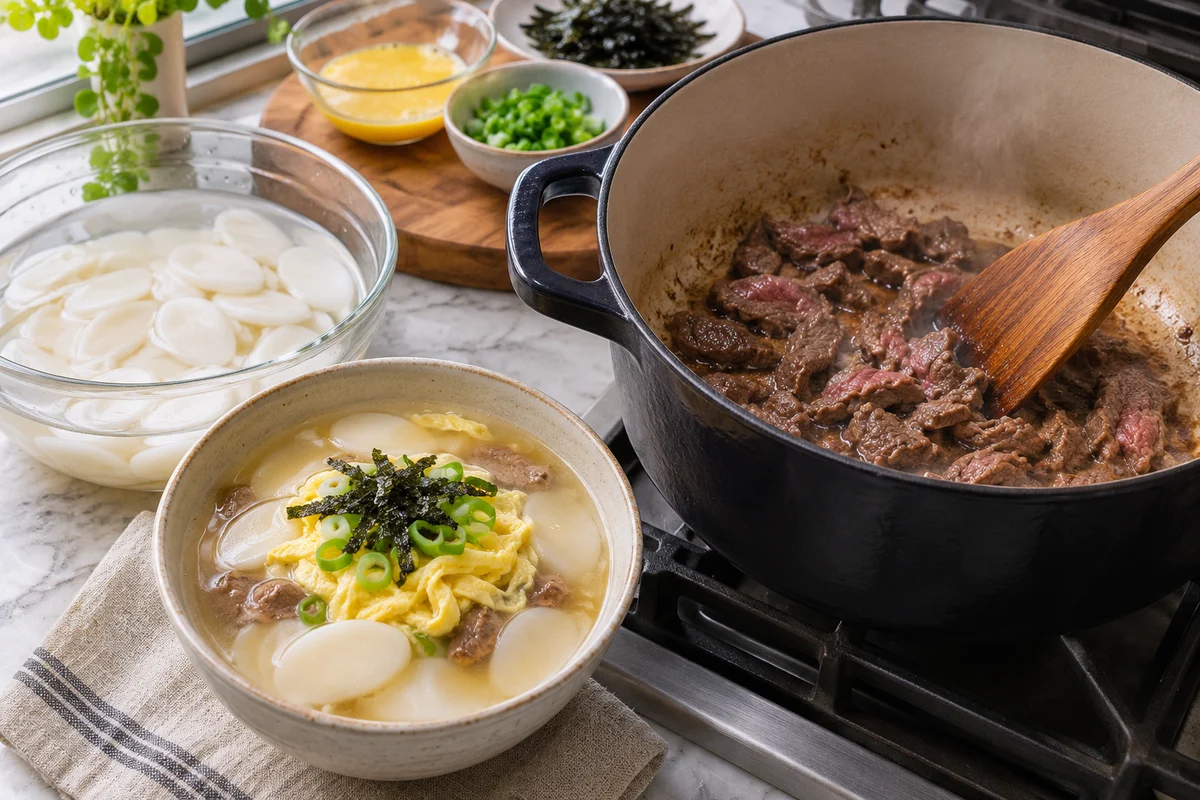
Thin-sliced beef browning in sesame oil in a Dutch oven for Korean rice cake soup
Build the broth
Pour in 8 cups of water and scrape up the browned bits. Cover and bring to a boil over high heat, about 8 to 10 minutes, then skim off the gray foam that rises in the first minute or two. That's what keeps the broth clear.
Lower the heat to medium-low and simmer, partially covered, for 20 minutes. The beef should be tender and the broth pale gold.
Season before the rice cakes go in
Stir in 1 1/2 tablespoons soup soy sauce and 1/2 teaspoon salt, then taste. It should be slightly saltier than you'd sip on its own (the Secret Tip at work). Adjust with salt a pinch at a time, and set out the bowls now.
Cook the rice cakes
Turn the heat to medium-high. Drain the rice cakes and add them with the remaining 1 tablespoon minced garlic, stirring once so nothing sticks. When the broth returns to a boil, cook for 3 to 5 minutes. They're done when most slices float, a pressed slice gives all the way through, and a slice bitten in half has no white, chalky center. The broth turns slightly cloudy from their starch, which is normal.
The usual mistake here is adding hard rice cakes straight from the fridge. The outside turns gummy and sloughs into the broth while the center stays firm, and the soup goes thick and murky. The soak in step 1 fixes this by letting the whole slice soften at the same rate.
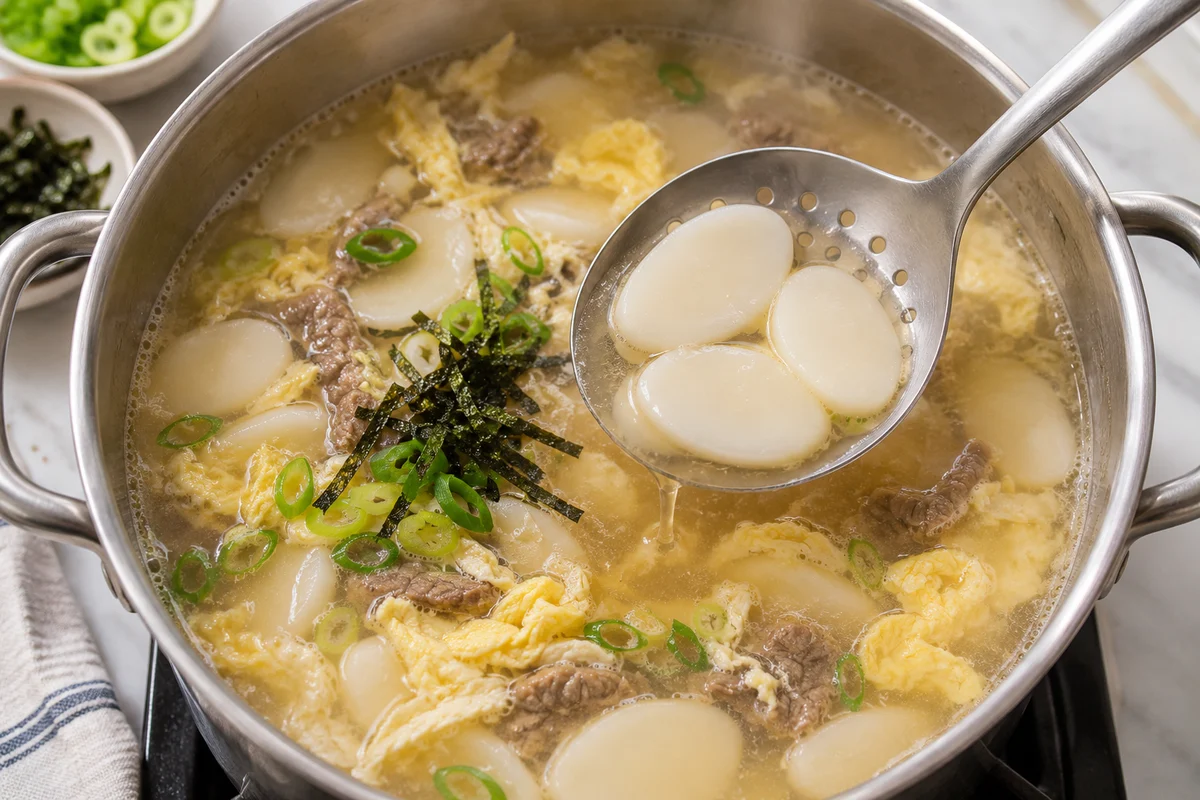
Oval rice cakes floating in simmering beef broth, the doneness cue for Korean rice cake soup
Add the eggs
Lower the heat until the broth barely bubbles. Drizzle the beaten eggs over the surface in a thin, circular stream, leave them for 30 seconds, then stir gently once to make ribbons. Cook until no runny egg remains, about 1 minute, and turn off the heat.
For the traditional garnish (jidan), separate the eggs and cook the yolks and whites as two thin sheets in a lightly oiled nonstick skillet over low heat, about 1 minute per side, until set but not browned. Cool, slice into thin strips and lay them on top of each bowl.
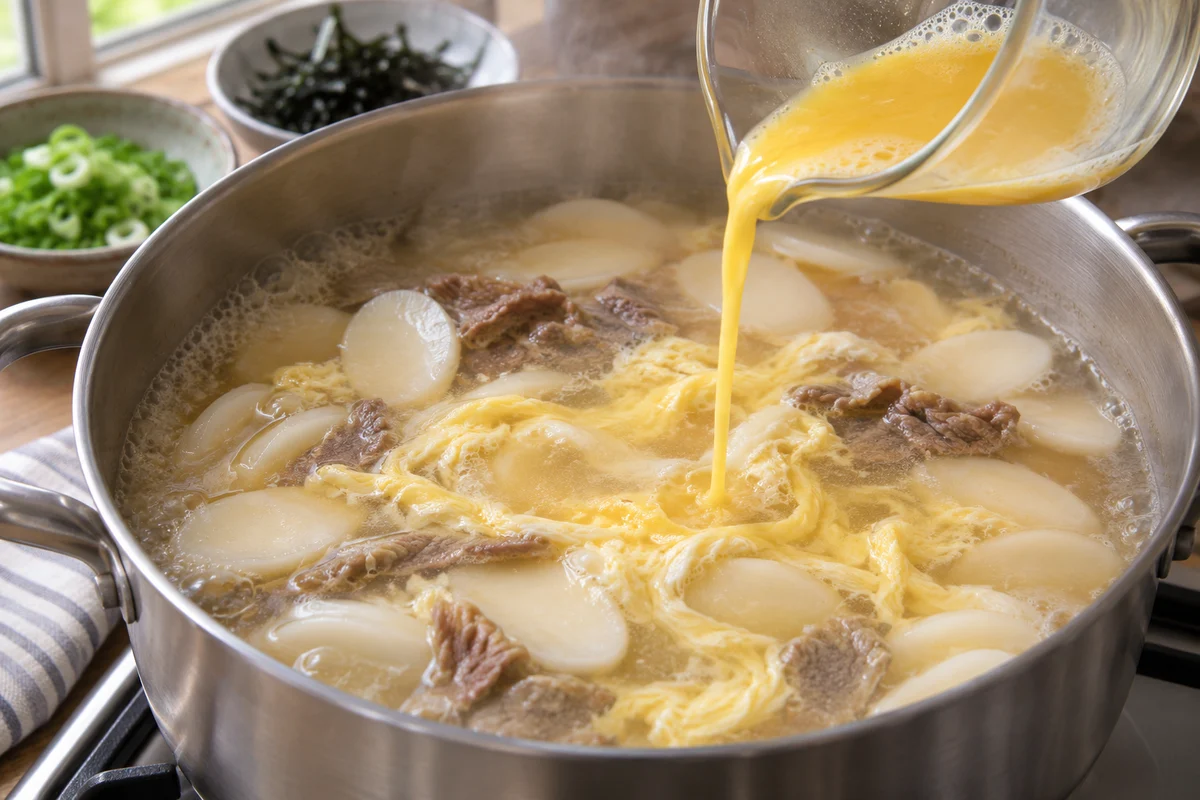
Beaten egg drizzled into simmering rice cake soup, forming soft yellow ribbons
Garnish and serve right away
Ladle into bowls and top with the green onions, seaweed strips, sesame seeds and a few turns of black pepper. Korean rice cake soup is at its best in the first few minutes, while the rice cakes are at their chewiest, so serve it straight away.
Getting the Rice Cake Texture Right
A good bowl of Korean rice cake soup has slices that are soft and bouncy all the way through, with smooth edges that hold their oval shape. The broth should be pale amber and only lightly cloudy, thin enough to sip from a spoon.
Give them another minute or two at a boil (or they skipped the soak). Test a slice every 30 seconds.
Overcooked, or left sitting in hot broth. It can't be undone, so next time pull the pot at the first float-and-soft test.
Loose starch from overcooked or unsoaked slices. Thin it with a cup of hot water or stock and season again.
Usually regular soy sauce in place of soup soy sauce. It still tastes fine; next time use soup soy sauce or swap some of the soy sauce for salt.
Add soup soy sauce 1/2 teaspoon at a time, or salt, tasting as you go.
The broth was boiling hard or the eggs got stirred too soon. Keep it at a bare simmer.
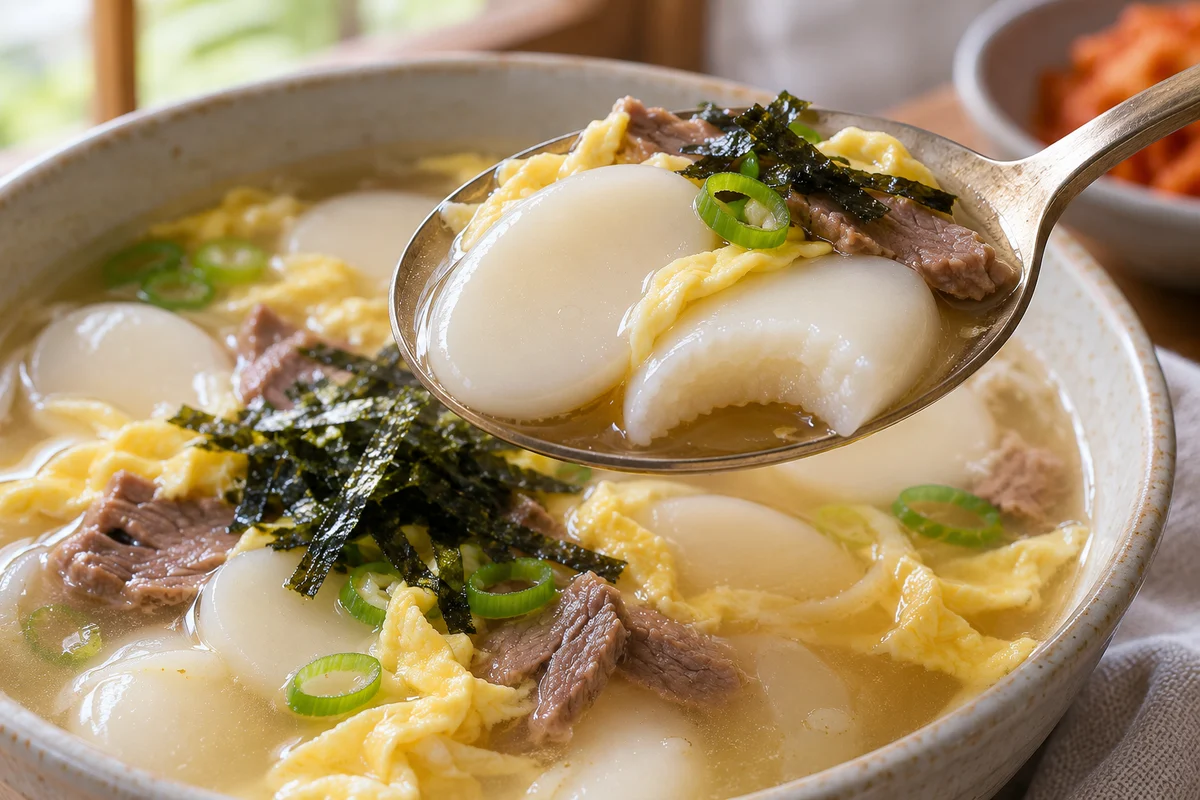
Spoon holding soft, glossy rice cakes from Korean rice cake soup, one bitten to show a fully cooked center
How to Use This Beef Broth Base
How to Serve, Store, and Reheat
Serve it the moment it's ready, in wide bowls so the garnish sits on top instead of sinking. Kimchi on the side is the classic pairing, and banchan like seasoned spinach or bean sprouts round it out.
Korean rice cake soup stores best in two parts: the broth with the beef, and the rice cakes. Cool the broth and refrigerate it within 2 hours in an airtight container, then use it within 3 to 4 days. If the rice cakes are already in, eat it within a day and expect softer slices in a thicker soup.
Bring the broth to a full boil, add freshly soaked rice cakes for 3 to 5 minutes, then the eggs as in step 6. Soup that already has rice cakes in it should be reheated gently with a splash of water until steaming hot (165°F). The slices will be softer than on day one.
Broth: yes. Freeze it with the beef for up to 2 to 3 months for best quality, and add fresh eggs when reheating. Cooked rice cakes: no. They turn spongy and crumble once thawed. Uncooked rice cakes freeze well, so keep a bag in the freezer and soak them before using.
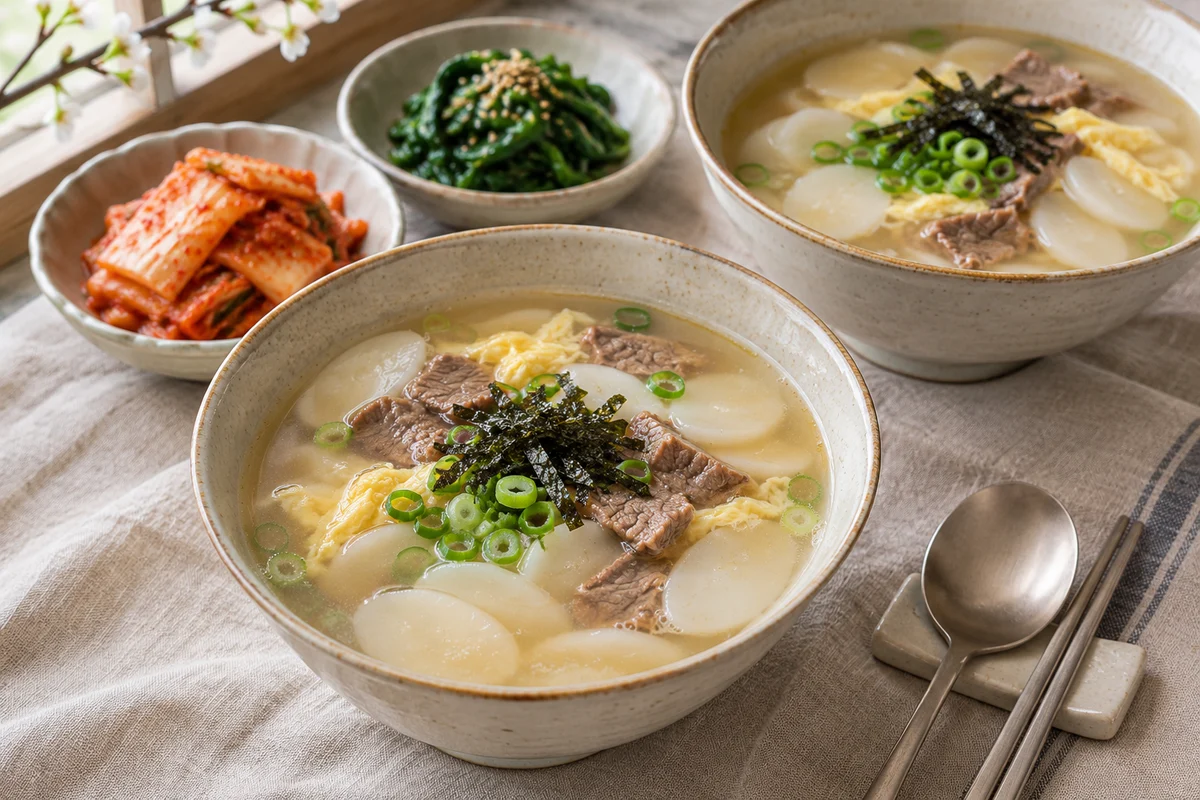
Two bowls of Korean rice cake soup served with kimchi and banchan on a linen-covered table
Dietary Variations
For gluten-free Korean rice cake soup, swap the soup soy sauce (which usually contains wheat) for tamari or a certified gluten-free soy sauce. Use about half the amount and make up the rest with salt, since tamari is darker and this keeps the broth pale. A few rice cake brands add wheat starch, so check that label too.
Swap the beef for 8 ounces of sliced fresh shiitake mushrooms, cooked in the sesame oil until soft and browned at the edges. Add a 4-inch piece of dried kelp (dashima) with the water and pull it out after 10 minutes of simmering, because kelp boiled too long turns slimy and bitter. Keep the eggs for a vegetarian bowl. For vegan, skip them and top with pan-fried tofu cubes and extra seaweed.
Rice cakes harden in the fridge because of starch retrogradation. As cooked rice starch cools, its molecules slowly pack back together into a firmer, more ordered structure.
It happens fastest at refrigerator temperature and nearly stops in the freezer, which is why uncooked rice cakes keep their texture better frozen than refrigerated. Soaking and boiling reverse it.
Leftover Korean rice cake soup disappoints for a related reason: rice cakes left in the broth keep drinking it, so the next day you have swollen slices in a thick, starchy soup.
Store them apart and cook the rice cakes fresh each time. It takes five minutes.
Allergen Notice: This recipe contains soy and wheat (soup soy sauce, and wheat starch in some rice cake brands), egg, and sesame (oil, seeds, and often seasoned seaweed).
- Soy: Season with salt alone. The broth is milder but still good.
- Wheat: Use tamari or a certified gluten-free soy sauce and check the rice cake label.
- Egg: Leave it out and add extra green onions and seaweed.
- Sesame: Cook the beef in a neutral oil, use plain unseasoned seaweed and skip the seeds.
Formulas and facilities vary, so check every label yourself. If you're cooking for someone with a serious food allergy, confirm each ingredient with them first.
Korean Rice Cake Soup FAQs
New Year's morning or a cold weeknight, Korean rice cake soup is a bowl that feels like a fresh start, which is the whole idea behind the tradition. Make a pot, then come back, leave a rating, and tell me whether you went with egg ribbons or the traditional strips.
Recipe Visual Gallery (7 Full Photos)
Recipe Card & Steps
Ingredients Checklist
Click an item to check it off as you prep
Rice cakes
- 1 1/2 pounds (680 g) sliced Korean rice cakes (tteokguk tteok)
Beef
- 8 ounces (225 g) beef brisket, chuck or sirloin, sliced 1/8 inch thick across the grain into bite-size pieces
- 1 teaspoon soup soy sauce (guk-ganjang)
- 1 teaspoon minced garlic (1 clove)
- 1 teaspoon toasted sesame oil
- 1/8 teaspoon ground black pepper
Broth
- 1 tablespoon toasted sesame oil
- 8 cups water
- 1 1/2 tablespoons soup soy sauce (guk-ganjang)
- 1/2 teaspoon fine salt, plus more to taste
- 1 tablespoon minced garlic (3 cloves)
To finish
- 2 large eggs, beaten
- 2 green onions, thinly sliced
- 1 sheet roasted seaweed (gim), cut into thin strips
- 1 teaspoon toasted sesame seeds
- Freshly ground black pepper, to taste
Step-by-Step Instructions
Follow along and mark each step complete as you cook
Place the rice cakes in a large bowl, cover with cold water by 1 inch and soak for 20 minutes, separating any slices that stick together. Skip this if using fresh, soft rice cakes.
Toss the beef with 1 teaspoon soup soy sauce, 1 teaspoon garlic, 1 teaspoon sesame oil and 1/8 teaspoon pepper.
Heat 1 tablespoon sesame oil in a 5- to 6-quart pot over medium heat. Add the beef and cook, stirring, for 3 to 4 minutes, until no pink remains and the edges start to brown.
Add 8 cups water and scrape up the browned bits. Cover and bring to a boil over high heat, 8 to 10 minutes. Skim off the foam.
Reduce the heat to medium-low and simmer, partially covered, for 20 minutes, until the beef is tender.
Stir in 1 1/2 tablespoons soup soy sauce and 1/2 teaspoon salt. Taste; the broth should be slightly saltier than you'd sip on its own. Adjust with salt.
Increase the heat to medium-high. Drain the rice cakes and add them with 1 tablespoon garlic. Stir once. When the broth returns to a boil, cook for 3 to 5 minutes, until most slices float and are soft all the way through.
Reduce the heat to low. Drizzle the eggs over the surface in a thin circular stream, wait 30 seconds, then stir gently once. Cook until no runny egg remains, about 1 minute. Turn off the heat.
Ladle into bowls and top with green onions, seaweed, sesame seeds and black pepper. Serve immediately.
Recipe Card Notes & Tips
- Rest Time: 20 minutes (soaking the rice cakes).
- Store leftover broth and uncooked rice cakes separately, and cook the rice cakes fresh when you reheat. Cooked rice cakes don't freeze well; the broth does.
- For the traditional egg garnish, separate the eggs and cook the yolks and whites as thin sheets in a lightly oiled nonstick skillet over low heat, about 1 minute per side. Slice into strips and lay on top in place of step 8.
Ratings & Reviews
Leave a Review
Made this recipe? Share your thoughts, tweaks, and honest rating with other home cooks!
Community Reviews (0)
You Might Also Enjoy
More delicious recipes in Soups & Chilis.

Easy Tortellini Soup Recipe

Homemade Chicken Tortilla Soup Recipe