Quick Bibim Guksu Korean Spicy Mixed Noodles Recipe
Classic bibim guksu Korean spicy mixed noodles: chilled somyeon tossed in a sweet, sour and spicy gochujang sauce, topped with cucumber, kimchi, Asian pear and a jammy egg.
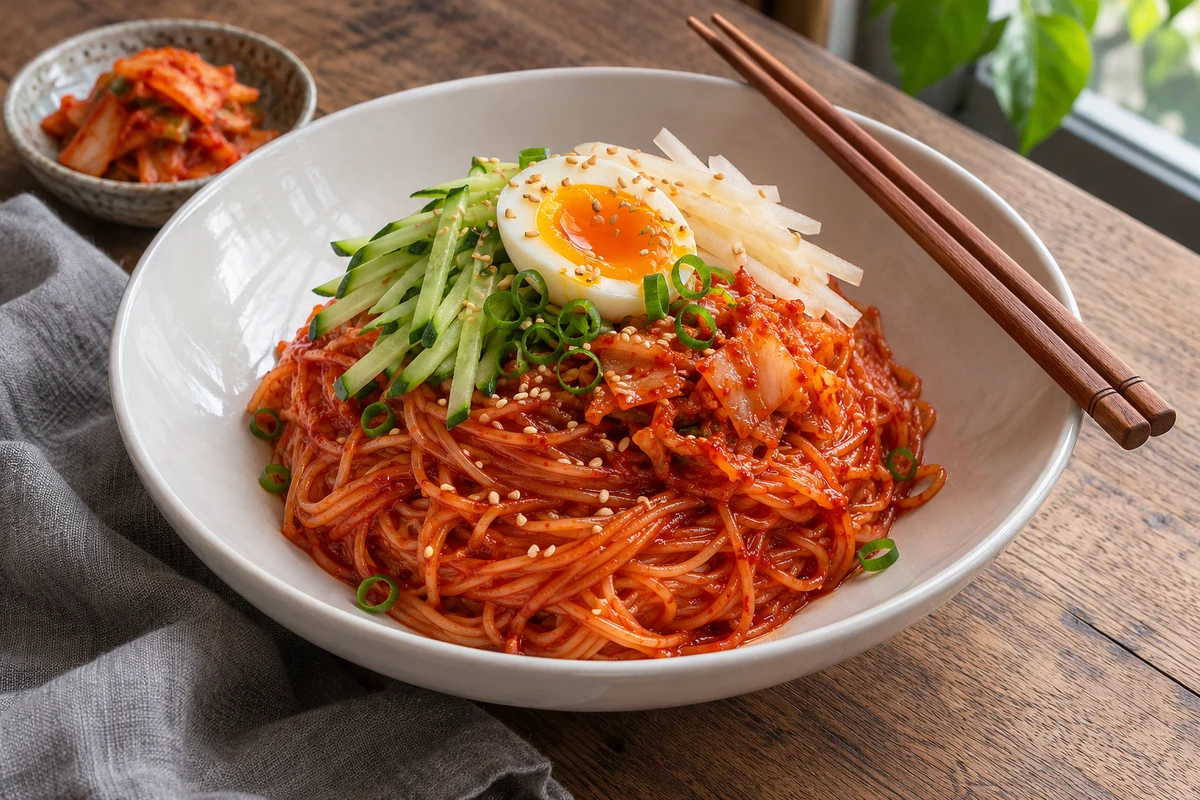
Bibim guksu Korean spicy mixed noodles are very thin wheat noodles, chilled in ice water and tossed in a gochujang sauce that hits sweet, sour and hot in the same bite. This version keeps the noodles springy instead of gummy and gets the sauce to cling to every strand, with crisp cucumber, sour kimchi, Asian pear and a jammy egg on top. It takes 30 minutes from cold pot to bowl, and the stove is only on for about 15 of them.
Why You'll Love This Bibim Guksu
- No broth, no simmering. The only heat is boiling water for the noodles and eggs. Everything else is stirring and slicing.
- Pantry-friendly. Gochujang, gochugaru, soy sauce and sesame oil keep for months, so once you own them bibim guksu becomes a fast lunch any week you have noodles and a cucumber.
- You control the heat. The spice comes from two ingredients, and the recipe tells you which one to turn down without thinning the sauce.
- Built for hot days. It's cold, sharp and light, the kind of meal that still sounds good when it's 90°F outside.
Here's the one thing nobody tells you: squeeze the noodles before they meet the sauce. After rinsing, lift a small handful, wind it into a loose nest and press it gently between your palms until it stops dripping.
Water trapped between those fine strands dilutes the sauce and pools at the bottom of the bowl, which is why so many homemade versions taste flat even when the sauce tasted great on a spoon.
Skip the squeeze and you pour a good part of the flavor you just built down the drain.
Read Before You Start
Two things decide whether bibim guksu turns out springy or sad, and neither of them is the sauce.
Don't salt the noodle water. Somyeon is made with salt in the dough, and the gochujang, soy sauce and kimchi bring plenty more. Salted water on top of that pushes the bowl into salty before you've even tasted the sauce.
Rinse harder than feels necessary. Thin wheat noodles shed a lot of surface starch, and that starch is the glue that turns a bowl of noodles into one solid clump. Rub them between your palms under cold running water, the way you'd wash rice, until the water runs clear and the strands feel slick instead of tacky.
Ingredient Notes
Every ingredient in a bibim guksu sauce has one specific job, which is why some of the swaps below work and others quietly ruin the bowl.
Somyeon noodles: These are very thin, round Korean wheat noodles, and their fine width is what lets a thick sauce coat each strand evenly. Japanese somen is nearly identical and cooks the same way. Thicker noodles like udon carry too little sauce per bite and make bibim guksu heavy. For a gluten-free bowl, thin rice vermicelli (the same noodle I use in Bun Thit Nuong) works with a gentler rinse.
Gochujang: This fermented chili paste gives the sauce its body, gloss, savory depth and a good share of its sweetness. Heat varies a lot from tub to tub, and many Korean brands print a heat level on the label, so check yours before deciding how much gochugaru to add.
Gochugaru: Korean chili flakes add clean, fruity heat and that brick-red color without thickening the sauce. Don't substitute Italian crushed red pepper here. Those flakes include the seeds, taste harsher and hotter, and stay as hard specks instead of softening into the sauce.
Rice vinegar: Use plain, unseasoned rice vinegar. The seasoned kind already contains sugar and salt, which throws off the balance you're building. Apple cider vinegar is the closest stand-in, a little fruitier but very close.
Soy sauce and sugar: Soy sauce adds salt and a savory note that gochujang alone doesn't cover. Sugar rounds off the vinegar so the sauce tastes bright instead of sharp, and plain white sugar dissolves fastest in a cold sauce. Honey works too, though it slightly mutes the sourness.
Asian pear: Grated pear and its juice add a fresh, fruity sweetness and loosen the sauce without watering it down. Half a pear covers both the sauce and the topping. If you can't find one, a crisp sweet apple like Fuji does the same job.
Toasted sesame oil and seeds: Toasted sesame oil carries the nutty aroma this dish is known for. Plain, untoasted sesame oil isn't a substitute because it tastes of almost nothing. Crush the seeds lightly between your fingers as you add them to release more flavor.
Kimchi: Use well-fermented, sour napa kimchi. Its acidity sharpens the whole bowl, while young kimchi tastes mostly of salt and garlic. Most kimchi is made with fish sauce, salted shrimp or anchovy, so buy a vegan one if you avoid seafood.
Cucumber, eggs and scallion: Persian or English cucumbers have thin skins and small seeds, so they julienne cleanly and don't water down the bowl. A regular slicing cucumber needs peeling and seeding first. If you want another cucumber dish on the table, the smashed Asian Cucumber Salad goes well next to these noodles.
A note on halal ingredients: Nothing in this bibim guksu is pork-based, and I've left out the mirin or cooking wine that some versions add. Two items need a label check because they vary by brand: many commercial gochujang tubs list ethyl alcohol as a preservative, and kimchi usually contains shrimp or fish.
Equipment Needed
- A large pot (at least 4 quarts): Thin noodles need plenty of water so the boil doesn't collapse when they go in and the starch has room to disperse.
- A small saucepan: for the eggs, so they cook while the noodle water heats.
- A large mixing bowl: Mix the sauce in the same bowl you'll toss the noodles in, so none of it gets left behind.
- A microplane or fine grater: for the pear and garlic. The fine side of a box grater works too.
- Food-safe gloves (optional): Tossing by hand is the traditional way and coats the noodles most evenly. Tongs are fine.
- A julienne peeler or mandoline (optional): A sharp knife does the job.
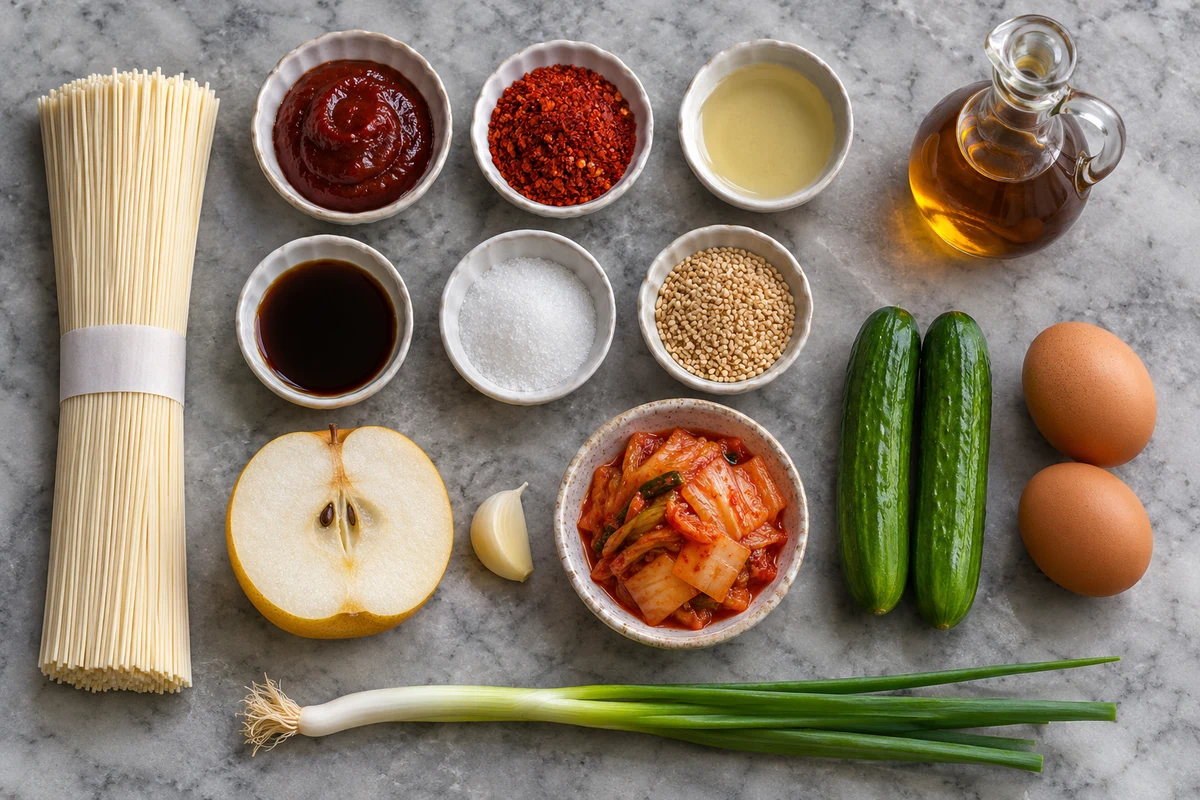
Ingredients for bibim guksu Korean spicy mixed noodles: somyeon, gochujang, gochugaru, kimchi, Asian pear, cucumbers, eggs
How to Make Bibim Guksu Korean Spicy Mixed Noodles, Step by Step
Mix the sauce first so it can sit
Preparation note: Put the large pot of water on to boil before anything else, since it takes the longest. Then set two bowls of ice water nearby, a small one for the eggs and a larger one by the sink for the noodles. Once the noodles are drained you have about a minute to stop them cooking, and that's not the time to go looking for ice.
In your large mixing bowl, stir together the gochujang, gochugaru, rice vinegar, soy sauce, sugar, grated Asian pear with its juice, garlic, sesame oil and crushed sesame seeds. Keep stirring until you can't feel sugar grains scraping the bottom. Let it sit at least 10 minutes while you do everything else, so the chili flakes soften and the raw garlic edge mellows.
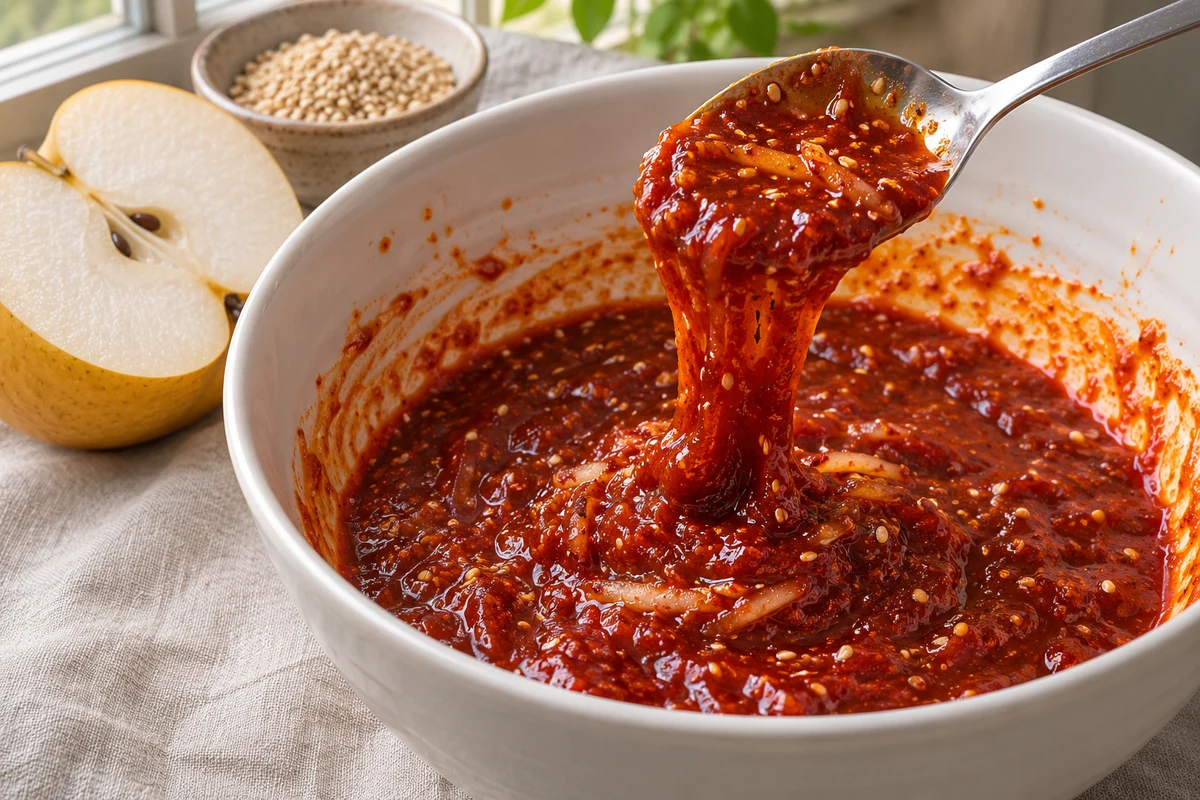
Glossy red gochujang sauce for bibim guksu in a mixing bowl with a spoon lifting a ribbon of sauce
Boil the eggs
Bring a small saucepan of water to a boil and lower in the eggs with a spoon. Boil 8 minutes for a set white and a jammy, deep-orange yolk, or 10 to 11 minutes for a fully firm yolk, then move them straight into the small bowl of ice water for at least 5 minutes. USDA guidance is to cook eggs until both the white and yolk are firm, so use the longer time if you're serving anyone pregnant, very young, older or immunocompromised.
Prep the toppings while the water heats
Cut the cucumbers into thin matchsticks, then cut the remaining pear the same way. Chop the kimchi into bite-size pieces and slice the scallion thinly. Peel and halve the eggs once they're cold.
Cook the noodles and watch the foam
Once the big pot is at a full rolling boil, add the somyeon, fanning it out as it goes in, and stir right away with chopsticks so the strands don't stick together. When the foam surges toward the rim, pour in ½ cup of cold water, then do it once more when it rises again. This knocks the boil back, prevents a boil-over and keeps such thin noodles cooking evenly.
The most common way bibim guksu goes wrong is right here. Somyeon goes from springy to soft in well under a minute, and a cold rinse won't firm up a noodle that's already overcooked. Most packages say 3 to 4 minutes, so start testing at 2½: bite a strand and drain the moment there's no chalky white dot in the center.
Rinse until the water runs clear
Drain into a colander and immediately run cold water over the noodles. This is the one step most people skip or rush: rub the noodles between your palms for about a minute, like washing rice, until the water runs clear and the strands feel slippery rather than sticky. Then dunk them in the large bowl of ice water for 30 seconds to firm them up and chill them all the way through.
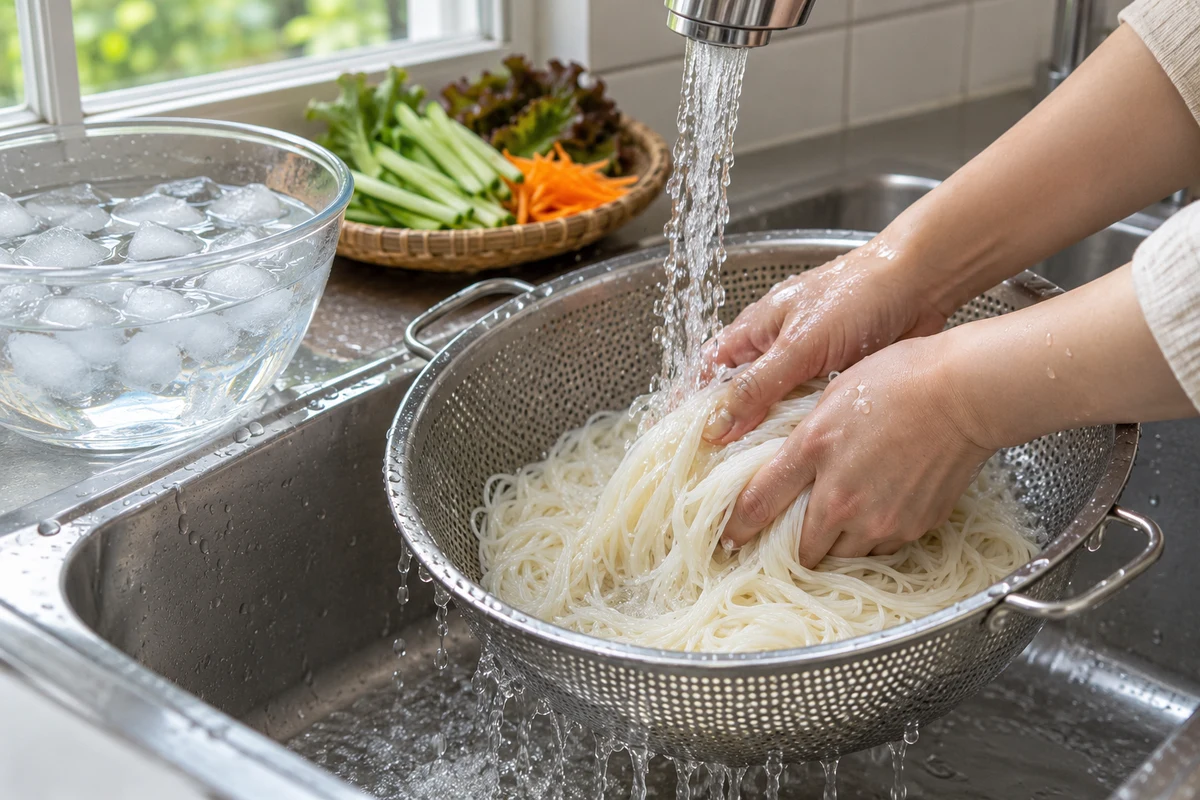
Hands rinsing thin somyeon noodles under cold running water in a colander for bibim guksu
Squeeze the noodles into nests
Lift the noodles out of the ice water in small handfuls, wind each one into a loose nest and press it gently between your palms. Give each nest one shake over the sink. They should feel damp, not dripping.
Toss, taste and serve
Add the noodles to the sauce bowl and toss with gloved hands or tongs for about 30 seconds, until every strand is evenly red and glossy with no pale patches. Taste one strand. If it's flat, add ½ teaspoon of vinegar; if it needs more depth, a splash of soy sauce. Divide between two bowls, top with the cucumber, kimchi, pear, egg halves, scallion and remaining sesame seeds, and eat right away.
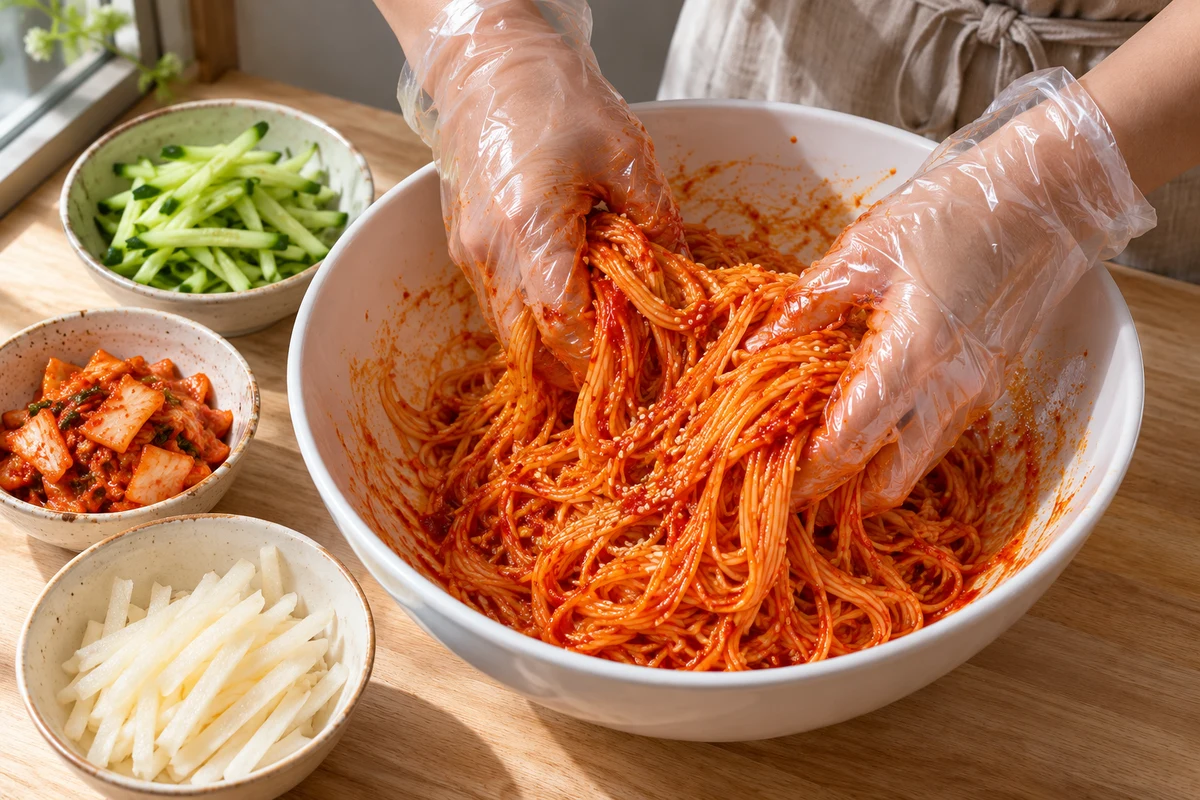
Gloved hands tossing somyeon in red gochujang sauce to make bibim guksu Korean spicy mixed noodles
Getting the Bibim Guksu Texture Right
You're aiming for separate, springy noodles that lift cleanly with chopsticks, every strand coated in glossy red sauce, and almost nothing pooled at the bottom of the bowl. If yours doesn't look like that, the fix is usually one of these.
The starch wasn't rinsed off, or the noodles sat too long before saucing. Rinse them again under cold water, squeeze, and toss.
Overcooked, or left in the sauce too long. This one can't be reversed, so test earlier next time and eat within 10 minutes of tossing.
The noodles weren't squeezed. Tip the bowl, pour off the thin liquid and stir in 1 teaspoon of gochujang to rebuild the coating.
Undercooked. Drop the noodles back into boiling water for 20 to 30 seconds, then rinse and chill again.
Usually short on acid. Add vinegar ½ teaspoon at a time, tasting after each addition.
Toss in extra cucumber and pear and a drizzle of sesame oil. Next time, cut the gochugaru before you touch the gochujang.
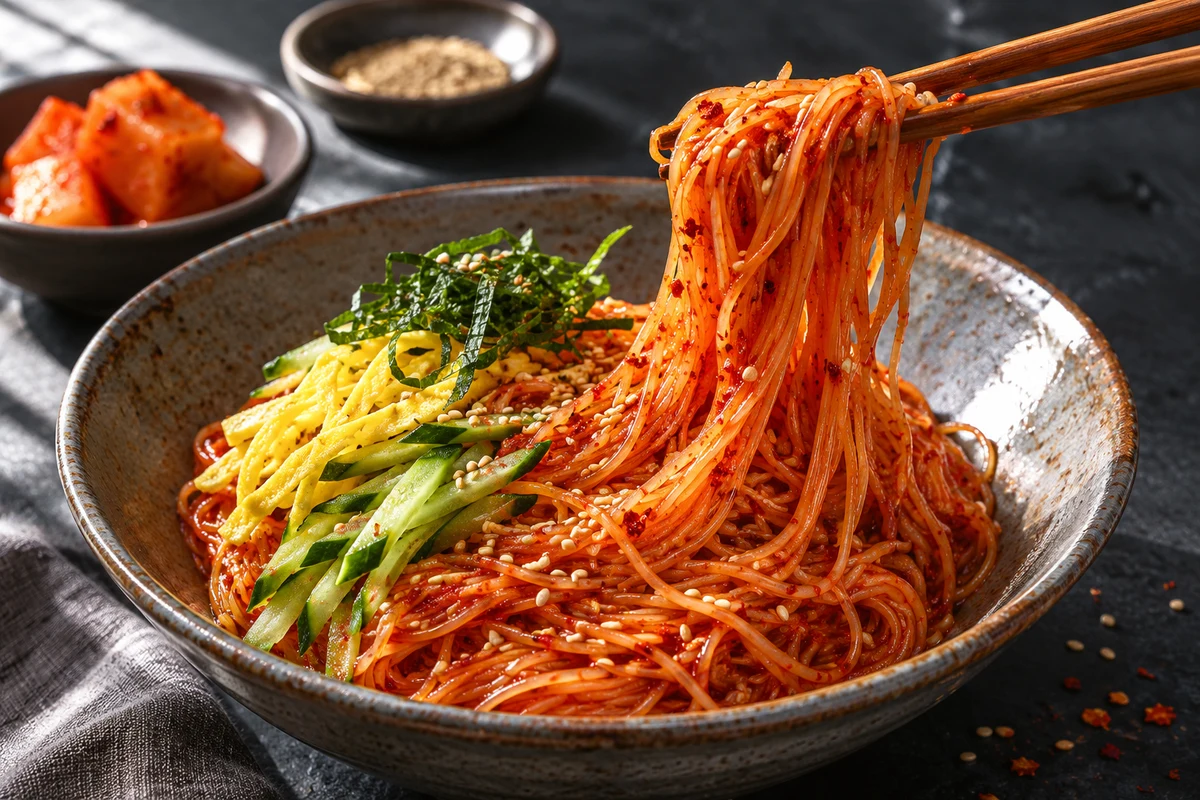
Close-up of chopsticks lifting bibim guksu noodles evenly coated in glossy red gochujang sauce
How to Use This Bibim Sauce
How to Serve, Store, and Reheat Bibim Guksu
Serve your bibim guksu Korean spicy mixed noodles as soon as they're tossed, while they're cold and springy. With the egg it's a full lunch on its own, and it also works as a cold side next to grilled beef or chicken, dumplings or anything off the barbecue. Iced barley tea or plain cold water helps with the heat.
Once tossed, bibim guksu keeps softening as the noodles absorb the sauce. Refrigerate leftovers within 2 hours of serving (1 hour if it's above 90°F, per USDA guidance on perishable food) and eat them within 1 day, knowing they'll be softer. For make-ahead lunches, store the parts separately: sauce up to 5 days, plain rinsed noodles up to 1 day, and hard-boiled eggs (the 10 to 11 minute version) in their shells up to 1 week.
No. Bibim guksu is a cold dish, and heat makes the sauce dull and the noodles limp. To bring stored plain noodles back, dip them in boiling water for 10 to 15 seconds to loosen them, rinse cold, squeeze, and toss with the sauce.
No. Cooked somyeon turns mushy when it thaws and the cucumber weeps. Make the sauce ahead in the fridge instead.
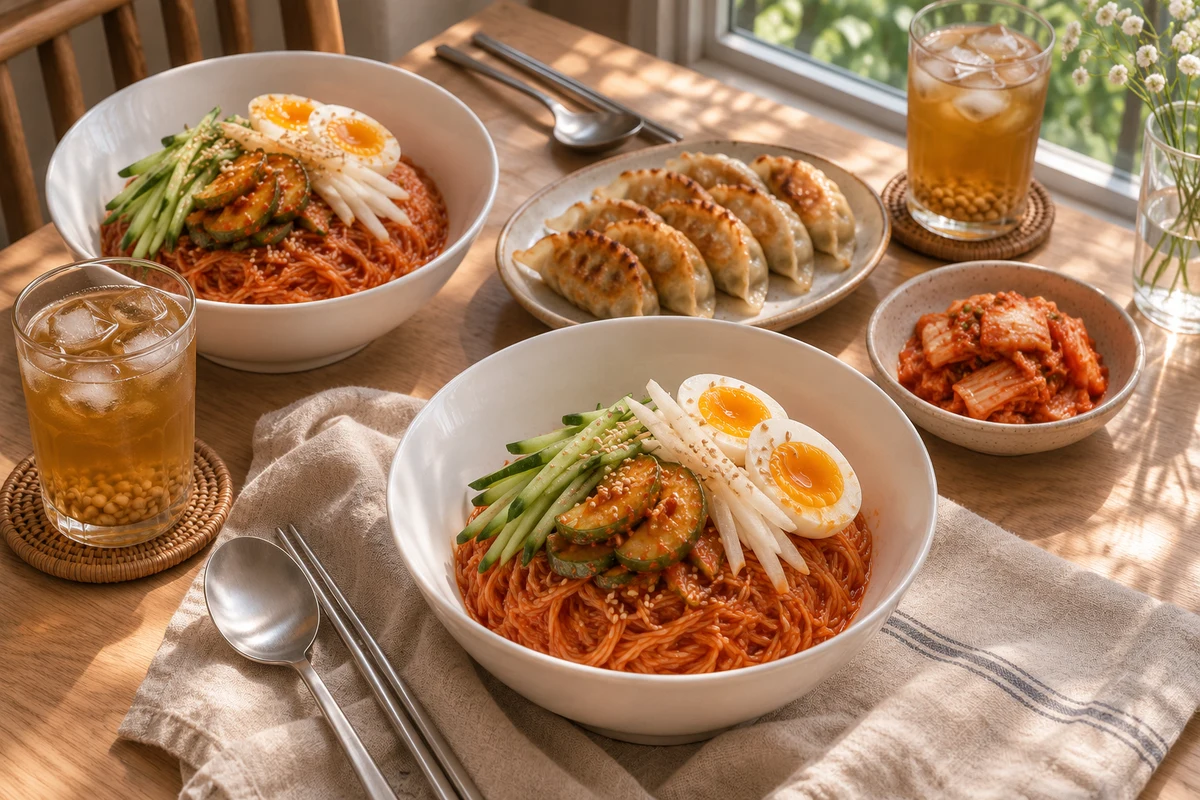
Two bowls of bibim guksu served with dumplings and iced barley tea on a summer lunch table
Dietary Variations
Swap the somyeon for thin rice vermicelli or 100% buckwheat soba (most soba also contains wheat, so check the label). Use tamari instead of soy sauce and a gochujang labeled gluten-free, since most brands contain wheat. Rice noodles break more easily, so rinse them with a gentle swish in cold water instead of rubbing.
Leave out the egg and use a vegan kimchi made without fish sauce or shrimp. For protein, add cubes of pan-fried firm tofu or a handful of shelled edamame, both of which hold up well against the cold sauce.
Use shirataki (konjac) noodles. Rinse them well, then dry-toast them in a hot, dry skillet for 2 to 3 minutes until they squeak against the pan, because wet shirataki won't hold sauce at all. Cut the sugar to 2 teaspoons and let the pear carry more of the sweetness.
The sauce has two sources of heat, and they do different jobs. Gochujang is the body: it brings sweetness, fermented depth and the thickness that lets the sauce cling.
Gochugaru brings clean heat and color with almost no body at all. So when you want it milder, cut the gochugaru first, down to 1 teaspoon or none.
Cut the gochujang instead and you lose the coating, ending up with thin, sweet-sour noodles that slide around the bowl.
Allergen Notice: This bibim guksu recipe contains the following common allergens:
- Eggs: leave them off and top with tofu instead.
Ingredient formulas vary by brand, and shared facilities can introduce cross-contact. Read every label, and if you're cooking for someone with a food allergy, check each product against their needs. This recipe is not guaranteed safe for any specific allergy.
Bibim Guksu FAQs
Bibim guksu Korean spicy mixed noodles reward a little attention at the sink more than at the stove: rinse hard, squeeze well, and the sauce does the rest. Make it once as written, then set the gochugaru to your own heat level. If you try it, tell me how spicy you took yours.
Recipe Visual Gallery (7 Full Photos)
Recipe Card & Steps
Ingredients Checklist
Click an item to check it off as you prep
Sauce
- 3 tablespoons gochujang
- 1 tablespoon gochugaru (1 teaspoon for mild)
- 2½ tablespoons unseasoned rice vinegar
- 1 tablespoon soy sauce
- 1½ tablespoons sugar
- 3 tablespoons finely grated Asian pear, with its juice (from ½ medium pear)
- 1 garlic clove, finely grated
- 1 tablespoon toasted sesame oil
- 2 teaspoons toasted sesame seeds, lightly crushed
Noodles
- 7 ounces (200 g) somyeon noodles
- Ice and cold water, for chilling
Toppings
- 2 large eggs
- 2 Persian cucumbers (or ½ English cucumber), julienned
- ½ cup well-fermented napa kimchi, chopped
- Remaining Asian pear from the ½ pear, cut into thin matchsticks
- 1 scallion, thinly sliced
- 1 teaspoon toasted sesame seeds
Step-by-Step Instructions
Follow along and mark each step complete as you cook
Fill a large pot with at least 3 quarts of water, cover, and bring to a boil over high heat. Do not salt it.
Set out two bowls of ice water: a small one for the eggs and a larger one by the sink for the noodles.
In a large mixing bowl, stir together the gochujang, gochugaru, rice vinegar, soy sauce, sugar, grated pear with juice, garlic, sesame oil and 2 teaspoons sesame seeds until the sugar dissolves. Set aside for at least 10 minutes.
Bring a small saucepan of water to a boil, lower in the eggs and boil 8 minutes for jammy yolks or 10 to 11 minutes for fully firm yolks.
Transfer the eggs to the small bowl of ice water and chill for at least 5 minutes.
Julienne the cucumbers, cut the remaining pear into matchsticks, chop the kimchi and slice the scallion.
Peel and halve the cooled eggs.
Add the somyeon to the rolling boil, fanning it out, and stir immediately with chopsticks to separate the strands.
When the foam rises toward the rim, add ½ cup cold water. Repeat once more when it rises again.
Start testing at 2½ minutes and drain as soon as a bitten strand has no chalky white center, usually 3 to 4 minutes total.
Rinse under cold running water, rubbing the noodles between your palms for about 1 minute, until the water runs clear.
Dunk the noodles in the large bowl of ice water for 30 seconds.
Lift out small handfuls, wind them into nests and gently squeeze out the excess water.
Add the noodles to the sauce and toss for about 30 seconds, until evenly coated and glossy.
Taste and adjust with ½ teaspoon vinegar or a splash of soy sauce if needed.
Divide between 2 bowls, top with cucumber, kimchi, pear, egg halves, scallion and 1 teaspoon sesame seeds, and serve immediately.
Recipe Card Notes & Tips
- The sauce's 10-minute rest and the eggs' ice bath both happen while the noodles cook, so neither adds time.
- For a milder bowl, reduce the gochugaru to 1 teaspoon or leave it out, and keep the gochujang at the full amount so the sauce still coats.
- To make ahead, store the sauce (up to 5 days) and rinsed plain noodles (up to 1 day) separately in the fridge, and toss just before eating.
Ratings & Reviews
Leave a Review
Made this recipe? Share your thoughts, tweaks, and honest rating with other home cooks!
Community Reviews (0)
You Might Also Enjoy
More delicious recipes in Main Dishes.