Creamy Baked Mac and Cheese Recipe
Most baked mac and cheese comes out of the oven one of two ways: dry, with the sauce soaked into the pasta and nothing left to coat it, or split, with a slick of orange oil sitting on top. Both problems trace back to the same twenty seconds of the cooking process, and once you know where they happen you can stop them every time.
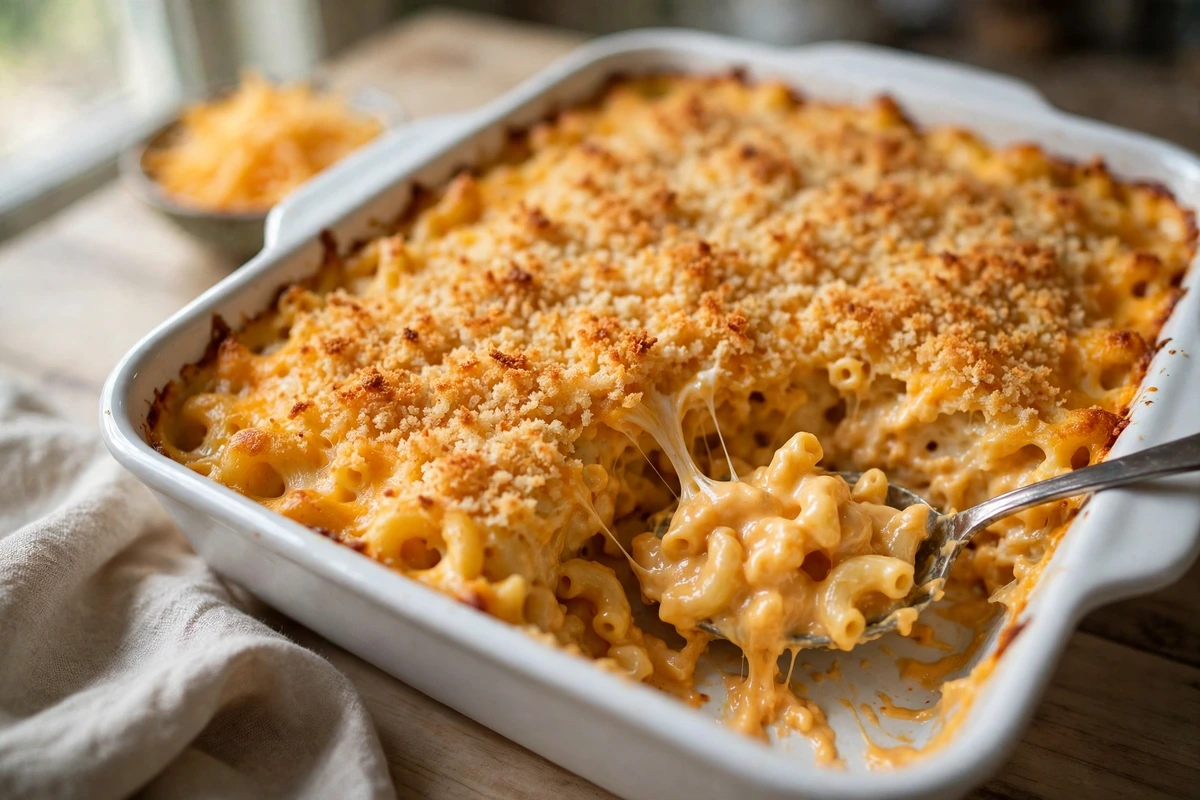
This version bakes for twenty-five minutes, not fifty, and the pasta goes in seriously undercooked. That combination is what keeps the sauce fluid under the crust.
Why You'll Love This Recipe
- The sauce stays creamy through baking and reheating instead of tightening into a solid block
- Two cheeses, chosen for two different jobs, so you get sharp flavour and a smooth melt at the same time
- A buttery panko and cheese top that actually crunches, with no dry casserole edges
- Fully make-ahead friendly, which is why it works for holiday tables and potlucks
Take the pot completely off the heat and let it stop simmering before a single handful of cheese goes in. Then add the cheese in three batches, stirring each one until it disappears. This is the whole game.
Cheddar is an emulsion of fat, water and protein held together loosely. Push it past about 165°F and those protein strands contract, squeeze out the fat, and you get the two failures everyone complains about at once: a gritty texture and a pool of oil.
A béchamel at a simmer is sitting around 200°F. Pull it off, give it thirty to sixty seconds to drop below a lazy bubble, and the cheese melts in smoothly instead of breaking.
Adding it in three batches keeps the temperature from spiking and lets each addition fully incorporate.
Read Before You Start
Undercook the pasta by two full minutes, not one. Package directions for elbows usually say seven to eight minutes. Pull it at five. It will look wrong in the colander, firm and chalky in the middle, and that is exactly right. Dry pasta keeps absorbing liquid in the oven, and if it goes in at al dente it drinks the sauce and leaves you with dry mac.
Make the sauce looser than instinct tells you. Before the cheese goes in, the béchamel should run off a spoon in a steady stream, not mound up on it. A sauce that looks perfect in the pot is already too thick for a baked mac and cheese recipe. The pasta and the oven will both take liquid out of it.
Ingredient Deep Dive & Notes
Elbow macaroni, 1 lb. Elbows earn their place here because the hollow centre traps sauce. Cavatappi and medium shells work just as well. Skip long shapes and anything smooth like penne lisce, which lets the sauce slide off.
Sharp cheddar, 16 oz, from a block. This is your flavour. Aged sharp or extra sharp has less moisture and a much more developed taste, so you need less of it to make an impact.
Gruyère, 8 oz, from a block. This is your melt. More on why the blend matters in the Chef's Note below.
Whole milk, 3 cups, plus 1 cup heavy cream. Do not substitute here. Skim or 1% milk makes a thin sauce that separates under the heat of the oven, and the cream is doing structural work, not just adding richness. The fat coats the cheese proteins and physically gets in the way of them clumping together.
Butter, 6 tablespoons, and all-purpose flour, 1/3 cup. This is the roux. The ratio matters more than the brand.
Mustard powder, 1/2 teaspoon. Not for mustard flavour. It sharpens the cheese and cuts the richness, and you will notice its absence more than its presence.
Panko, 1 cup. Coarser and drier than regular breadcrumbs, so it browns instead of going soggy.
A note on ingredients: this recipe contains no pork and no alcohol in any form. Cheddar, Gruyère and Parmesan are rennet-set cheeses and the rennet source varies between brands, so check the label if that matters to your household. Vegetarian and microbial rennet versions of all three are widely available.
Related recipes worth a look: the same roux-and-cheese method drives my Creamy Broccoli Cheddar Soup, and if you are building a full comfort-food spread, our Chicken Pot Pie Casserole bakes in the same 9x13 dish at a similar temperature.
Equipment Needed
- A 9x13 baking dish, roughly 3 quarts. Anything smaller and the mac sits too deep to heat through in twenty-five minutes.
- A box grater or food processor shredding disc. Shredding 24 ounces of cheese by hand is slow, and this is the one job worth pulling the processor out for.
- A heavy-bottomed pot or Dutch oven, at least 5 quarts. Thin pans scorch the milk before the roux cooks out.
- An instant-read thermometer, optional but genuinely useful if you have never made a cheese sauce before.
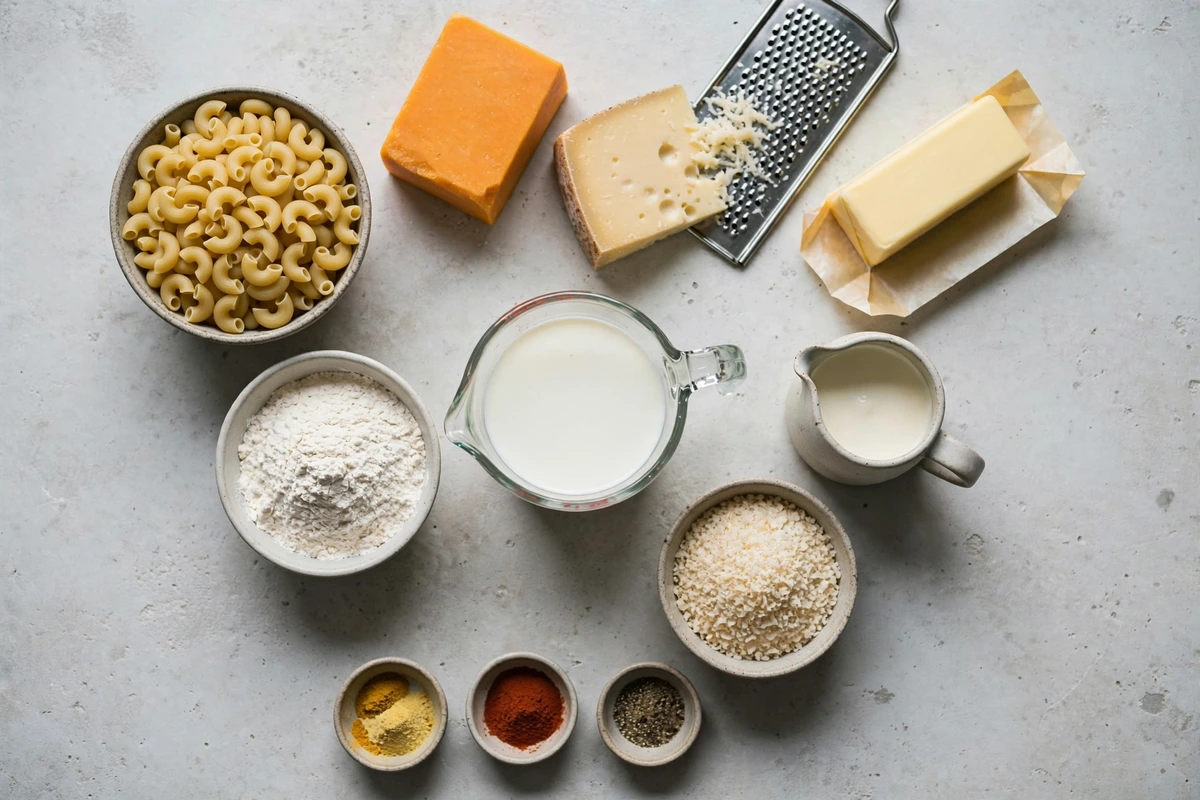
Ingredients for a mac and cheese recipe laid out including elbow macaroni, blocks of cheddar and Gruyère, butter, flour, whole milk and panko
Detailed Step-by-Step Cooking Guide
Preparation & Setup
Boil the pasta well short of done
Cook the roux until it smells like toast
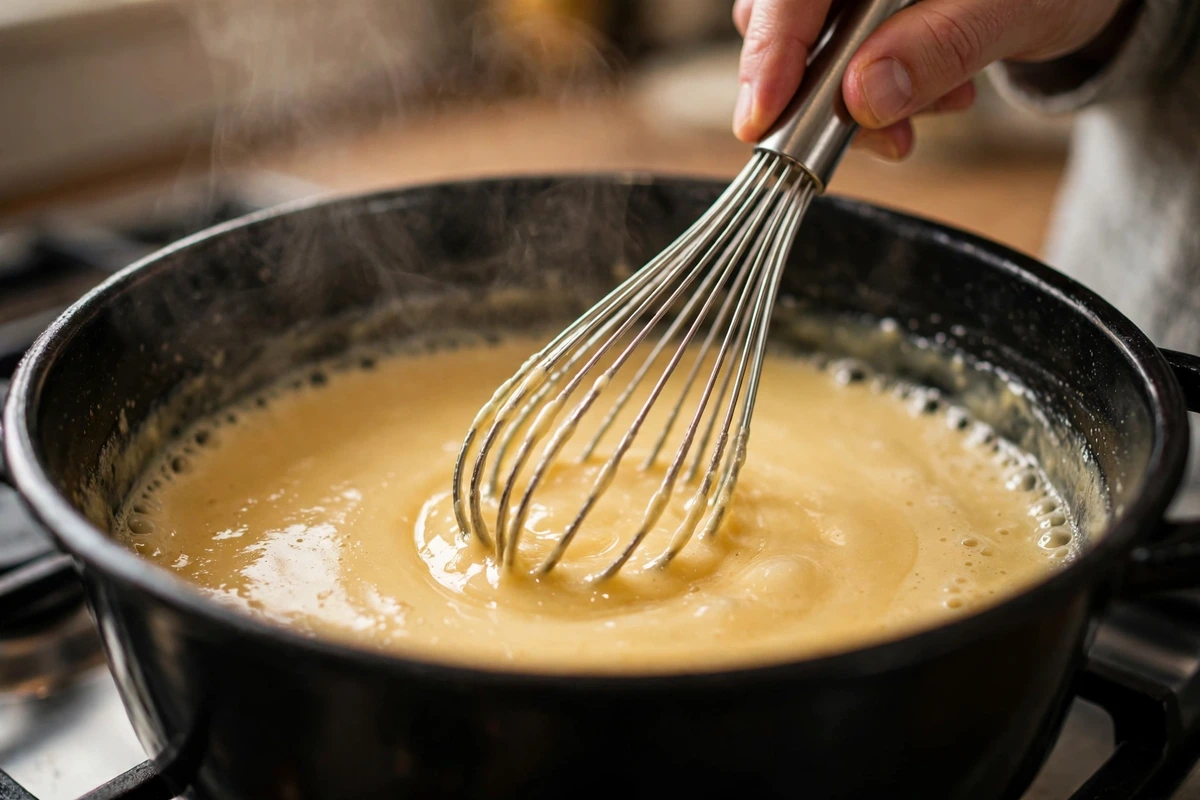
Whisking a pale blonde butter and flour roux in a black Dutch oven, the first step in a homemade mac and cheese recipe sauce
Build the béchamel
Take it off the heat, then add the cheese
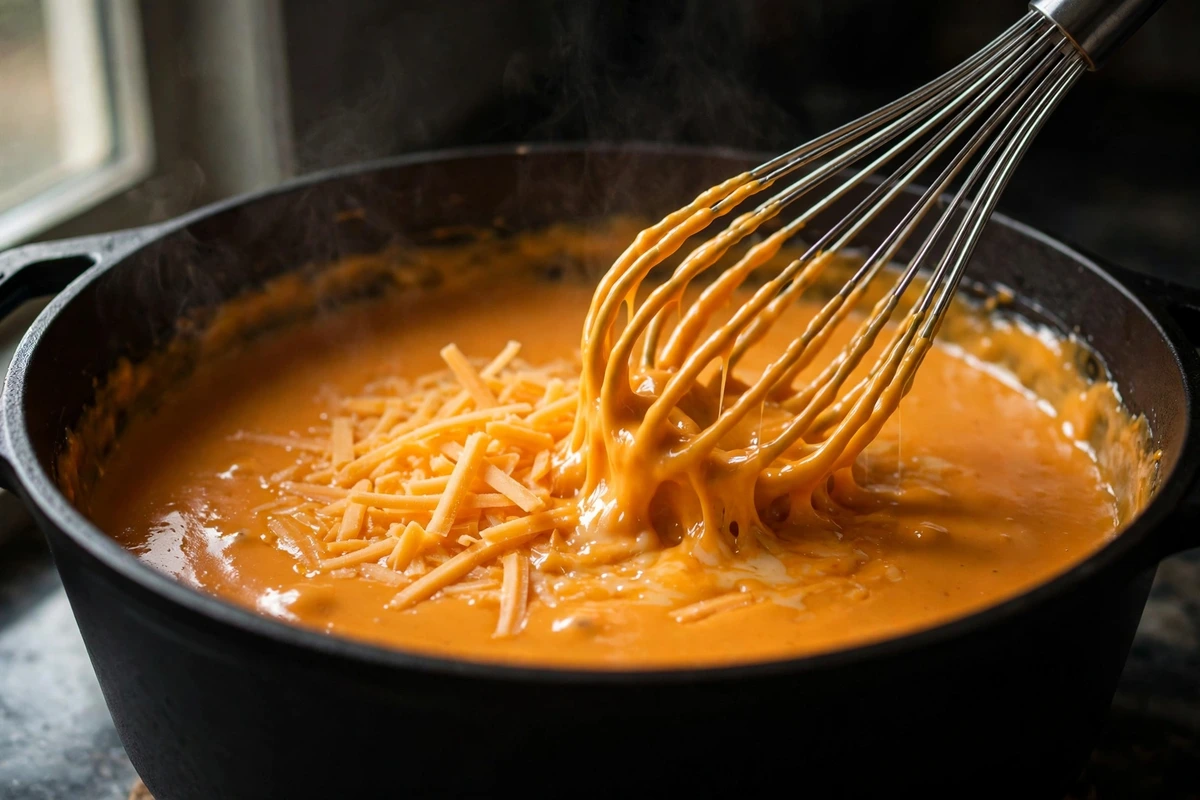
Glossy orange cheese sauce being whisked off the heat for a creamy mac and cheese recipe, shredded cheddar melting into it
Combine and taste
Top it and bake
Rest it
Getting the Creamy Texture Right
Here is the failure that is easiest to walk into with this dish, and it happens after the hard part is already done. The mac comes out of the oven at twenty-five minutes, the top is golden but not deeply browned, and it is tempting to leave it in another ten or fifteen minutes to get more colour. Do not. Extended time in the oven pushes the sauce past the point where the cheese emulsion holds, and you will pull out a dish with a browner crust sitting on broken, oily sauce. Use the broiler for colour instead. It browns the surface in two minutes without heating the interior much at all.
the cheese went in too hot. It cannot be undone once it has happened, though whisking in a splash of warm milk off the heat softens the texture a little. Next time, off the heat and in three batches.
same root cause, usually combined with over-baking. A gentle stir while it rests will sometimes bring it back together.
the pasta was cooked too far before baking, or the sauce was too thick going in. Both are fixed on the front end, not the back.
it needed more of the 10-minute rest, or the roux was underweighted for the liquid. Give it another 10 minutes before you judge it.
the panko was not buttered enough, or the dish went in covered. Bake this one uncovered start to finish.
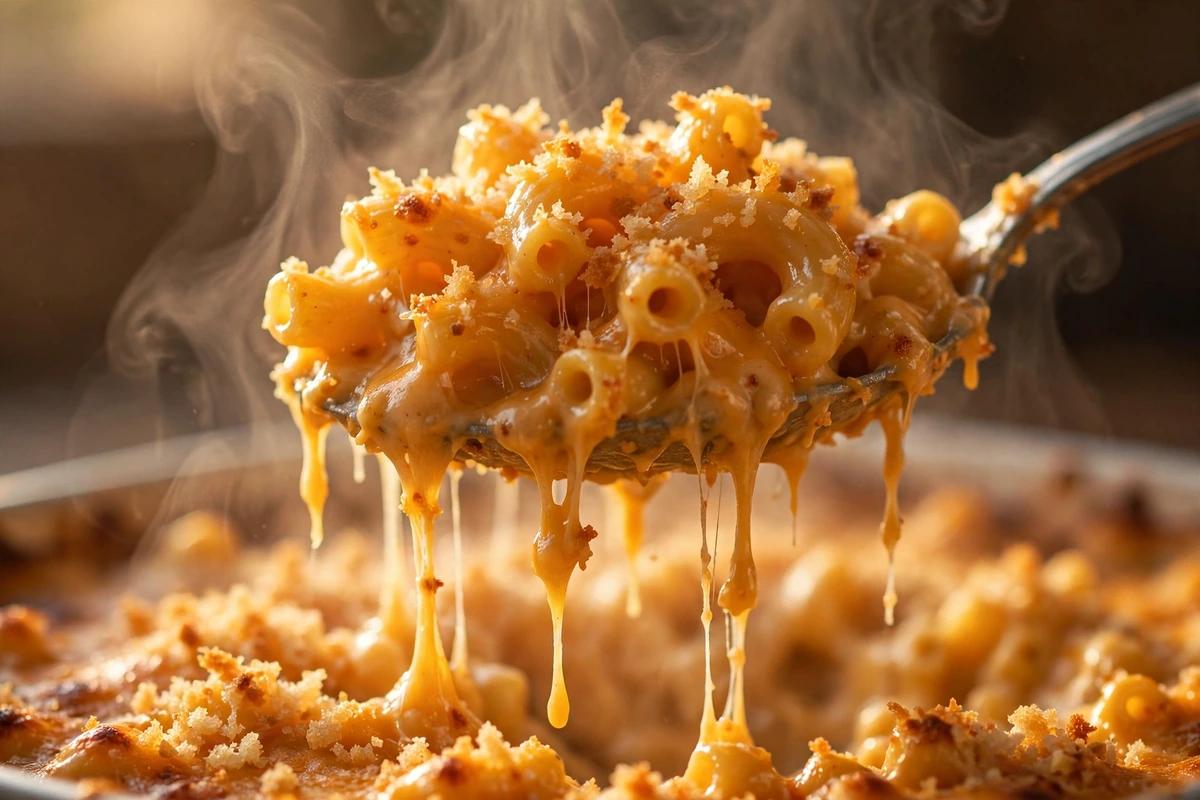
Close-up of a spoonful of baked mac and cheese showing creamy sauce stretching between elbow pasta and a crisp golden topping
Creamy Stovetop Mac and Cheese, No Oven Needed
How to Serve, Store & Reheat
It is rich, so a side portion of about three quarters of a cup is plenty. It sits well next to anything acidic or green: roast chicken, a sharp vinaigrette salad, quick-pickled onions, garlicky green beans. On a holiday table it holds heat for about 45 minutes if you leave it in the baking dish and tent it loosely with foil.
Cool it to room temperature within two hours, then cover tightly and refrigerate for up to 4 days. Transferring it to a shallow container helps it cool faster and more evenly.
Yes, and the splash of milk is not optional. Add 1 to 2 tablespoons of milk per portion, cover, and reheat at 325°F for 15 to 20 minutes, or microwave at 50% power in one-minute bursts, stirring between each. Reheating hard and fast on full power is what breaks leftover mac and cheese.
Yes, with one adjustment. Freeze it unbaked and without the topping, wrapped tightly, for up to 2 months. Thaw overnight in the fridge, add the panko topping fresh, and bake as written plus about 10 extra minutes. Freezing it after baking works but the texture drops noticeably, because the sauce has already been through one full heat cycle. To Make Ahead Assemble the whole thing up to 2 days ahead, hold the topping back, and refrigerate covered. Add the panko just before baking and add 10 to 15 minutes to the bake time since it is going in cold.
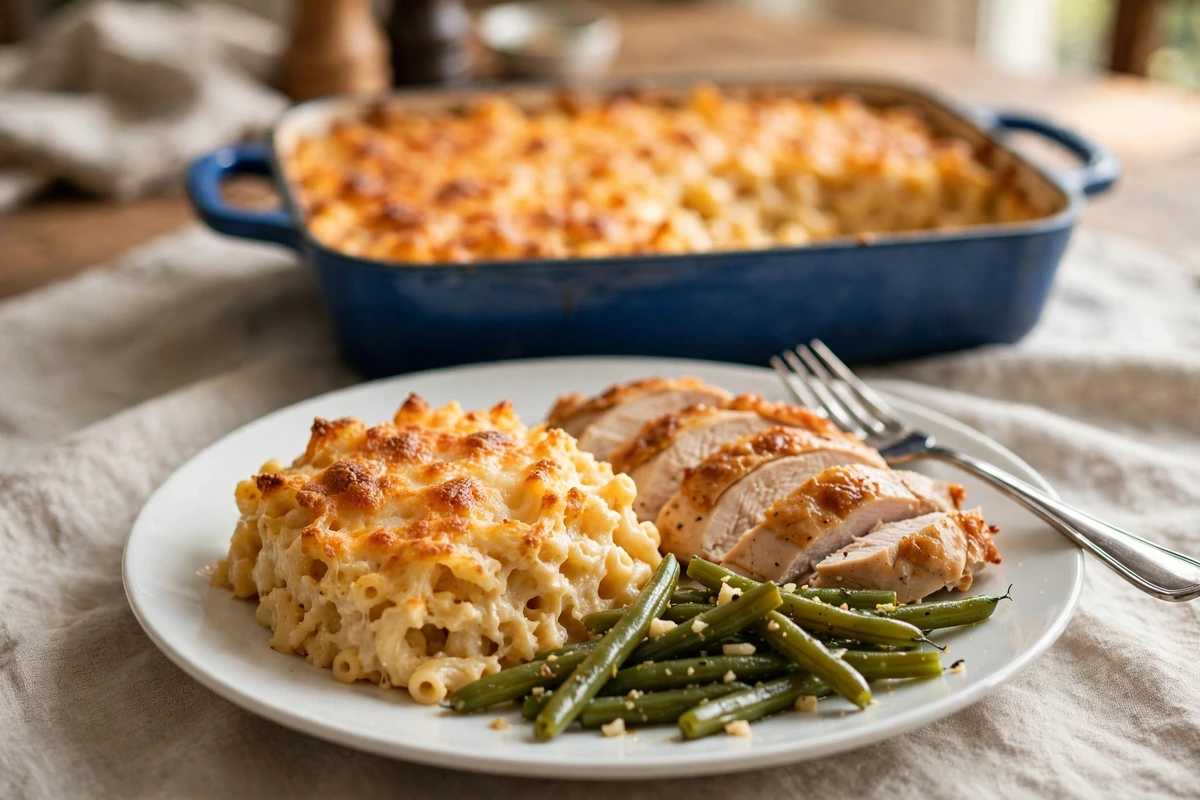
A serving of mac and cheese recipe plated on a white dish next to roast chicken and green beans for a family dinner
Dietary Variations & Adaptations
use a gluten free elbow pasta and swap the flour for a 1:1 gluten free baking blend or 3 tablespoons of cornstarch slurried into the cold milk instead of a roux. Replace the panko with crushed gluten free crackers or a plain cheese-only topping. Gluten free pasta softens faster, so cut the boil to 4 minutes.
drop the cream and use 4 cups of whole milk, and cut the total cheese to 18 ounces. It will be less rich and slightly less stable, so watch the bake time closely.
fold in 3 cups of roasted cauliflower or broccoli at Step 5. This stretches the dish to serve 12 without adding more dairy.
Whole milk, 3 cups, plus 1 cup heavy cream. Do not substitute here. Skim or 1% milk makes a thin sauce that separates under the heat of the oven, and the cream is doing structural work, not just adding richness.
The fat coats the cheese proteins and physically gets in the way of them clumping together. We explore this roux and dairy behavior thoroughly in our culinary guide to 10 Creamy Soup Recipes.
Frequently Asked Questions
Recipe Visual Gallery (6 Full Photos)
Recipe Card & Steps
Ingredients Checklist
Click an item to check it off as you prep
- 1 lb(450 g) elbow macaroni
- 2 tablespoonskosher salt, for the pasta water
- 6 tablespoons(85 g) unsalted butter
- 1/3 cup(42 g) all-purpose flour
- 3 cups(720 ml) whole milk, warmed
- 1 cup(240 ml) heavy cream, warmed
- 16 oz(450 g) sharp cheddar, shredded from a block, divided
- 8 oz(225 g) Gruyère, shredded from a block
- 1 1/2 teaspoonskosher salt
- 1/2 teaspoonfreshly ground black pepper
- 1/2 teaspoonmustard powder
- 1/4 teaspoonsmoked paprika
- 1/8 teaspooncayenne pepper
- 1/8 teaspoonground nutmeg
- 1 cup(60 g) panko breadcrumbs
- 2 tablespoons(28 g) unsalted butter, melted
Step-by-Step Instructions
Follow along and mark each step complete as you cook
Preheat the oven to 350°F (175°C). Butter a 9x13 inch baking dish.
Shred all the cheese from blocks. Set aside 1 1/2 cups of the cheddar for the topping and keep the rest in a bowl at room temperature. Warm the milk and cream together until steaming.
Bring a large pot of water to a rolling boil and add the 2 tablespoons of kosher salt. Cook the macaroni for 5 minutes only, well short of package directions. Drain and do not rinse.
Melt 6 tablespoons of butter in a heavy 5-quart pot over medium heat. Whisk in the flour and cook for 90 seconds to 2 minutes, until it smells nutty and turns pale blonde.
Pour in the warm milk and cream in a slow stream, whisking constantly. Bring to a gentle simmer and cook 4 to 5 minutes, whisking often, until the sauce coats a spoon but still runs off in a steady stream.
Whisk in the salt, pepper, mustard powder, smoked paprika, cayenne and nutmeg.
Remove the pot from the heat completely and wait 30 to 60 seconds until it stops bubbling. Add the cheddar and Gruyère in three batches, whisking each until fully melted before adding the next. The sauce should be glossy and pourable.
Fold the drained pasta into the sauce until evenly coated. It will look very saucy. Taste and adjust salt. Transfer to the prepared dish and level the top.
Toss the panko with the 2 tablespoons of melted butter, then mix in the reserved cheddar. Scatter evenly over the top.
Bake uncovered for 20 to 25 minutes, until bubbling at the edges and golden on top. Broil 2 to 3 minutes if more colour is needed, watching constantly.
Rest 10 minutes before serving.
Recipe Card Notes & Tips
- Shred from a block. Pre-shredded cheese is coated in potato starch or cellulose to stop it clumping in the bag, and that coating turns a cheese sauce gritty.
- The cheese goes in off the heat. Above roughly 165°F the proteins tighten and squeeze out fat, which is what causes grainy or oily mac and cheese.
- Stovetop version: cook the pasta to al dente instead of underdone, increase the milk to 3 1/2 cups, skip the topping and the bake, and serve within 5 minutes.
- Make ahead: assemble up to 2 days ahead without the topping, refrigerate covered, add the topping just before baking and add 10 to 15 minutes to the bake time.
- Gruyère substitutes that work: young Monterey Jack, mild cheddar, Fontina. Do not substitute more sharp cheddar or Parmesan.
Ratings & Reviews
Leave a Review
Made this recipe? Share your thoughts, tweaks, and honest rating with other home cooks!
Community Reviews (0)
You Might Also Enjoy
More delicious recipes in Main Dishes.