Crispy Orange Chicken Recipe with Real Orange Sauce
This crispy orange chicken recipe uses a double-fried cornstarch coating and a reduced fresh orange juice and zest glaze so the crust stays crisp through tossing and serving.
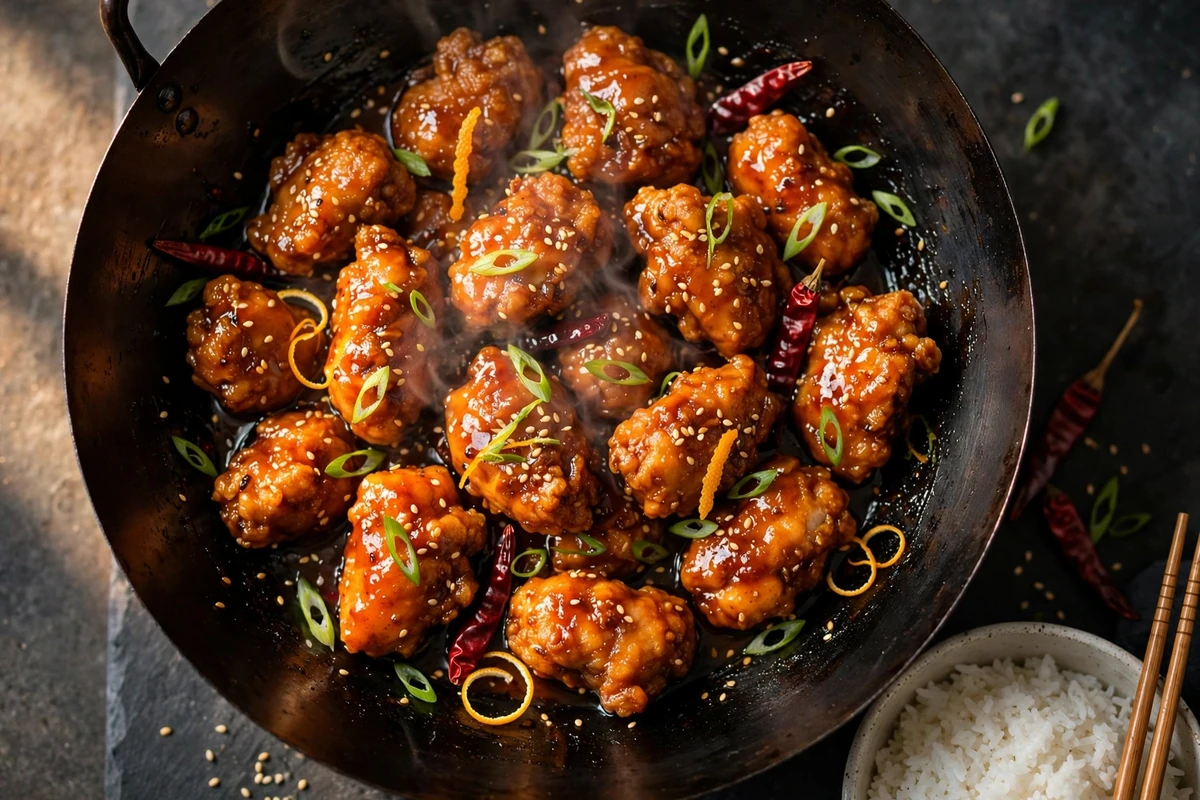
Fixing them takes a two-stage fry and a glaze built on fresh orange juice reduced before the chicken ever touches the pan. Because the sauce thickens in under a minute and the double-fried cornstarch shell is dehydrated on the surface, the chicken stays crisp through tossing and serving at the table.
Why You'll Love This Recipe
- The coating stays crisp through tossing and serving because the sauce is reduced to a glaze first rather than simmered around the chicken.
- Real orange flavor from both fresh zest and reduced juice, so it tastes like bright fruit instead of orange-colored syrup.
- No Shaoxing wine, no mirin, and no hard-to-source pantry items—everything comes from a standard grocery run.
- The orange sauce keeps in the fridge for up to a week and works on shrimp, roasted cauliflower, or meatballs.
Reduce the orange juice by itself, before anything else goes into the pan. Fresh orange juice is mostly water, so if you add it to a sauce at full volume you have two bad options: simmer the whole sauce long enough to drive that water off, which cooks the soy and vinegar into something flat and dull, or thicken it with extra cornstarch, which gives you a gluey texture.
Boiling 3/4 cup of juice down to about 1/3 cup takes 5 to 7 minutes on its own during the marinade rest, concentrates the fruit flavor, and means the finished sauce only needs about 90 seconds of cooking once everything is combined.
Read Before You Start
Dark meat holds up better. Boneless thighs stay juicy through two trips into hot oil, reaching optimal tenderness at 175°F (80°C). Breast meat works, but the window between safely cooked at 165°F (74°C) and dry is narrow, so cut breast pieces slightly larger and pull them as soon as they hit 165°F.
Cornstarch does the crisping, flour does the sticking. A coating of pure cornstarch shatters nicely but flakes off in the sauce. A coating of pure flour holds on but goes bready and soft. Three parts cornstarch to one part flour holds onto the chicken and still cracks when you bite it.
Ingredient Deep Dive & Notes
Boneless skinless chicken thighs. Cut into 1-inch pieces, slightly bigger than they look like they should be, because they shrink in the fryer. Uniform size matters more than exact size, since mismatched pieces cook at different rates and you end up with some dry and some underdone.
Egg white, not whole egg. The yolk adds fat that softens the coating and browns faster than you want on the second fry. The white alone is just enough protein to glue the starch on.
Cornstarch. Buy more than you think. The coating uses most of a cup, and the sauce needs another two teaspoons for the slurry.
Fresh oranges, three or four. You need both the zest and the juice, so buy whole fruit rather than a carton. Navel oranges are the easy default. Bottled juice works in a pinch but tastes noticeably duller once reduced.
Rice vinegar. Unseasoned, if you can find it. Seasoned rice vinegar already contains sugar and salt, which throws off the sauce balance. Cider vinegar is a workable substitute.
Light brown sugar. The molasses in it gives the sauce a darker, rounder sweetness than white sugar. Not authentic to every version, but it makes the fruit read better.
Fresh ginger and garlic. Both grated on a microplane so they dissolve into the sauce instead of leaving chunks.
Don't substitute: the orange zest with more juice. Almost all of the aroma you associate with orange lives in the oil in the peel, not the juice. A sauce made with juice alone tastes sour and sweet but not particularly orange, which is exactly the complaint people have about homemade versions.
For a lighter chicken dinner with citrus that goes the oven-roasted route instead, see Baked Lemon Chicken. For another takeout-style favorite with a rich, deeply spiced gravy, see Butter Chicken.
Equipment Needed
- A heavy 4-to-5-quart Dutch oven, pot, or flat-bottomed wok at least 5 inches deep for frying. Four cups of oil should fill the vessel no more than one-third to halfway up the sides to prevent boil-over and hold steady heat.
- A clip-on deep-fry thermometer and an instant-read food thermometer. Guessing oil temperature is the single biggest cause of greasy coating.
- A wire rack set over a sheet pan. Draining fried chicken on paper towels traps steam underneath and softens the bottom side.
- A microplane for the orange zest, fresh ginger, and garlic.
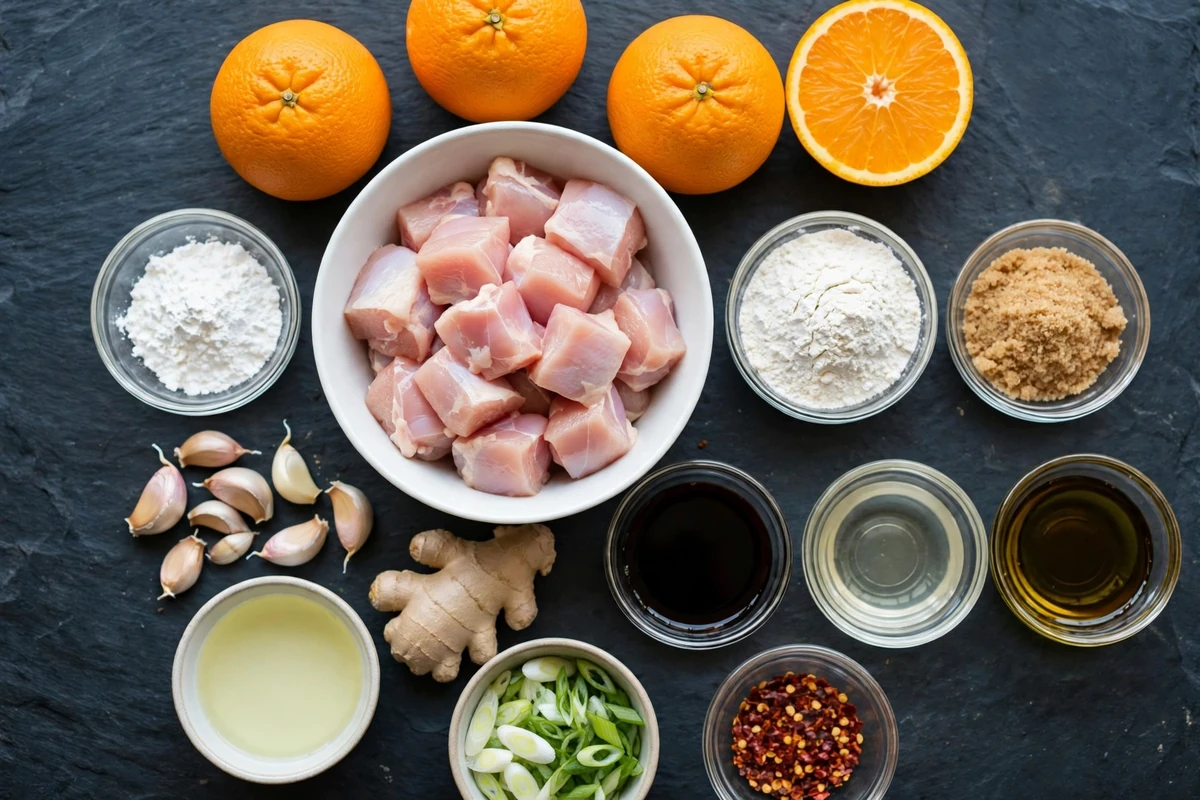
Orange chicken recipe ingredients laid out: cubed chicken thighs, fresh oranges, cornstarch, soy sauce, rice vinegar, ginger and garlic
Detailed Step-by-Step Cooking Guide
Marinate the chicken
Reduce the orange juice
Coat and rest the chicken
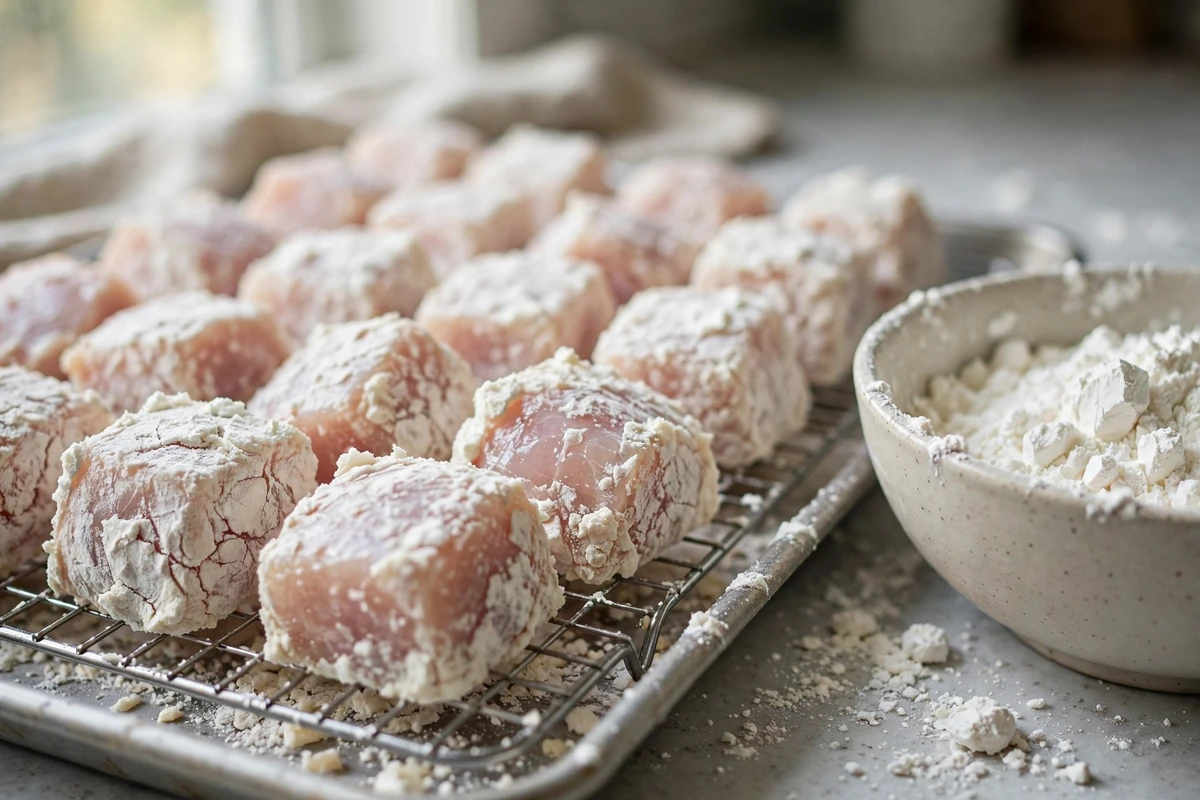
Chicken pieces coated in cornstarch batter resting on a wire rack before frying for orange chicken
First fry (3 batches)
Second fry (2 batches)
Finish the orange sauce
Toss and serve immediately
Getting the Crispy Coating Right
Crisp homemade orange chicken comes down to starch hydration, oil temperature recovery between batches, and a concentrated glaze that coats in seconds.
Either the 10-minute rest was skipped, or the chicken went in wet from the marinade with dry powder sitting loose on top. Press the coating on firmly, and let it turn from chalky white to slightly translucent on the wire rack before frying.
Oil temperature dropped from overcrowding or skipping recovery time between batches. Fry the first stage in 3 batches and the second stage in 2 batches, and keep a clip-on thermometer in the pot the whole time.
Pieces were cut too large, or the oil was too hot on the first fry. Keep the first fry at 350°F (175°C), not higher. If pieces are larger than 1 inch, add a minute and verify at least 165°F (74°C) internally (175°F / 80°C for thighs) with a thermometer.
Under-reduced orange juice, or the slurry was added to liquid that was not actively bubbling. Cornstarch must reach a boil to thicken properly. If it is still loose, mix another teaspoon of cornstarch with a tablespoon of cold water and whisk it in at a simmer.
Fresh oranges vary widely in sweetness. Whisk in unseasoned rice vinegar half a tablespoon at a time until the sweet-tart balance sharpens.
You zested too deeply and took white pith with the peel. Zest with a light touch, stopping at the bright orange outer layer, and rotate the fruit as you go.
That is natural once fried starch sits in warm glaze. Double frying keeps the crust crisp through tossing and immediate plating, not indefinitely. Have the rice steamed and everyone at the table before starting the second fry.
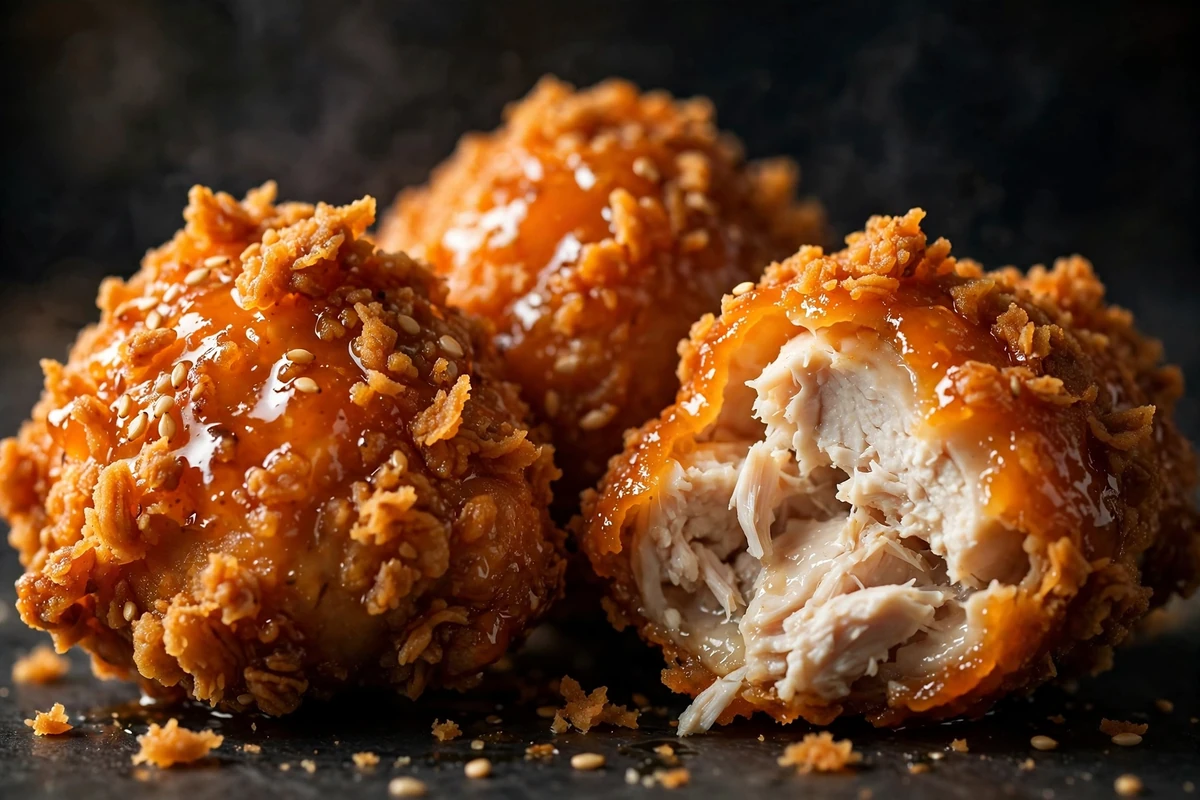
Close-up of crispy orange chicken pieces showing craggy glazed coating and juicy chicken inside
How to Use This Orange Sauce
How to Serve, Store & Reheat
Steamed jasmine rice is the standard pairing because it soaks up the extra orange glaze. Fried rice, lo mein noodles, or steamed broccoli and snap peas all work well, and a cool bowl of Asian Cucumber Salad or Crunchy Thai Cucumber Salad cuts through the sweet-tangy richness. Serve within a minute or two of tossing.
Cool leftovers promptly and refrigerate in an airtight container within 2 hours for up to 3 days. Already-sauced coating softens overnight in the fridge, though the flavor holds up well. If you anticipate leftovers, fry the batch, sauce only the portion you are eating right away, and store the unsauced cooked chicken and the sauce in separate containers.
Reheat in an oven or air fryer at 400°F (200°C) for 6 to 8 minutes until hot and an instant-read thermometer reads at least 165°F (74°C). Storing and reheating the fried chicken unsauced on a wire rack restores far more crunch before tossing with warmed sauce; the microwave heats leftovers through to 165°F but leaves the coating soft.
Freeze the fully cooked, unsauced double-fried chicken in a single layer, then transfer to a freezer bag for up to 2 months, and freeze the sauce separately in a sealed container. Reheat the unsauced chicken straight from frozen at 400°F (200°C) for 12 to 15 minutes until it reaches 165°F (74°C) internally, warm the sauce in a pan until bubbling, and toss. Freezing chicken already coated in sauce yields a soft crust and watery glaze.
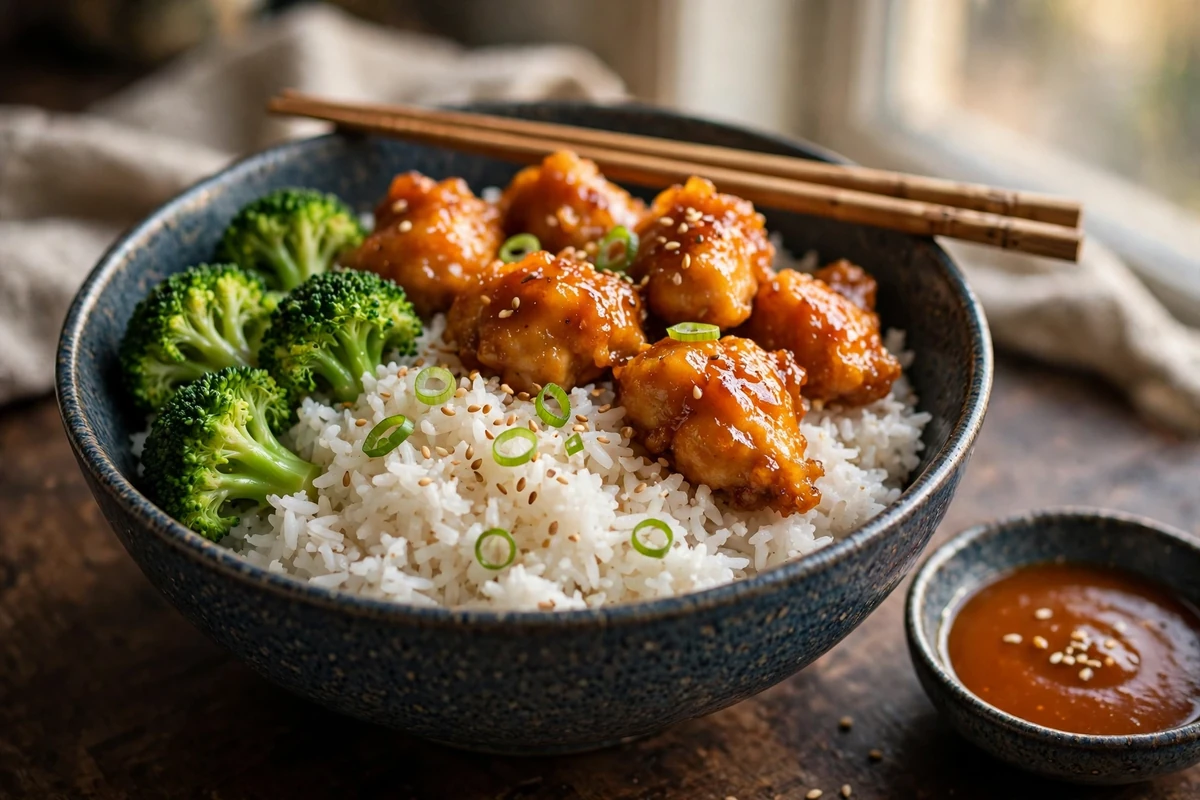
Orange chicken served in a bowl over steamed rice with broccoli, scallions and sesame seeds, chopsticks resting on the side
Dietary Variations
Spray the coated, rested chicken generously with neutral cooking oil and air fry in a single layer at 400°F (200°C) for 12 to 14 minutes, shaking the basket twice, until golden and cooked to at least 165°F (74°C) internally (175°F / 80°C for thighs). The crust is thinner and less craggy than deep-fried, but holds the glaze well.
Swap the 1/4 cup all-purpose flour for sweet white rice flour (glutinous rice flour) one-for-one, and use certified gluten-free tamari in place of soy sauce. Confirm your unseasoned rice vinegar carries a gluten-free label.
Reduce the light brown sugar to 2 tablespoons and use 1/2 cup of reduced fresh orange juice (starting from 1 cup fresh juice). The glaze will be brighter, tangier, and slightly less syrupy.
The reason takeout-style orange chicken stays crisp under glaze while most home versions soften immediately comes down to surface moisture in the crust.
A single fry cooks the meat but leaves steam migrating outward into the starch coating, which the sauce then saturates right away.
Following the 350°F (175°C) first fry with a 60-to-90-second second fry at 375°F (190°C) flashes that residual water out of the outer starch layer, leaving a porous, dehydrated shell.
Because the orange juice was already reduced beforehand, the glaze sits on top of that crisp shell instead of soaking straight through—giving you the window you need to toss for 20 seconds and get the dish to the table while it still crunches.
Allergen Notice: This recipe contains soy (soy sauce), wheat (all-purpose flour and soy sauce), egg (egg white in the marinade), and sesame (toasted sesame oil and sesame seeds). Substitutions: replace soy sauce with coconut aminos plus 1/4 teaspoon fine salt; replace all-purpose flour 1:1 with sweet rice flour (and use gluten-free tamari); replace egg white with 2 tablespoons of reduced orange juice as a wet binder; or omit sesame oil and seeds entirely and use 1/2 teaspoon neutral oil in the marinade. Ingredient formulations and facility practices vary by brand, so always read product labels yourself when cooking for a food allergy.
Frequently Asked Questions
Recipe Visual Gallery (5 Full Photos)
Recipe Card & Steps
Ingredients Checklist
Click an item to check it off as you prep
- 1.5 lb (680 g)boneless skinless chicken thighs, cut into 1-inch pieces
- 1 largeegg white
- 1 tbspsoy sauce (for marinade)
- 1 tsptoasted sesame oil
- 1/4 tspground white pepper
- 3/4 cupcornstarch (for coating)
- 1/4 cupall-purpose flour
- 1/2 tspbaking powder
- 1/2 tspsalt
- 4 cupsneutral oil, for frying
- 3/4 cupfresh orange juice (about 3 oranges)
- Zest of 2 oranges
- 1/4 cuppacked light brown sugar
- 3 tbspunseasoned rice vinegar
- 2 tbspsoy sauce (for orange sauce)
- 1 tbspfresh ginger, grated
- 3 clovesgarlic, grated
- 1/2 tspred chili flakes
- 2 tspcornstarch mixed with 1 tbsp cold water (for slurry)
- 2scallions, thinly sliced
- 1 tbsptoasted sesame seeds
Step-by-Step Instructions
Follow along and mark each step complete as you cook
Toss the cubed chicken with the egg white, soy sauce, sesame oil, and white pepper until evenly coated. Cover and marinate in the refrigerator for 20 minutes.
Meanwhile, while the chicken marinates, simmer the fresh orange juice in a small saucepan over medium heat until reduced to about 1/3 cup, 5 to 7 minutes. Pour into a bowl with the brown sugar, rice vinegar, soy sauce, and orange zest, stir to combine, and set aside.
Whisk the cornstarch, flour, baking powder, and salt in a wide bowl. Working in batches, press each piece of marinated chicken into the dry mixture until thickly coated, then arrange in a single layer on a wire rack set over a sheet pan. Rest for 10 minutes until the coating hydrates and looks slightly translucent while you begin preheating the frying oil.
Heat 4 cups of neutral oil to 350°F (175°C) in a heavy 4-to-5-quart Dutch oven, pot, or deep wok (at least 5 inches deep, filled no more than one-third to halfway full). Fry the chicken in 3 batches for about 4 minutes per batch, until the coating is set and pale gold. Transfer to the clean wire rack and allow the oil 1.5 to 2 minutes to return to 350°F between batches.
Raise the oil temperature to 375°F (190°C) (about 2 to 3 minutes). Fry the chicken a second time in 2 batches—never all at once, to prevent crowding or hot-oil overflow—for 60 to 90 seconds per batch, letting the oil recover for 1 minute between batches, until deep golden and audibly crisp. An instant-read thermometer inserted into the thickest piece should read at least 165°F (74°C) for food safety, and 175°F (80°C) for optimal thigh tenderness. Drain briefly on the wire rack.
Pour the combined orange sauce mixture into a wok or wide skillet over medium-high heat along with the grated ginger, grated garlic, and red chili flakes. Bring to a full bubble, about 1 minute. Re-stir the cornstarch slurry and whisk it into the boiling sauce; cook 30 to 45 seconds until glossy and thick enough to coat the back of a spoon. Remove the pan from the heat.
Add the hot double-fried chicken to the sauce and fold through off the heat for no more than 20 seconds, just until glazed. Serve immediately over steamed rice, topped with sliced scallions and toasted sesame seeds.
Recipe Card Notes & Tips
- Separate juice reduction: Reducing the fresh orange juice on its own keeps the sauce bright and concentrated without needing a long simmer that dulls the soy sauce and rice vinegar.
- Hydration rest: Do not skip the 10-minute wire-rack rest after coating; letting the starch hydrate from the marinade prevents the crust from sliding off in the hot oil.
- Safe batch frying: Use a pot at least 5 inches deep (4 to 5 quarts) so 4 cups of oil fills it less than halfway. Always perform the first fry in 3 batches and the second fry in 2 batches to prevent oil boil-over and greasy temperature drops.
- Safe make-ahead method: Never partially cook chicken and hold it at room temperature. To prep ahead, reduce the sauce up to 3 days in advance and refrigerate, or fully double-fry the chicken to at least 165°F (74°C) (175°F / 80°C for thighs), cool promptly, and refrigerate in an airtight container. Re-crisp unsauced chicken at 400°F (200°C) in an oven or air fryer for 6 to 8 minutes until it reaches 165°F (74°C) internally before tossing with freshly warmed sauce.
- No cooking wine or mirin: This recipe omits Shaoxing wine and mirin. If cooking for Halal dietary needs, use Halal-certified chicken and verify labels on your brewed soy sauce and unseasoned rice vinegar.
Ratings & Reviews
Leave a Review
Made this recipe? Share your thoughts, tweaks, and honest rating with other home cooks!
Community Reviews (0)
You Might Also Enjoy
More delicious recipes in Main Dishes.
Copycat Cheddar Bay Biscuit Chicken Pot Pie Recipe
Leftover Turkey Pot Pie Recipe