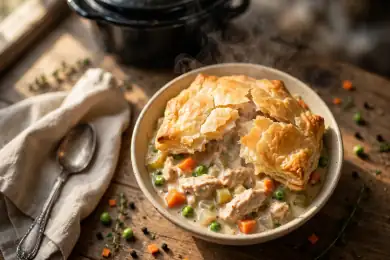
Copycat Cheddar Bay Biscuit Chicken Pot Pie Recipe
A creamy chicken and vegetable filling baked under eight from-scratch cheddar garlic drop biscuits, brushed with garlic parsley butter straight out of the oven. No pastry and no bottom crust.
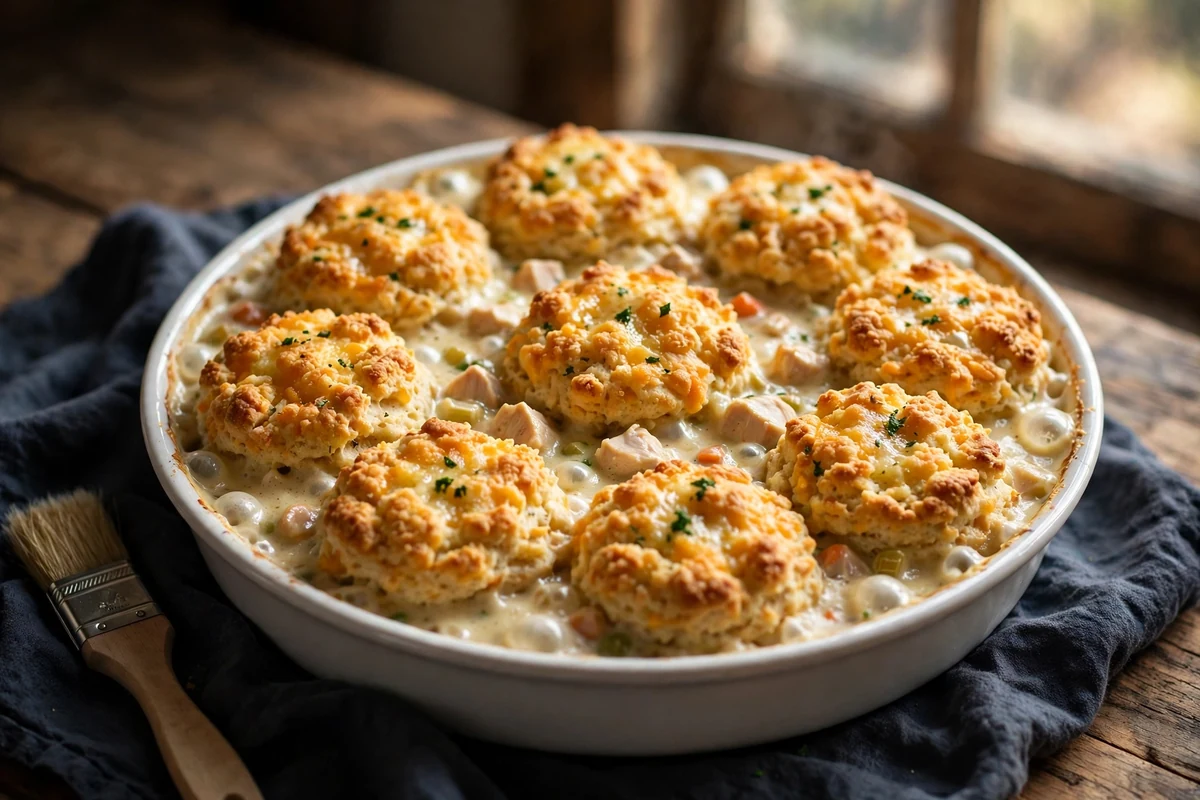
The cheddar garlic drop biscuit is a better pot pie topping than pastry and almost nobody uses it that way. It has enough structure to sit on a wet filling without collapsing, the cheese browns where it hits the heat, and the garlic butter brushed over the top at the end soaks straight into the crumb. The biscuits here are made from scratch, because a cheddar bay biscuit chicken pot pie lives or dies on the biscuit and a box will not get you there.
Why You'll Love This Recipe
- Eight craggy cheddar biscuits on top, made completely from scratch in about ten minutes of active work.
- No rolling pin required—no pastry to roll, no blind-baking, and no bottom crust to keep crisp.
- Melted garlic and parsley butter goes on steaming hot straight from the oven, delivering authentic restaurant-style flavor.
- The seasoning blend is built from everyday pantry spices rather than a commercial packaged mix.
Cube the cheddar instead of shredding it. Cut the cheese into quarter-inch cubes and toss them through the dry flour so each piece is coated.
Shredded cheese is standard in drop biscuits on a flat baking sheet, but on top of a wet filling it works against you: shreds melt out early, release their fat into the crumb, and leave a flatter, greasier biscuit that turns soft where it meets the sauce.
Cubes hold their shape long enough for the biscuit structure to set around them, then melt into defined molten pockets. You get crisp browning on the exterior and molten cheese inside.
Read Before You Start
Make the biscuit dough first and chill it. The dough wants to be cold when it meets the filling, and the filling wants to still be steaming hot. Doing it in that order guarantees both. Do it the other way around and you will be stirring a cooling filling while trying to cut butter into flour.
Leave an inch of headroom in the dish. Biscuits rise and the filling bubbles up around them. Fill a 2.5-quart baking dish to about an inch below the rim and place it on a rimmed baking sheet anyway to catch any stray bubbling drips.
Ingredient Deep Dive & Notes
Sharp cheddar, from a block. Buy a block and cube it yourself. Pre-shredded cheese is dusted with powdered starch to prevent clumping, which interferes with proper dough hydration. Worth knowing: the enzyme or rennet used in cheddar varies by producer—some are animal-derived and some are microbial—so check the label if that matters for your household.
Cold buttermilk. The acidity reacts with the baking soda to give these drop biscuits high lift that baking powder alone cannot match. Plain milk with one tablespoon of fresh lemon juice stirred in and left for 5 minutes is a reliable substitute.
Cold butter, two places. Six tablespoons go into the biscuit dough, cubed and chilled. Three tablespoons are melted separately for the finishing garlic butter. Do not combine these steps.
Garlic powder, not fresh garlic, in the dough. Fresh garlic in biscuit dough scorches at 400°F (200°C) and turns bitter. Powder distributes evenly and stays sweet. Fresh minced garlic belongs strictly in the warm finishing butter brushed on after baking.
Smoked paprika, celery salt, and cayenne. This spice trio alongside the garlic powder gives the biscuit its iconic savory, restaurant-style flavor profile without any commercial mix.
Boneless, skinless chicken thighs. Thighs brown in the skillet and stay juicy and succulent through the 25-minute oven bake. Chicken breast tends to dry out over that time in a hot oven.
All-purpose flour in the filling (1/2 cup). Deliberately calibrated on the thick side. A loose filling under biscuits soaks into their undersides, leaving a gummy, unbaked layer that extra oven time cannot fix.
Don't substitute: do not use a boxed biscuit mix and add cheese to it. Boxed mixes run sweeter and softer than homemade drop dough, causing the biscuits to slump and dissolve into the filling. If you want a quick shortcut version, use canned refrigerated biscuits and follow the par-baked method in our Chicken Pot Pie Casserole instead.
Equipment Needed
- 2.5-quart round or oval ceramic baking dish (at least 2.5 inches deep)
- Rimmed baking sheet to catch drips
- Large deep skillet or Dutch oven
- Instant-read digital thermometer
- Pastry brush
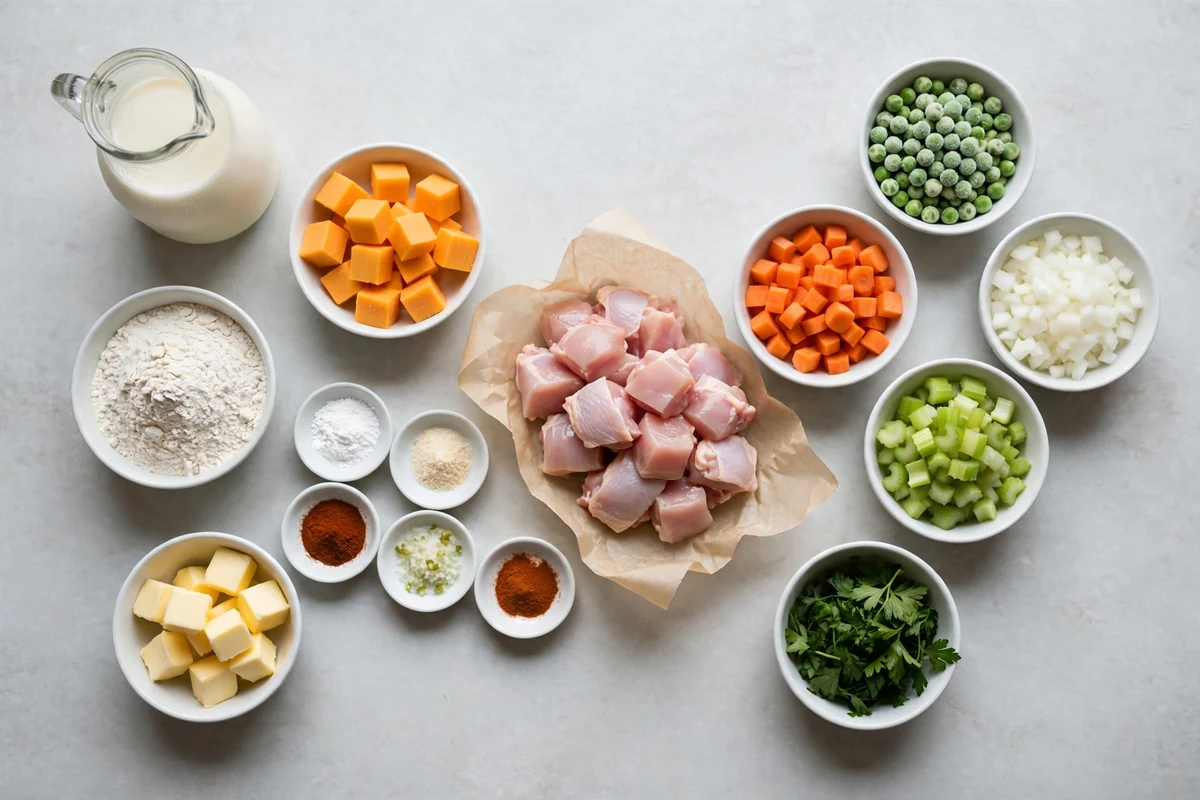
Ingredients for cheddar bay biscuit chicken pot pie including cubed cheddar, buttermilk, flour, chicken thighs and spices
Detailed Step-by-Step Cooking Guide
Preparation
Mix the biscuit dough
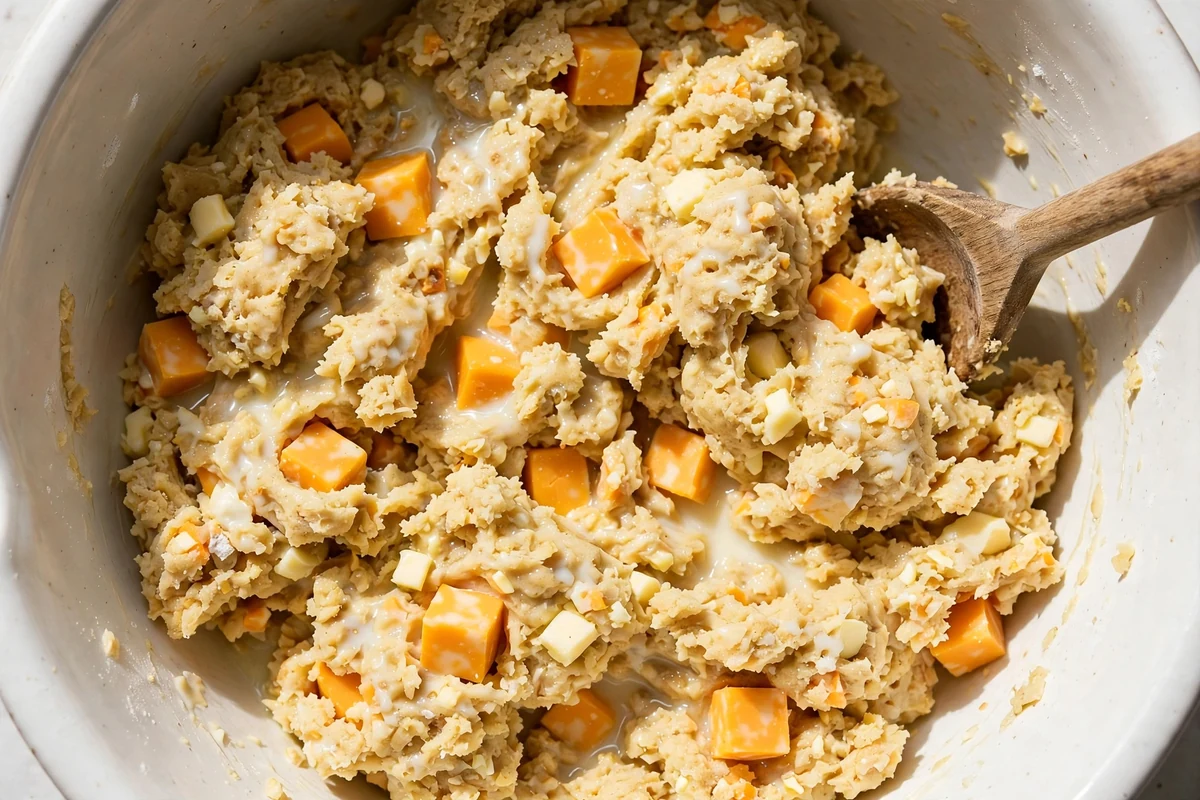
Shaggy cheddar biscuit dough in a bowl with visible cubes of cheddar and pieces of butter
Brown the chicken
Cook the vegetables and flour
Thicken the sauce
Transfer hot and top immediately
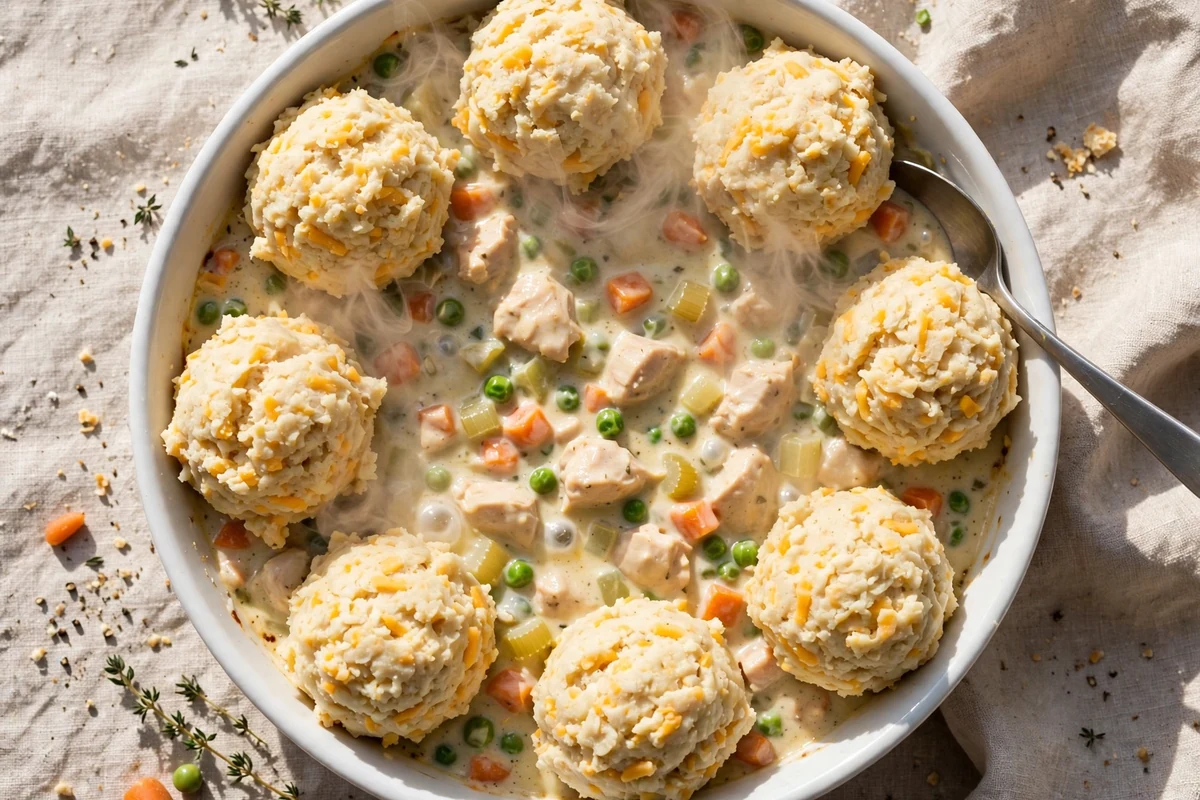
Mounds of cheddar biscuit dough dropped over hot chicken pot pie filling in a baking dish before baking
Bake
Garlic butter, straight away
Getting the Cheddar Bay Biscuits Right
The dough was too warm or shredded cheese was used instead of cubes. Both cause butter and cheese fat to melt into the crumb before the structure sets. Keep the dough chilled until the exact moment it meets the filling.
The filling was too thin, or the dough mounds were pressed down into the gravy. Drop the mounds gently on top and let them sit proud. A thick roux holds them up so heat can circulate underneath.
Overmixing the dough. Stir 10 to 12 times just until flour is incorporated, then put the spoon down.
Oven temperature ran cool, or the biscuits were crowded together and steamed each other. Bake at 400°F with distinct gaps between each mound.
Fresh garlic went into the raw biscuit dough instead of the finishing butter. Fresh garlic scorches in hot dough; powder belongs in the dough, fresh garlic in the butter.
The dish was filled too full. Always leave 1 inch of clearance at the rim and bake on a rimmed sheet pan.
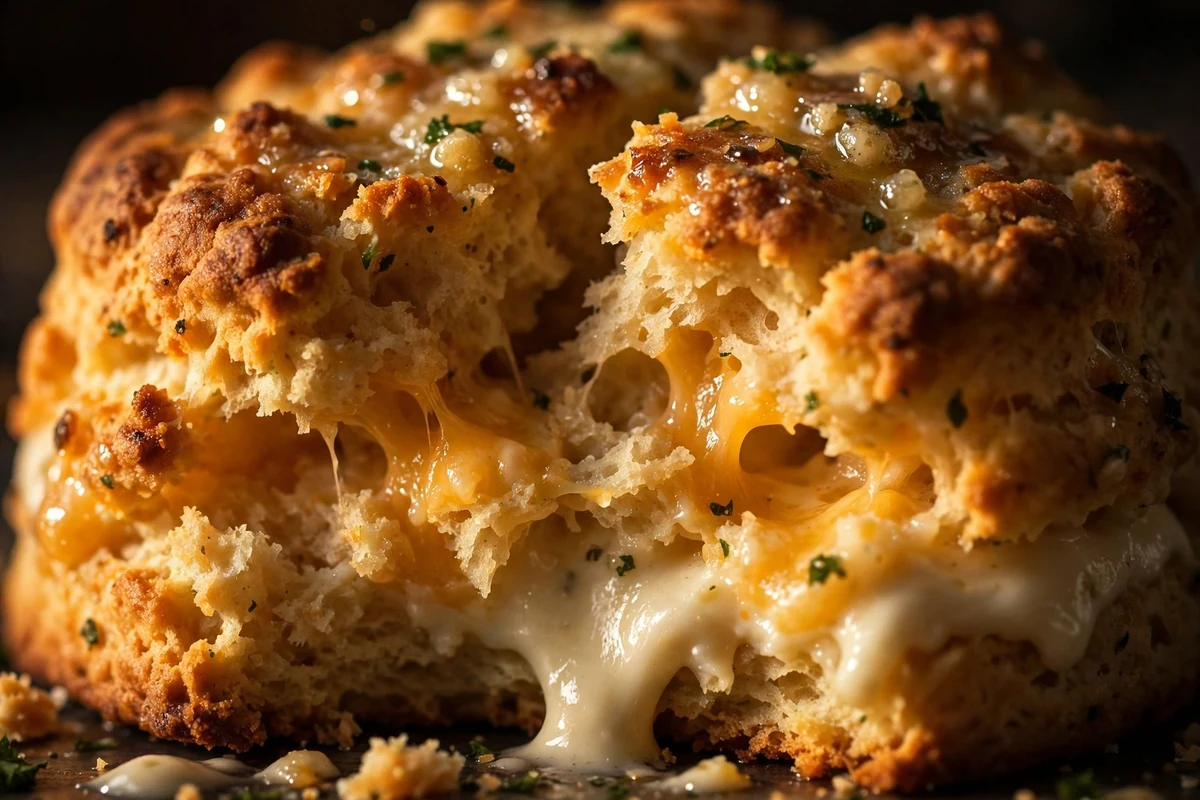
Close-up of a split cheddar bay biscuit showing melted cheese pockets and a craggy garlic butter glazed top
The Biscuits on Their Own & Variations
How to Serve, Store & Reheat
Rest 10 minutes on the counter, then serve with a large spoon—one biscuit and a generous scoop of filling per plate. Do not attempt neat slices. Serve alongside a crisp, acidic salad such as a tangy vinegar slaw or mixed greens with lemon vinaigrette to balance the rich butter and cheese.
Allow the casserole to cool completely, cover tightly, and refrigerate for up to 3 days. Biscuits will soften slightly overnight, but the oven reheat restores their crisp crust.
Warm in a 350°F (175°C) oven for 20 minutes covered with foil, then uncover for 5 minutes to re-crisp the biscuit tops. A light brush of fresh melted garlic butter restores day-one aroma and flavor. Avoid microwaving, which steams the biscuits and makes them rubbery.
Freeze the two components separately rather than the assembled casserole. The filling freezes flat in freezer bags for up to 3 months. The raw biscuit dough mounds can be frozen solid on a sheet pan, transferred to a freezer bag, and baked straight from frozen with 5 additional minutes of bake time. Assembled and baked casseroles turn dense and soggy when frozen.
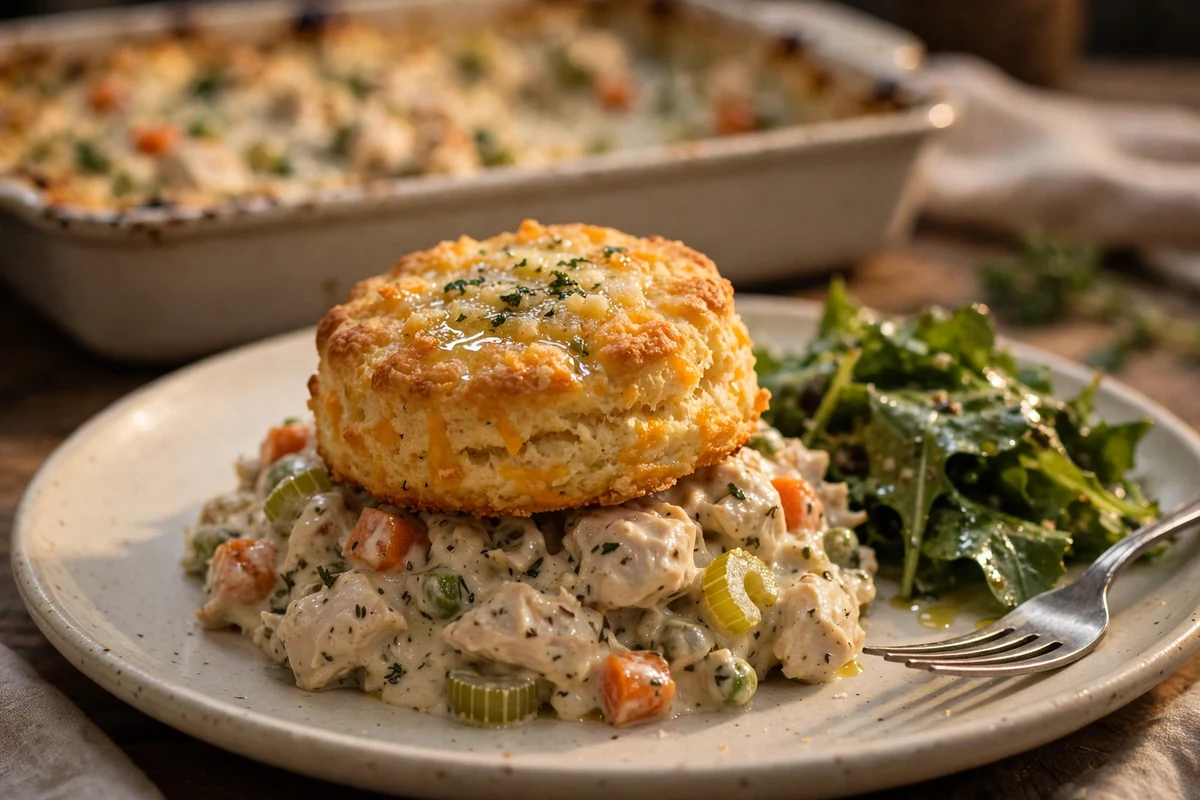
A cheddar bay biscuit served with a scoop of creamy chicken pot pie filling on a plate with salad
Dietary Variations
Use a 1-to-1 gluten-free baking blend in equal amounts for both the filling roux and the biscuit dough. Gluten-free biscuit dough is slightly more delicate, so chill the scooped mounds for 15 minutes before dropping onto the hot filling to help them hold their shape.
Substitute a firm plant-based baking stick butter for both the dough and filling roux, use unsweetened oat milk with 1 tablespoon of lemon juice in place of buttermilk, and use a firm plant-based sharp cheddar block cut into cubes.
Reduce the cheddar cheese to 3 ounces, decrease the filling butter to 3 tablespoons, and use 1% milk. The drop biscuits remain flavorful while noticeably lowering total fat and calories.
Brushing the garlic butter on while the biscuits are still steaming hot is not just a garnish—it is the single technique that creates the signature restaurant flavor.
A biscuit straight out of the 400°F oven has an open crumb actively releasing hot steam. Brushing melted garlic butter at that exact second causes the cooling steam to pull the seasoned butter deep into the tender crumb.
If you wait five minutes, the crumb contracts, the surface cools below butter's melting point, and the butter simply pools on top and tastes greasy.
Whisk the butter and have your pastry brush standing by before the oven timer dings.
Allergen Notice: This recipe contains wheat (biscuit flour and roux) and dairy (butter, buttermilk, sharp cheddar, and whole milk). Wheat can be replaced with a certified 1-to-1 gluten-free baking blend. Dairy is integral to the authentic texture and flavor of both the filling and the cheddar bay biscuits. Always check ingredient packaging if cooking for individuals with diagnosed food allergies. This recipe guide does not replace certified medical or nutritional advice.
Frequently Asked Questions
Recipe Visual Gallery (5 Full Photos)
Recipe Card & Steps
Ingredients Checklist
Click an item to check it off as you prep
- 2 cups (240 g)all-purpose flour
- 1 Tbspbaking powder
- 1/2 tspbaking soda
- 1 tspgranulated sugar
- 3/4 tspfine salt
- 1 tspgarlic powder
- 1/2 tspsmoked paprika
- 1/4 tspcelery salt
- 1 pinchcayenne pepper
- 6 Tbsp (85 g)cold unsalted butter, cut into 1/4-inch cubes
- 5 oz (140 g)sharp cheddar cheese, cut into 1/4-inch cubes
- 1 cup (240 ml)cold buttermilk
- 1 1/2 lb (680 g)boneless skinless chicken thighs, cut into 1-inch pieces
- 5 Tbsp (70 g)unsalted butter, divided
- 1medium yellow onion, diced
- 2medium carrots, diced
- 2ribs celery, sliced
- 1/2 cup (60 g)all-purpose flour
- 2 1/2 cups (600 ml)low-sodium chicken stock
- 3/4 cup (180 ml)whole milk
- 1 cup (140 g)frozen sweet peas
- 1 tspdried thyme
- 1/2 tspgarlic powder
- 1 1/4 tspsalt, plus more to taste
- 1/2 tspblack pepper
- 3 Tbsp (42 g)unsalted butter, melted
- 1 smallgarlic clove, finely minced
- 1/2 tspgarlic powder
- 1 Tbspfinely chopped fresh parsley
- 1 pinchfine salt
Step-by-Step Instructions
Follow along and mark each step complete as you cook
Preheat the oven to 400°F (200°C). Cut the sharp cheddar and 6 tablespoons of butter into 1/4-inch cubes and return both to the refrigerator to stay firm and cold.
In a large mixing bowl, whisk together the flour, baking powder, baking soda, sugar, fine salt, 1 tsp garlic powder, smoked paprika, celery salt, and cayenne pepper. Cut in the cold butter cubes using a pastry cutter or your fingertips until the largest pieces are pea-sized. Toss the cheddar cubes through the dry mixture until every cube is lightly coated in flour.
Pour in the cold buttermilk. Stir 10 to 12 times with a wooden spoon just until no dry flour remains. The dough will look shaggy and slightly wet. Place the bowl in the refrigerator while making the filling.
Melt 2 tablespoons of the filling butter in a large deep skillet or Dutch oven over medium-high heat. Add the chicken pieces in a single layer, leave undisturbed for 3 minutes to develop golden fond, then stir and cook about 6 minutes total until golden outside and the thickest piece reads 175°F (80°C). Transfer the chicken and pan juices to a plate.
Lower the skillet heat to medium. Add the remaining 3 tablespoons of butter, followed by the diced onion, carrots, and celery. Cook for 9 minutes, stirring occasionally, until the onion is translucent and the carrots are tender-crisp.
Sprinkle the 1/2 cup flour over the vegetables and stir constantly for 2 minutes, until it resembles damp sand and smells lightly toasted rather than chalky.
Gradually whisk in the low-sodium chicken stock in three additions, followed by the whole milk. Simmer gently for 5 to 6 minutes, stirring frequently, until a spoon dragged across the bottom of the pan leaves a clear track that stays open for a second or two.
Take the skillet off the heat. Stir in the dried thyme, 1/2 tsp garlic powder, salt, and black pepper. Fold in the cooked chicken with its juices and the frozen peas. Taste and adjust seasoning if desired.
Pour the steaming hot filling into a 2.5-quart baking dish, leaving at least 1 inch of headroom. Retrieve the chilled biscuit dough from the refrigerator and drop eight roughly equal mounds over the hot surface, spacing them apart with visible gaps. Do not press or flatten them.
Place the baking dish onto a rimmed baking sheet. Bake at 400°F (200°C) for 22 to 26 minutes, until the biscuit tops are deep golden with darker toasted cheese edges, the filling is actively bubbling around them, and an instant-read thermometer inserted into the center of the thickest biscuit reads 200°F (93°C). Tent loosely with foil during the final 5 minutes if the tops brown too quickly.
While the pot pie bakes, whisk together the melted butter, minced fresh garlic, 1/2 tsp garlic powder, chopped fresh parsley, and a pinch of salt. Brush the garlic butter generously over the biscuits the exact moment the dish comes out of the oven, using all of it.
Rest the pot pie on the counter for 10 minutes to allow the filling to set slightly, then spoon into warm bowls or plates and serve.
Recipe Card Notes & Tips
- Cube the cheddar rather than shredding it: quarter-inch cubes hold their shape long enough for biscuit structure to set, then melt into distinct molten pockets.
- Fresh garlic belongs only in the finishing butter: in the biscuit dough it scorches at 400°F and turns bitter.
- Standalone biscuits: bake on a parchment-lined baking sheet at 425°F for 13 to 15 minutes, then brush immediately with the garlic butter.
- Freeze separately: freeze the filling flat and the unbaked dough mounds separately, never as an assembled baked casserole.
- Quick buttermilk substitute: stir 1 Tbsp fresh lemon juice into 1 cup whole milk and let stand 5 minutes.
Ratings & Reviews
Leave a Review
Made this recipe? Share your thoughts, tweaks, and honest rating with other home cooks!
Community Reviews (0)
You Might Also Enjoy
More delicious recipes in Main Dishes.
Leftover Turkey Pot Pie Recipe

Crispy Orange Chicken Recipe with Real Orange Sauce