Skillet Chicken Pot Pie with Puff Pastry Recipe
A one-skillet chicken pot pie crowned with a soaring golden puff pastry lid and no bottom crust. The secret egg-washing rule that lets pastry layers rise high.
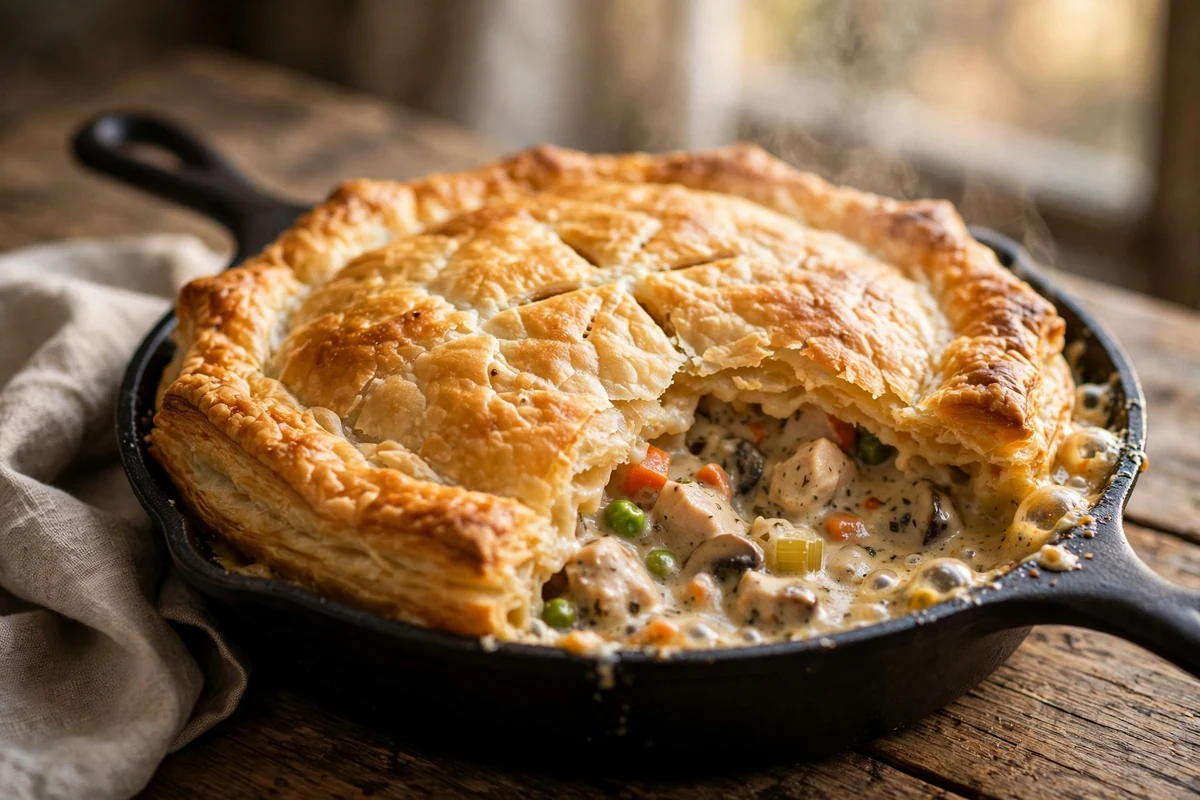
Puff pastry is the easiest pot pie topping to buy and the easiest one to ruin. It arrives from the store already laminated with dozens of paper-thin butter layers, and everything you do between the freezer and the oven either protects those layers or crushes them. A chicken pot pie with puff pastry that comes out flat and greasy has almost always been handled too warm, sliced with a dragging knife, or brushed with egg wash down the sides. None of those mistakes are obvious, and all three are completely avoidable.
There is no bottom crust here. The filling cooks in an oven-safe skillet on the stove, the cold puff pastry round drapes over the top, and the entire dinner bakes in one pan. If you prefer a traditional double-crust pie baked in a pie plate, see our scratch-made Homemade Chicken Pot Pie. If you are using a slow cooker, see our Easy Chicken Pot Pie Crock Pot Recipe, where puff pastry squares are baked separately on a sheet pan because pastry steams into dough under a slow cooker lid. For a 9x13 family bake with biscuit topping, explore our Chicken Pot Pie Casserole.
Why You'll Love This Recipe
- One skillet from stove to table: sauté, simmer, lid, and bake in a single 10-inch pan.
- Soaring flaky layers: puff pastry delivers dramatic height and buttery shatter with zero pastry-making effort.
- No par-baking or blind-baking needed: the filling is fully cooked on the stove, so the oven bake is 100% focused on puffing the crust.
- No bottom crust to keep crisp—guarantees zero soggy bottom pastry.
Egg wash the top of the pastry only, never the cut edges. This is the single most common reason a puff pastry pot pie lid fails to rise around its perimeter. Egg is a protein that sets quickly upon heating.
Any egg wash that drips down the cut edge glues those laminated dough sheets together at the very seam where steam is trying to push them apart.
Brush inward from the rim with a light touch, and wipe any stray drips off the skillet edge with a paper towel before sliding the pan into the oven.
Read Before You Start
Thaw pastry in the fridge, not on the warm counter. The listed 20-minute prep time assumes thawed pastry. Thaw the pastry sheet in the refrigerator overnight (or for 40 minutes at cool room temperature if pressed for time). Cold, firm dough is critical: if it turns floppy or tacky while you work, slide it flat on a plate into the fridge for 10 minutes.
Cut with one clean downward press, never a sawing drag. Use a sharp chef's knife or pizza cutter pressed straight down. Dragging a blade smears the delicate laminated butter layers together, gluing the edges shut so the rim stays flat while baking.
Ingredient Deep Dive & Notes
Frozen puff pastry (1 sheet, ~8. 6 oz / 245 g). One standard sheet fits a 10-inch skillet with an attractive drape. Check the ingredient label: all-butter puff pastry offers superior flavor and flaky lift, while some commercial brands use vegetable shortening or animal lard.
Boneless, skinless chicken thighs. Cooked directly in the skillet filling on the stovetop. The oven bake is calibrated for the pastry, so the chicken is already fully cooked and tender before baking begins.
All-purpose flour in the filling (1/2 cup). Calibrated deliberately thick. Because puff pastry rests directly on top of the sauce without a pastry barrier, a watery filling releases steam directly into the pastry's underside, causing it to turn gummy.
Low-sodium chicken stock (2 1/2 cups). Provides savory depth without over-salting as the sauce simmers.
Whole milk and heavy cream (3/4 cup milk + 1/4 cup cream). Cream provides fat stability, preventing the hot roux-thickened sauce from breaking beneath the pastry lid during the 400°F bake.
Egg wash (1 egg beaten with 1 tsp water). Water thins the protein wash so it glazes the pastry in a delicate, even golden sheen without pooling.
Don't substitute: never use puff pastry as a bottom crust. Puff pastry requires hot air circulation to lift away from a surface; trapped beneath a wet filling, it collapses into a dense, soggy layer that never bakes through. For a bottom-crust pie, use standard shortcrust pastry as in our Homemade Chicken Pot Pie or Easy Chicken Pot Pie.
Equipment Needed
- 10-inch oven-safe skillet (cast iron or heavy stainless steel)
- Sharp knife or pizza wheel
- Pastry brush
- Instant-read digital thermometer
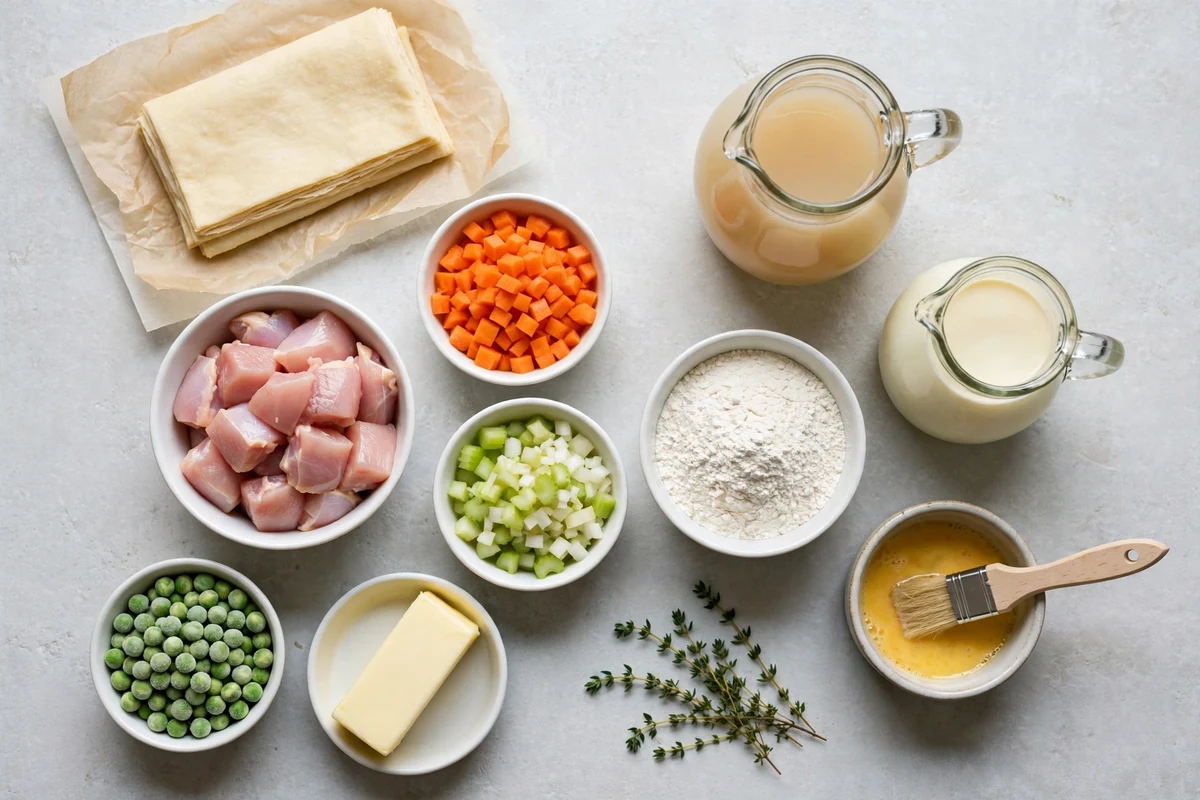
Chicken pot pie with puff pastry ingredients including a folded sheet of puff pastry, chicken thighs, vegetables and stock
Detailed Step-by-Step Cooking Guide
Preparation
Brown the chicken
Vegetables and roux
Build the filling
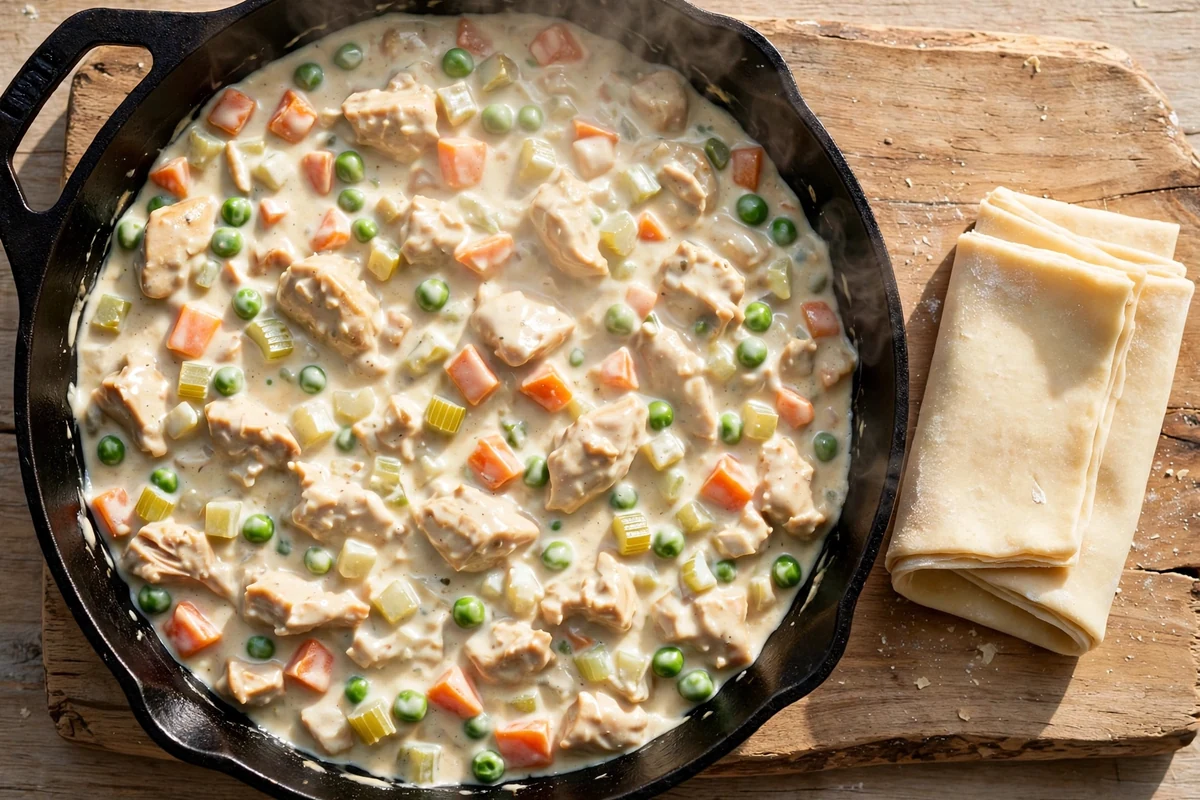
Thick creamy chicken and vegetable filling levelled in a cast iron skillet ready for the puff pastry lid
Cut the cold pastry
Lid, vent, and egg wash
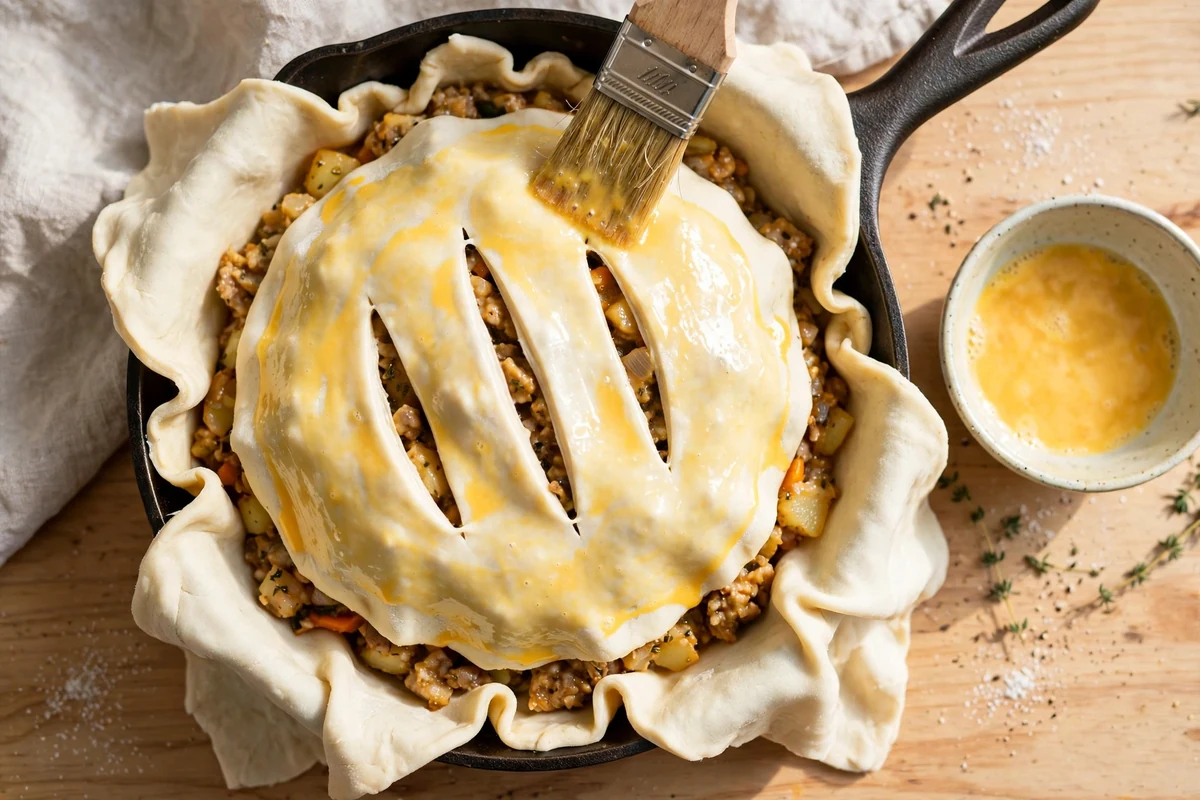
Raw puff pastry lid draped over filling in a skillet, vents cut and egg wash brushed on the top only
Bake hot
Rest
Getting Puff Pastry to Rise
The pastry got warm and floppy before baking, or egg wash dripped down the cut edges and sealed the layers. Keep the pastry fridge-cold until it meets the pan.
Egg wash ran down the cut edges, or a dull knife dragged across the cut. Top surfaces only for egg wash.
Dough was stretched to fit the skillet. Cut the round 1 inch larger than the rim and let it drape loosely.
The vents were too small or the bake was pulled too early. Steam must vent freely so the bottom of the puff sheet bakes dry.
Below 375°F, butter melts out of the dough before steam can lift the layers, frying the crust flat instead of puffing. Maintain 400°F throughout.
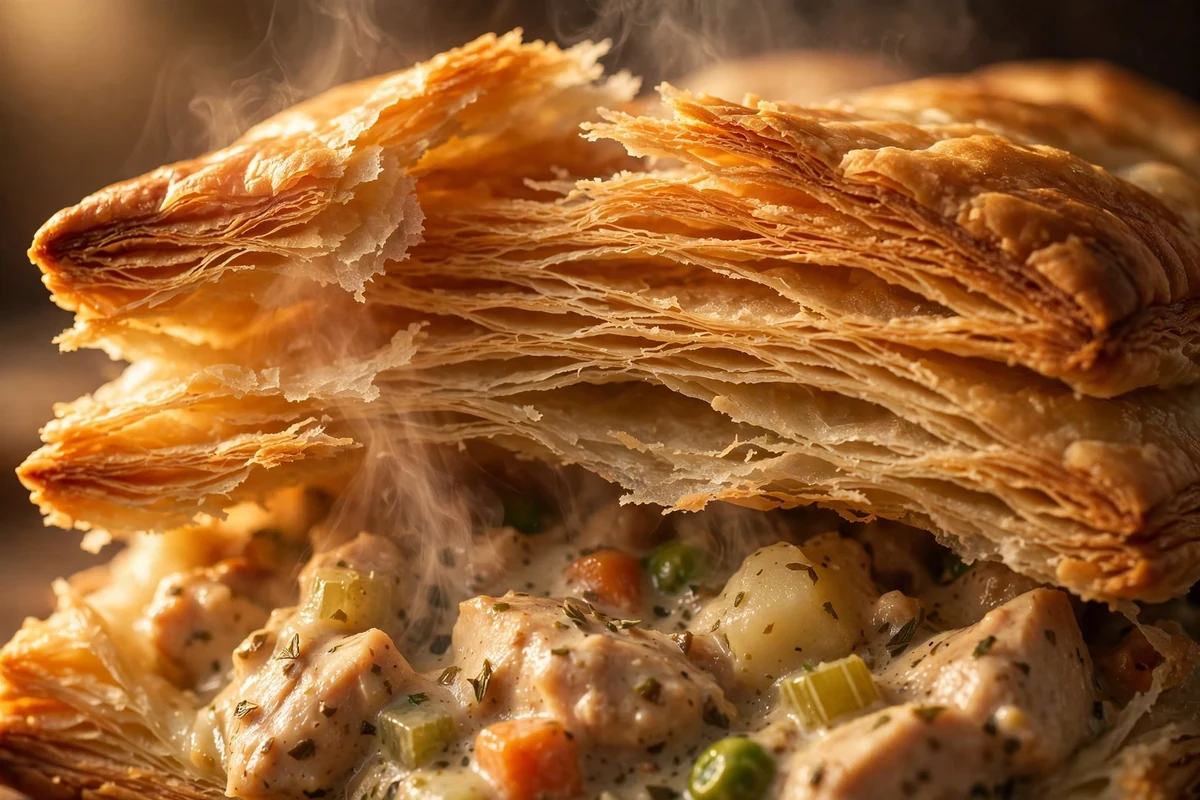
Close-up of a puff pastry lid torn open showing distinct risen layers above creamy chicken filling
Where Else Puff Pastry Works Here
How to Serve, Store & Reheat
Rest 10 minutes, cut through the puffed lid with a chef's knife, and scoop deep from the bottom with a serving spoon so each portion gets generous filling and a high crown of crisp pastry. Serve with a sharp lemon arugula salad.
Cool completely, cover loosely, and refrigerate for up to 3 days. Puff pastry naturally softens overnight as it absorbs moisture.
Reheat uncovered on a baking sheet in a 375°F (190°C) oven for 15 to 20 minutes. The dry heat drives moisture out of the pastry and restores its crispness. Avoid microwaving.
Freeze the filling separately in freezer bags for up to 3 months. Baked puff pastry does not survive freezing and thawing. When ready, reheat the filling in the skillet until bubbling, top with a fresh sheet of cold puff pastry, and bake as directed.
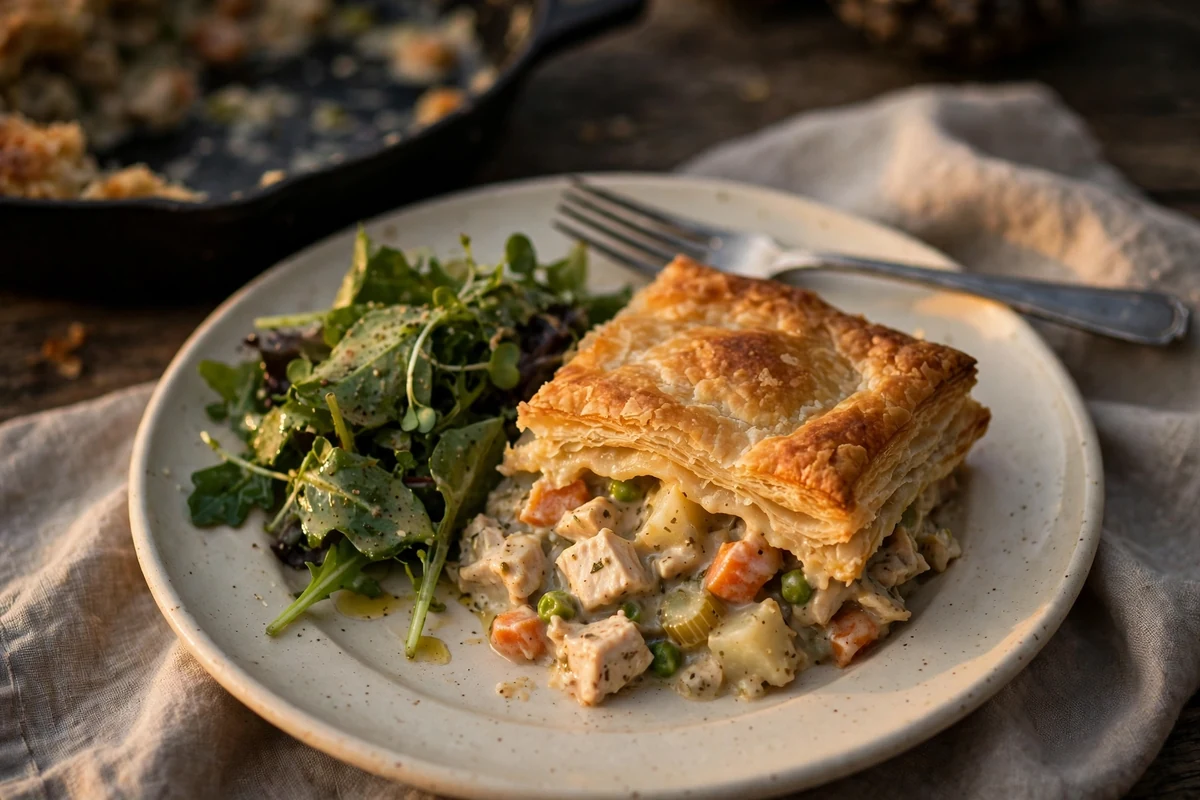
A portion of chicken pot pie with puff pastry served on a plate, a piece of golden layered lid over creamy filling
Dietary Variations
For a dedicated double-crust recipe using a gluten-free starch-hydrated dough, make our Gluten Free Chicken Pot Pie. Commercial gluten-free puff pastry also works over this filling with the roux swapped 1-to-1 with GF flour.
Many store-bought puff pastry brands are naturally dairy-free (made with vegetable shortening). Verify labels, and substitute plant-based butter and unsweetened plain oat milk in the filling.
Cut the puff pastry sheet into 1-inch strips and arrange in an open lattice. This cuts approximately 90 calories per serving while keeping flaky crunch.
Puff pastry rises purely on steam, not chemical leaveners. As the cold butter layers hit a 400°F oven, moisture in the butter flashes to steam, forcing dough layers upward before the fat fully melts.
Below 375°F, the butter melts prematurely, saturating the crumb into a heavy fried sheet. Keep the oven hot, brush egg wash strictly on top, and don't pull the skillet until the pastry is deep bronze and crackling.
Allergen Notice: This recipe contains wheat (puff pastry and flour roux), dairy (butter, whole milk, heavy cream, and butter in all-butter pastry), and egg (egg wash). Commercial puff pastry may also carry soy. Always check packaged pastry labels for allergen disclosures. This recipe guide is educational and not medical dietary advice.
Frequently Asked Questions
Recipe Visual Gallery (5 Full Photos)
Recipe Card & Steps
Ingredients Checklist
Click an item to check it off as you prep
- 1 sheet (8.6 oz / 245 g)frozen puff pastry, thawed cold
- 1 1/2 lb (680 g)boneless skinless chicken thighs, cut into 1-inch pieces
- 5 Tbsp (70 g)unsalted butter, divided
- 1 mediumyellow onion, diced
- 2 mediumcarrots, diced
- 2 ribscelery, sliced
- 1/2 cup (60 g)all-purpose flour
- 2 1/2 cups (600 ml)low-sodium chicken stock
- 3/4 cup (180 ml)whole milk
- 1/4 cup (60 ml)heavy cream
- 1 cup (140 g)frozen sweet peas
- 2 tspfresh thyme leaves (or 3/4 tsp dried)
- 1 1/4 tspfine salt, plus more to taste
- 1/2 tspblack pepper
- 1 largeegg, beaten with 1 tsp water (for egg wash)
Step-by-Step Instructions
Follow along and mark each step complete as you cook
Thaw puff pastry in the refrigerator overnight, or for 40 minutes at cool room temperature until pliable yet cold and firm. Preheat oven to 400°F (200°C).
Melt 2 Tbsp butter in a 10-inch oven-safe skillet over medium-high heat. Add the chicken thighs in a single layer, leave undisturbed for 3 minutes, then cook for 6 minutes total until golden and reading 175°F (80°C). Transfer chicken and juices to a plate.
Lower heat to medium. Add the remaining 3 Tbsp butter, followed by the diced onion, carrots, and celery. Cook for 8 minutes until the onion is translucent and carrots soften.
Sprinkle over the 1/2 cup flour and stir constantly for 2 minutes until it looks like wet sand and smells toasted.
Whisk in the chicken stock in three additions, followed by the whole milk and heavy cream. Simmer for 5 to 6 minutes until a wooden spoon leaves a clear trail that stays open for a second or two.
Off the heat, stir in the fresh thyme, salt, black pepper, cooked chicken with juices, and frozen peas. Level the surface, leaving about 3/4 inch of headspace below the rim.
Unfold the cold puff pastry onto a lightly floured surface and roll gently only to flatten the fold lines. Cut a round approximately 1 inch wider than the skillet rim using clean downward cuts. Do not stretch.
Lay the pastry round over the hot filling, letting the 1-inch overhang drape over the skillet edge. Cut three or four 1-inch steam vents in the center.
Brush the top surface with egg wash, working inward and keeping egg wash completely away from the cut edges. Wipe any drips from the pan rim.
Bake at 400°F (200°C) for 25 to 30 minutes until deeply golden brown and visibly risen in flaky layers, filling bubbles around the rim, and the underside of a lifted corner is set and dry.
Rest the skillet for 10 minutes on the counter to allow the filling to set slightly before scooping and serving.
Recipe Card Notes & Tips
- Keep egg wash off cut edges: Egg wash dripping down cut sides glues the laminated pastry layers shut and prevents high lift.
- Keep oven at 400°F: High heat is essential to flash moisture into steam before butter melts out. If top browns early, tent loosely with foil.
- Never use as bottom crust: Trapped beneath wet filling, puff pastry turns into a gummy paste that cannot bake dry.
- Thawing: Thaw overnight in the fridge or 40 minutes at cool room temperature. Listed prep time assumes thawed dough.
Ratings & Reviews
Leave a Review
Made this recipe? Share your thoughts, tweaks, and honest rating with other home cooks!
Community Reviews (0)
You Might Also Enjoy
More delicious recipes in Main Dishes.
Gluten Free Chicken Pot Pie Recipe with a Real Double Crust
Mini Chicken Pot Pies Recipe in a Muffin Tin